Understand any stock in simple English
Enter a ticker to learn what the company does and how it makes money.
World Labs Technologies Inc.
World Labs builds AI systems that turn two-dimensional images and text into interactive, explorable 3D worlds.
World Labs is an artificial intelligence company working on what it calls "spatial intelligence" — software that understands the three-dimensional world rather than just words and flat pictures. Its main product takes an image or a text prompt and generates a full 3D scene you can move around inside, like a video game level that didn't exist a moment ago. The company was founded in 2024 by Fei-Fei Li, the Stanford professor whose ImageNet dataset helped kick off the modern AI boom, along with Justin Johnson, Christoph Lassner, and Ben Mildenhall.
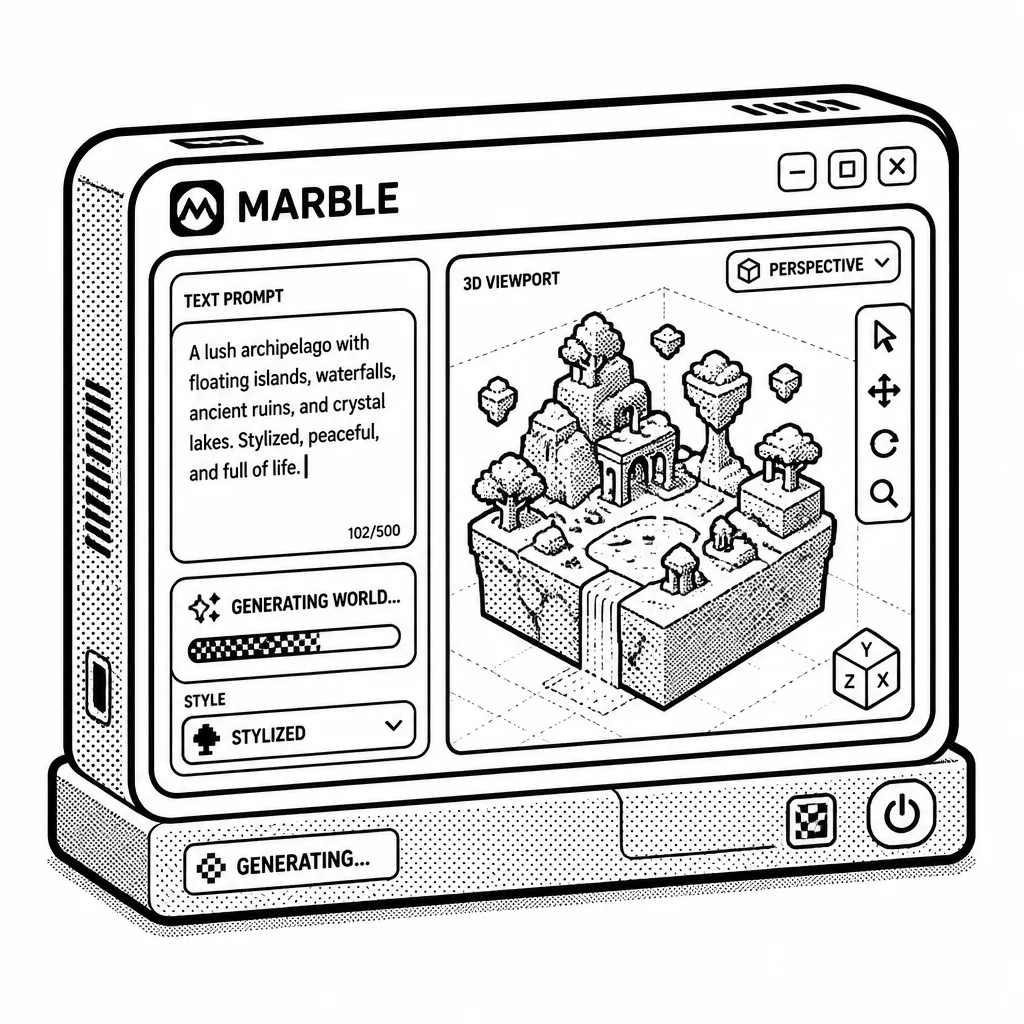
The business is still young and private, so it doesn't yet sell to everyday consumers. Instead, it's aimed at developers, designers, and companies that need 3D content — think game studios, film and visual-effects shops, robotics firms training machines to navigate real spaces, and architects or interior designers who want to walk clients through a room before it's built. Making 3D worlds by hand is slow and expensive; World Labs' pitch is that a model can spin one up from a single photo in seconds, which is why investors are paying attention. The company raised roughly $230 million in 2025, valuing it at over $1 billion, with backing from firms including Nvidia and AMD's venture arm, plus major VC funds. Its flagship technology, a model called Marble, launched publicly in late 2025. Marble builds persistent, editable 3D environments that users can export into standard formats for game engines and design tools, and it offers free and paid tiers — so there's an actual product generating revenue, even if small. The real prize World Labs is chasing is bigger than 3D art: Fei-Fei Li argues that AI needs to grasp space and physics to be truly useful in the physical world, which ties directly into robotics and "world models" — AI that can simulate how environments behave.
That ambition puts World Labs in a crowded, fast-moving fight. Google, Meta Platforms, and OpenAI-backed efforts are all pouring money into world models and 3D generation, and startups like Unity Software and Adobe sit on the tools side of the same market. World Labs' edge is its founder's reputation and a head start in a niche that could matter enormously if robots and AI agents end up needing to understand real spaces. The risk is equally plain: it's an unproven private company burning venture money in a race against giants with far deeper pockets, and nobody yet knows how big the market for generated 3D worlds will actually become.
Saved answer · last researched 10 Nov 2026