Understand any stock in simple English
Enter a ticker to learn what the company does and how it makes money.
Vinted Group UAB
Vinted runs an online marketplace where people buy and sell second-hand clothes and other used items.
Vinted is an online marketplace for second-hand stuff, mostly clothes. People use it to clear out wardrobes they no longer wear and to buy good fashion cheaply, and it has become the default place in Europe to do that. You photograph your items, set a price, and sell directly to another person. Vinted sits in the middle and takes a cut.
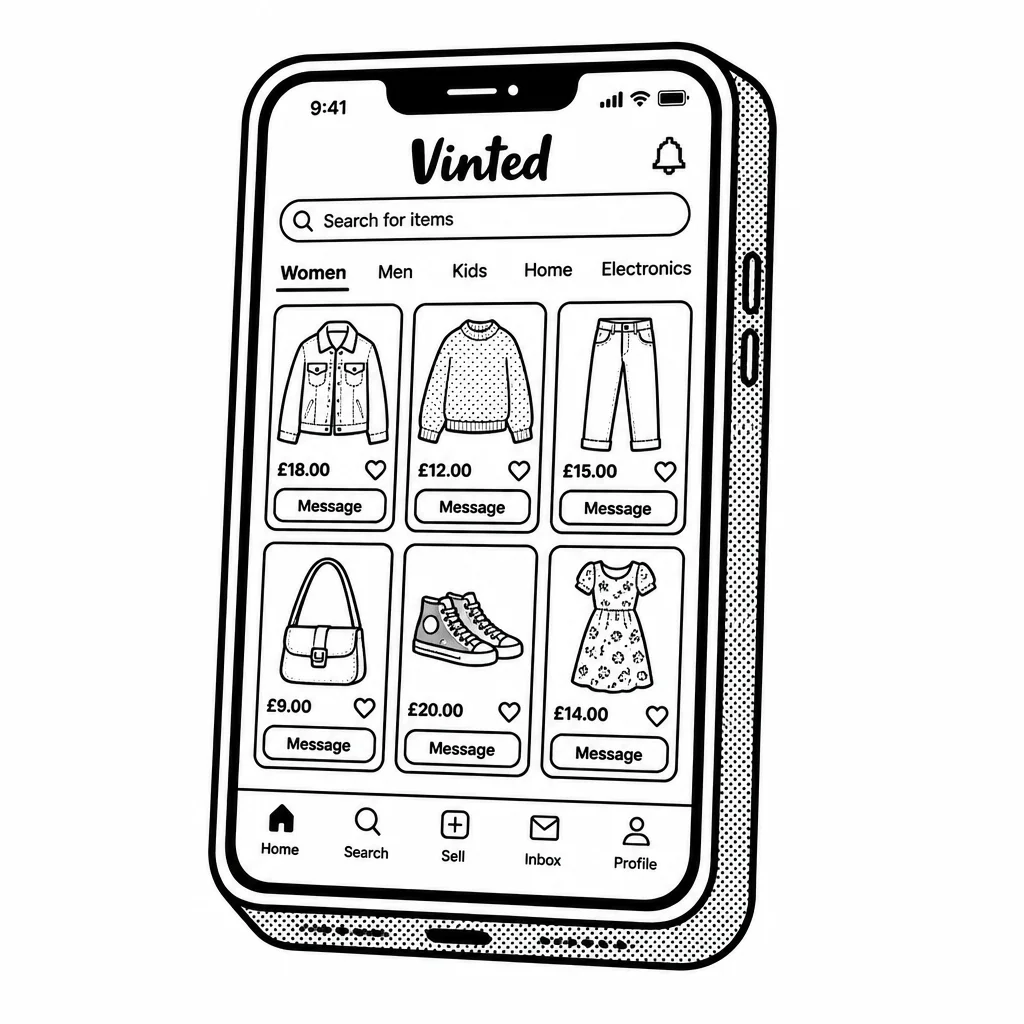
The clever part is how the money works. Sellers list items for free, and buyers pay a "buyer protection" fee added at checkout, plus a small payment fee depending on how they pay. Vinted also makes money from shipping labels, advertising for brands, and an optional verification service for pricier items. So the person who pays Vinted is usually the buyer, not the seller, which is a big reason the site grew so fast: listing costs nothing, so people list a lot. It was founded in Lithuania in 2008, and its home market is Europe, where it is the clear leader in second-hand fashion. That position matters because resale has a network effect: the more sellers list, the more buyers show up, and the more buyers show up, the more sellers list. Vinted has leaned into that scale, pushing into the United States and expanding into categories beyond clothes, like electronics and home goods. It is a private company, backed by investors, and it turned profitable in recent years after a long stretch of spending to grow.
The honest downside is that the business relies on trust between strangers, so it spends heavily on buyer protection, fraud detection, and customer support. Counterfeits and scams are a real problem on resale platforms, and Vinted's verification service is partly a response to that. It also faces competition from bigger players moving into resale, including eBay and Amazon, plus local rivals in individual countries. Still, the basic proposition is strong: Vinted turns unused clothes into cash for sellers and cheap fashion for buyers, and takes a small slice of every deal along the way.
Saved answer · last researched 10 Nov 2026
BIG PICTURE
Vinted takes about 19% of Europe's secondhand clothing market, more than any rival
- 19% Vinted
- 81% Other secondhand sellers
Vinted handled 10.8 billion euros of secondhand goods in 2025, and that was roughly 19% of Europe's secondhand clothing market, the largest slice of any seller. The company keeps only about 10% of each sale as fees, so it earns by letting people list for free and charging buyers for protection, then collecting volume rather than big cuts per item. Source: DataNext Research, data from 2025
Timeline
A Full Closet Starts Vinted
When Milda Mitkute was moving to Vilnius, her closet was stuffed with clothes she never wore. So she and a programmer friend, Justas Janauskas, built a simple website to sell the extra clothes, first called Manu Drabuziai, or "my clothes." It was a tiny fix for one person's clutter that turned out to be a problem lots of people had.
The German Fee Backfires
Vinted pushed into Germany under the name Kleiderkreisel, but money was tight: little income and costs going up fast. So the company started charging sellers a fee, and users hated it. They walked away, and the site's popularity crashed just when it needed to grow.
Plantenga Flips the Focus
An investor, Burda, helped the founders find an experienced boss instead of selling its shares, and in came Dutchman Thomas Plantenga. He cut half the staff, scrapped the service fee, and added a smaller buyer fee. His real insight was simple: stop chasing buyers and take care of the sellers, because no sellers means nothing to buy. That shift was the turning point.
Lithuania's First Unicorn
The seller-first bet paid off, and investors noticed. Vinted raised a big funding round led by Lightspeed at a valuation above a billion dollars, making it Lithuania's first unicorn. It also bought Spain's Chicfy and opened in the Netherlands, planting flags across Europe.
One Name Across Germany
Vinted kept buying rivals, picking up United Wardrobe in the Netherlands. In Germany it folded its two local platforms, Kleiderkreisel and Mamikreisel, into a single brand: Vinted. One name, one app, across more of Europe.
Beyond Person-to-Person
Vinted stretched past people selling to people. It moved into business-to-business selling and launched its own shipping brand, Vinted Go. It also bought Rebelle and stepped into premium second-hand, where the clothes and the prices are higher.
A Five-Billion-Dollar Sale Without Going Public
By now Vinted was making a profit, so it didn't need to raise money. Instead it ran a secondary share sale worth 340 million euros at a five-billion-euro valuation, letting investors and employees cash out some shares without an IPO. The company grew without handing over new ownership to the public.
An Eight-Billion-Euro Secondary Deal
The no-IPO playbook got bigger: a secondary share sale of 880 million euros valued Vinted at eight billion, led by EQT with new investors joining. The numbers behind it were serious, with 2025 sales volume up 47% to nearly eleven billion euros and a real net profit across 26 markets. Vinted says it is ready to go public but has set no date, choosing liquidity now over a listing anytime soon.