Understand any stock in simple English
Enter a ticker to learn what the company does and how it makes money.
ThredUp Inc.
ThredUp is an online resale marketplace where people buy and sell secondhand clothes, shoes, and accessories.
ThredUp is an online thrift store. It sells used clothing, shoes, and accessories — mostly to women in the United States — at prices far below what those items cost new. Shoppers come for brands they recognize at a fraction of retail price, and because buying secondhand is cheaper and less wasteful than buying new.
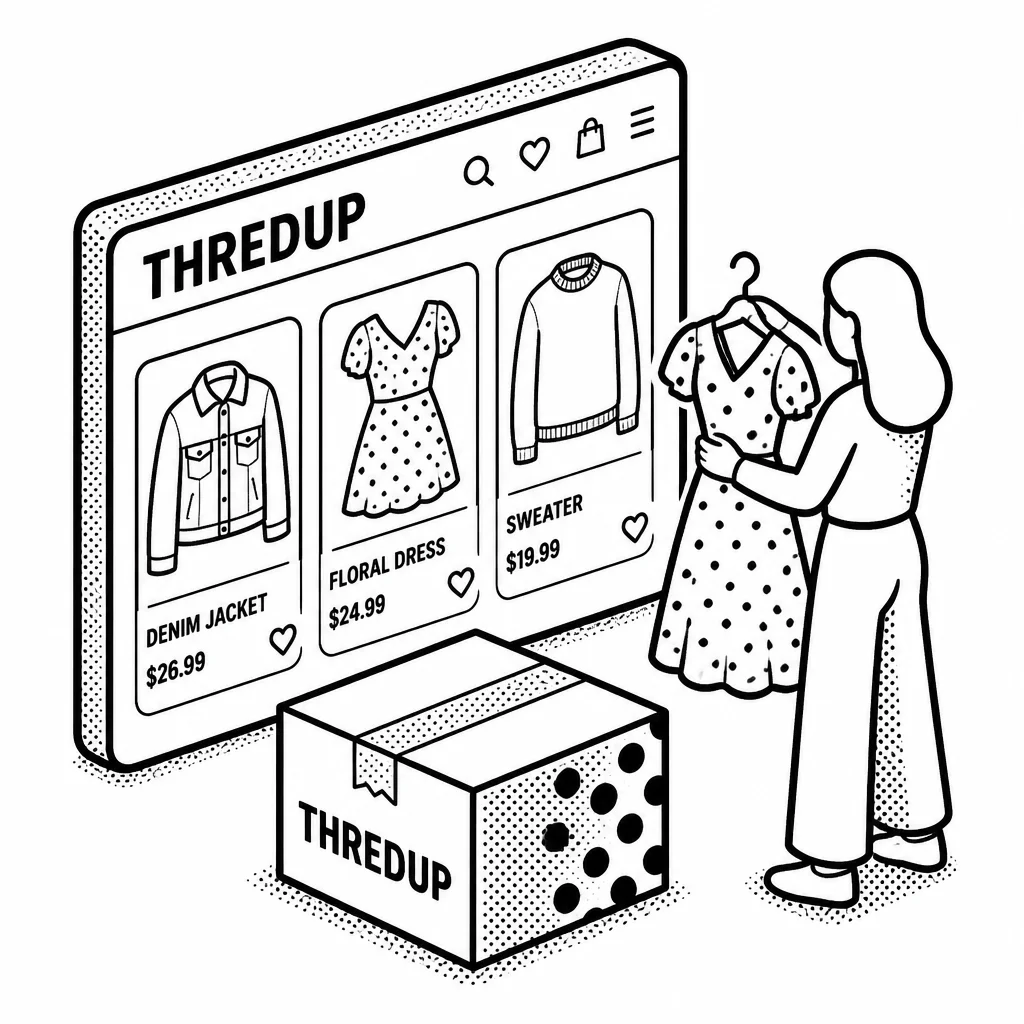
The harder part of the business is getting the clothes in the first place. ThredUp takes in huge volumes of used items from sellers, either through its "Clean Out" kits or by handling the logistics for brands and retailers who want to resell their own customers' castoffs. It sorts, photographs, prices, and lists all of it. That processing is the engine of the company, and it is expensive and labor-intensive. ThredUp earns money in two ways: a cut when it sells an item for a seller, and by buying inventory outright and reselling it. It also sells a service to retailers who want a resale program without building one themselves. Resale is a crowded, low-margin fight. eBay is the giant of secondhand, Poshmark built a social shopping brand around it, and The RealReal goes after luxury. ThredUp's pitch is convenience and scale — a shopper can browse millions of items in one place, and a seller can unload a whole closet without photographing anything. The company went public in 2021 during a resale boom, but growth has since slowed, and it has focused hard on cutting costs and reaching profitability rather than chasing expansion. That tension — a genuinely useful service that has struggled to make money — is the central story of the business.
Watch the processing costs and the buyer demand together. ThredUp lives or dies on keeping the cost of turning a bag of old clothes into a listed item low, while still convincing enough shoppers to buy. If those two line up, the model works. If not, the warehouse fills up faster than the cash does.
Saved answer · last researched 14 Nov 2026