Understand any stock in simple English
Enter a ticker to learn what the company does and how it makes money.
Synergy Quantum
Synergy Quantum makes encryption software and hardware designed to survive attacks from future quantum computers, selling to governments, militaries, telecoms, and banks.
Synergy Quantum is a cybersecurity company with a very specific bet: that the computers of the future will be able to crack the encryption we use today, and that governments and big institutions need to start protecting themselves now. The company builds post-quantum cryptography — encryption built to resist quantum computers — in both software and specialized hardware. Its customers are the ones with the most to lose if a secret leaks: governments, defense agencies, telecom networks, critical infrastructure like power grids, banks, and large enterprises.
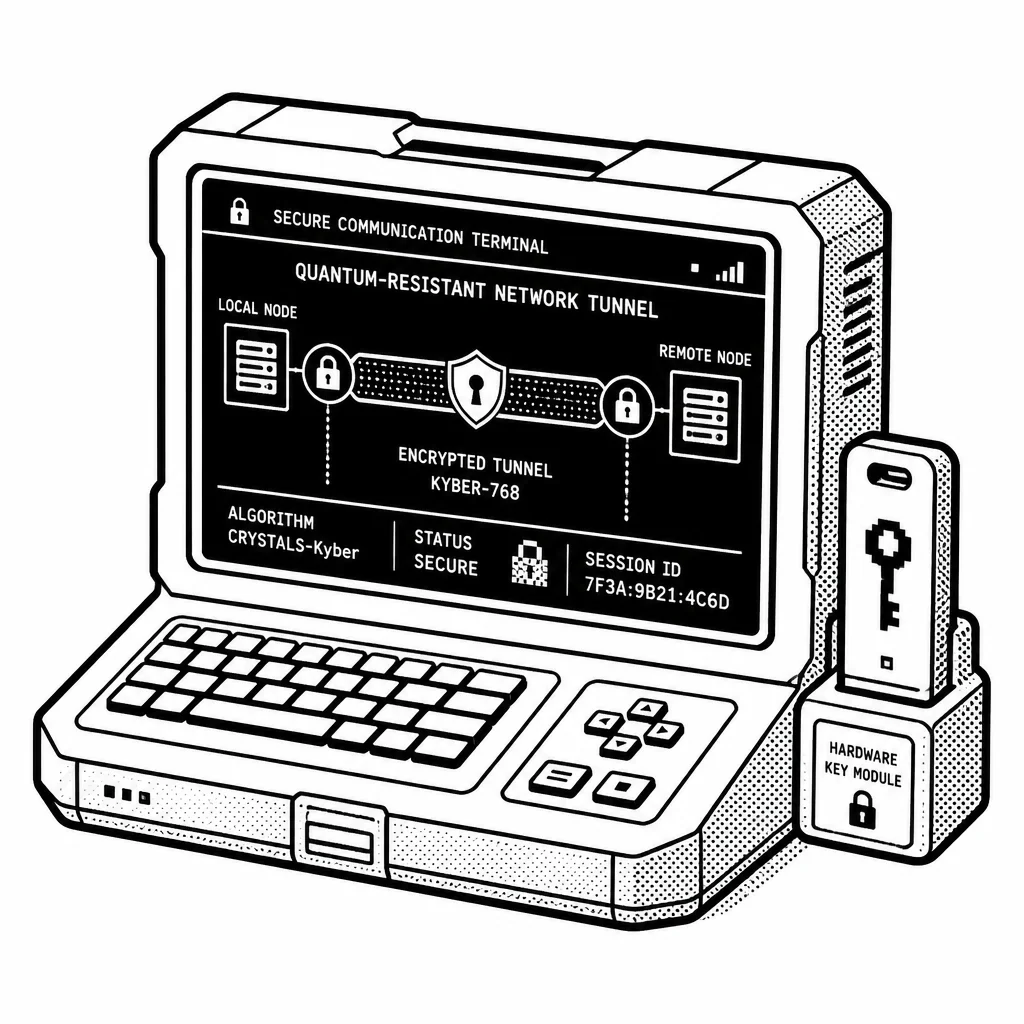
The reason this matters takes a moment to appreciate. Today's encryption relies on math problems that ordinary computers find practically impossible to solve. A quantum computer, in theory, could solve some of those problems quickly. That means anything encrypted today could be recorded now and unlocked later. Synergy Quantum's pitch is that "later" is coming, so the locks need replacing before it arrives. Its hardware matters because the keys themselves — the secret numbers that unlock everything — are often safest stored in a dedicated physical chip rather than sitting on a computer's normal memory. The company is headquartered in Switzerland, a country whose name is practically a brand for privacy and secure banking, which does not hurt when you are selling encryption to cautious institutions. It faces competition from much larger players in the security and networking world, as well as from standards bodies and open-source tools that make some of this technology free. The race is now governed in part by new post-quantum standards published by the U.S. National Institute of Standards and Technology in 2024, which gave the whole industry a common rulebook and, arguably, a push.
The honest way to see the business: it sells insurance against a threat that has not fully arrived yet. That is a hard sell to a cost-cutting IT department but an easier one to a defense ministry, and that is exactly why the customer list leans toward governments and critical infrastructure. The risk is that the big security vendors bundle similar protection into products customers already buy, squeezing the specialists. The opportunity is that migrating the world's encryption is a decade-long, unavoidable job — and everyone who touches a secret will eventually have to do it.
Saved answer · last researched 11 Nov 2026
BIG PICTURE
89% of companies have started quantum projects, but only 3% have scaled them up
- 89% Organizations with hands-on quantum initiatives
- 11% Organizations with no hands-on quantum initiatives
Most large organizations are already experimenting with quantum technology, yet almost none have pushed it into full production. That gap is the space Synergy Quantum sells into. Its customers are governments, militaries, telecoms and banks that need working quantum-safe encryption now, and its pitch is that it can deploy the gear and software while rivals are still testing. Source: State of Quantum 2026 report, data from 2026
Timeline
Synergy Quantum Is Founded
Jay Oberai spent years in global finance and wealth management in Geneva, and he became convinced that privacy and data protection would define the digital age. So in 2018 he started Synergy Quantum with co-founder Vipin Rathi, inspired by his earlier investments in Cambridge Quantum. The bet was simple to state and huge to deliver: quantum computing will upend cybersecurity, and someone has to make the world ready for it.
Synergy Quantum Moves Into Chips
Being ready for quantum meant protecting the tiny computers inside everyday devices, so the company entered the semiconductor business, designing and packaging chips with post-quantum encryption for the internet of things. To lead the effort it hired Manu Khullar, a 29-year veteran of chipmaker STMicroelectronics, as chief operating officer. Oberai said the plan was to add teams and buy businesses in the secure-chip space.
First Contracts and Funding
Soon after, the company raised a pre-series A round led by Swiss and international investors, and signed three contracts that showed the encryption tech was real: a Swiss private bank's client-communication app, a post-quantum secure chip with a major European semiconductor company, and quantum satellite communication with India's Quantum Mission. Banking, chips and space are about as different as customers get, but the same idea sat underneath all three.
Nishant Batra Joins
In 2025, Nishant Batra, until recently Nokia's chief strategy and technology officer, came on board as a shareholder and strategic advisor. The company positioned itself in the middle of the quantum world, running secure networks that connect quantum computers to governments and enterprises. The goal was to speed up the rollout of quantum-safe national and cross-border networks.
Deal With India's C-DOT
That same year, Synergy Quantum signed an agreement with C-DOT, the telecom research arm of India's Department of Telecommunications, to co-develop drone-based Quantum Key Distribution systems. The idea is to send encryption keys through the air on drones, using a protocol called BB84, rather than trusting long cables. It also fit India's push to build its own secure telecom and quantum technology at home.
Quantum-Safe Silicon Cores for RISC-V
By 2026 the chip bet had grown into a product line: a portfolio of quantum-safe silicon cores for RISC-V-based system-on-chip designs. These let chipmakers bake post-quantum cryptography straight into hardware for custom chips, FPGAs and embedded platforms. For devices that stay in service for years, that means security built into the foundation rather than bolted on later.