Understand any stock in simple English
Enter a ticker to learn what the company does and how it makes money.
Shanghai Jieyue Xingchen Intelligent Technology Co., Ltd.
StepFun builds large artificial intelligence models, especially ones that understand language, images, and sound, and sells them to businesses and developers.
StepFun is a Chinese artificial intelligence company that builds "foundation models" — giant AI systems trained on enormous piles of text, images, and audio that other companies can then use to power their own products. You can think of it as a model factory: instead of making a chatbot for consumers, it makes the underlying brain that other businesses plug into their apps, customer service tools, and devices.
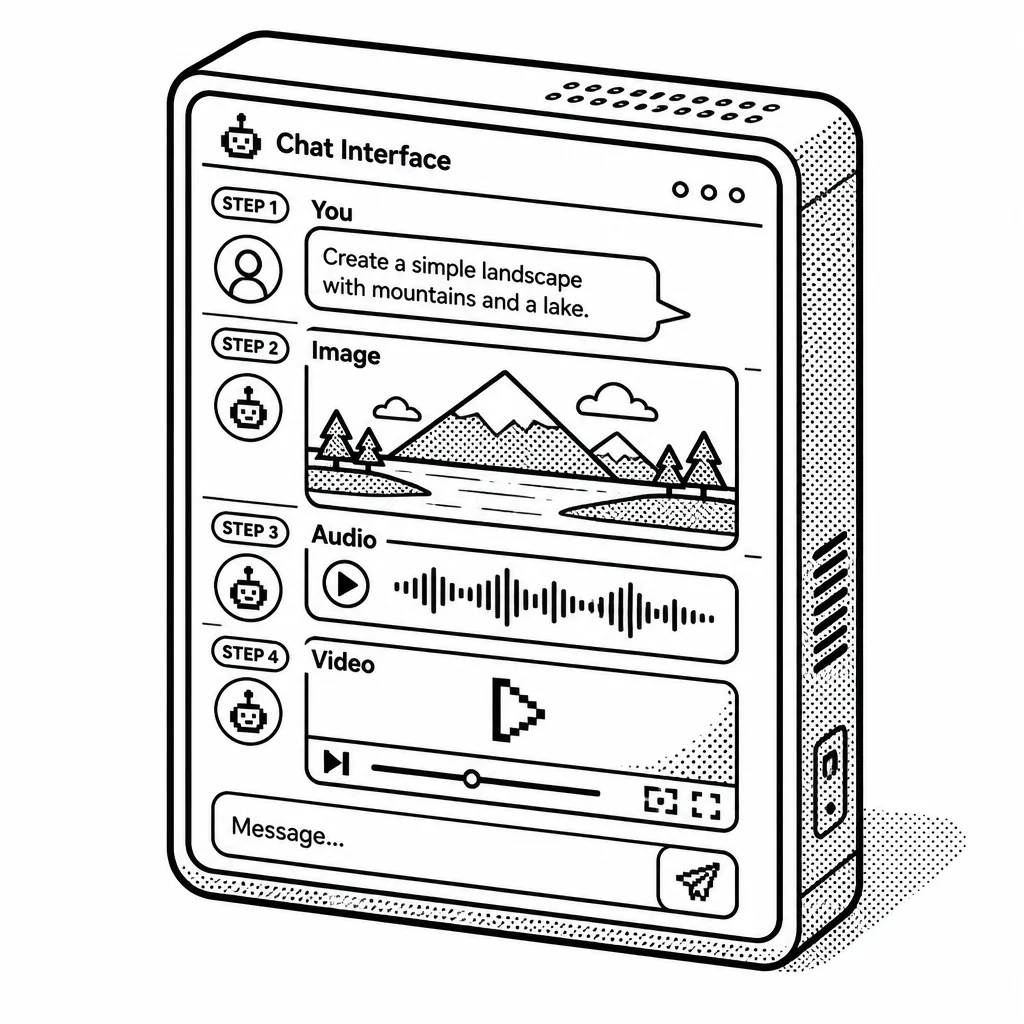
The company was founded in 2023 in Shanghai by Jiang Daxin, a well-known AI researcher who previously worked at Microsoft Research Asia, and it quickly became one of China's most talked-about AI startups. Its flagship line is called Step, and it spans several flavors: Step-1 and Step-2 for understanding and generating language, Step-1X for images, and Step-Audio for speech. One of its most distinctive bets is "multi-modal" AI — models that handle text, pictures, and voice together rather than just words — which is a big deal for things like smart devices and robotics. StepFun makes money mainly by licensing access to its models and selling services to enterprises and developers, similar to how other AI labs rent out their technology. It has raised serious money from investors including Shanghai state-backed funds and Alibaba, and in 2025 it reportedly pulled in fresh funding at a valuation of roughly $2 billion — a sign investors think it can compete in a crowded Chinese market that also includes players like DeepSeek, Zhipu, and Moonshot.
The business is exciting but risky. Training top-tier AI models burns through cash on computing power, and Chinese AI startups face both fierce price competition at home and US export restrictions on advanced chips. StepFun's edge is its research pedigree and its push into multi-modal and voice AI, but whether it turns that into a durable, profitable business is still an open question.
Saved answer · last researched 10 Nov 2026
BIG PICTURE
In China's new AI cockpit market, StepFun is one of the small names chasing a leader with 45%
- 45% Volcano Engine
- 30% Alibaba
- 25% Others, including StepFun
IDC's first ranking of AI cockpit systems puts Volcano Engine on top with 45%, with Alibaba in second place and a cluster of smaller players, including Jieyue Xingchen, still fighting for a foothold. StepFun sells models that understand language, images and sound, so a young car-market share measured in single digits shows how much room it still has to win paying business customers. Source: IDC, via EEWorld, data from 2026
Timeline
A Microsoft Veteran Starts StepFun
In 2023, Dr. Jiang Daxin, a former global vice president at Microsoft, started a company in Shanghai's Xuhui district. The bet was simple: build Chinese artificial intelligence models good enough to stand with anyone's. It was a crowded field, but he had the credentials to be taken seriously.
A Trillion-Parameter Model
A year later, StepFun became the first Chinese company to release a large language model with a trillion parameters. Size is not the same as quality, but in the model race it is a loud signal, and it gave the young company a technical reputation overnight.
Big Money and a Fast Model Factory
That reputation turned into cash. By the end of 2024, StepFun had raised a Series B worth hundreds of millions of dollars from Shanghai state capital, Tencent and top venture firms, while shipping eleven of its own models in ten months. Speed and money were both on its side.
Agents Become the Business
At its Step UP open day in early 2025, StepFun made a choice about how it would actually make money: agents for smart devices. Instead of just selling model access, it aimed at cars, phones, robots and connected gadgets, with a CEO who said the company had moved into an agent-building stage on top of its multimodal and reasoning skills.
A Hong Kong Listing in the Wings
Around mid-2026, StepFun quietly filed with the Hong Kong stock exchange, hoping to raise up to half a billion dollars at a valuation near twelve billion. Months later it was still unpriced and unlisted, though the exchange had doubled how long its application stayed valid. The paperwork was moving; the market was not.
A New Chairman Arrives
Alongside its next funding round, StepFun brought in Yin Qi, a co-founder of Megvii and chairman of Qianli Technology, as its new chairman. Founder Jiang Daxin stayed on as CEO, so the company now had a seasoned hand at the top for the next phase.
The Biggest Round in a Year
In January 2026, StepFun closed a Series B+ of more than five billion yuan, the largest single round in China's model sector in a year. Shanghai state funds, China Life, Pudong Venture Capital and Huaqin joined, with existing investors Tencent, Qiming and 5Y adding more. This was not a startup scraping by; it was a company with big backers and a big plan.
From the Cloud to Your Pocket
The plan became clearer as StepFun raised money from consumer-electronics suppliers like Huaqin, Longcheer, OmniVision and ZTE. It was preparing its first agentic AI smartphone, a bet that the real fight in AI would move from training models in the cloud to running them on the devices people carry. Device makers on the cap table were not a coincidence.
The STEPX Phone Debut
In mid-2026, chairman Yin Qi launched STEPX, a model-native terminal brand, with its first Agentic Phone running the Step AOS system and an assistant called Amoo. The excitement was real, but so was the criticism: no mass-production unit, no price, no launch date. Many saw a concept sample built to dress up the story before a listing.