Understand any stock in simple English
Enter a ticker to learn what the company does and how it makes money.
Nord Security
Nord Security sells subscription apps that keep people's internet connections private and safe, led by its NordVPN product.
Nord Security is a privacy and security software company best known for NordVPN, one of the world's most popular virtual private networks. A VPN does a simple but powerful job: it scrambles your internet traffic and routes it through a server somewhere else, so your internet provider, your Wi-Fi operator, and nosy websites can't easily see what you're doing or where you are. People use NordVPN to protect themselves on public Wi-Fi, to hide their location, and to get around blocked websites and streaming restrictions. The company also sells NordPass, a password manager, and NordLayer, a version of its network security tools aimed at businesses rather than individuals.
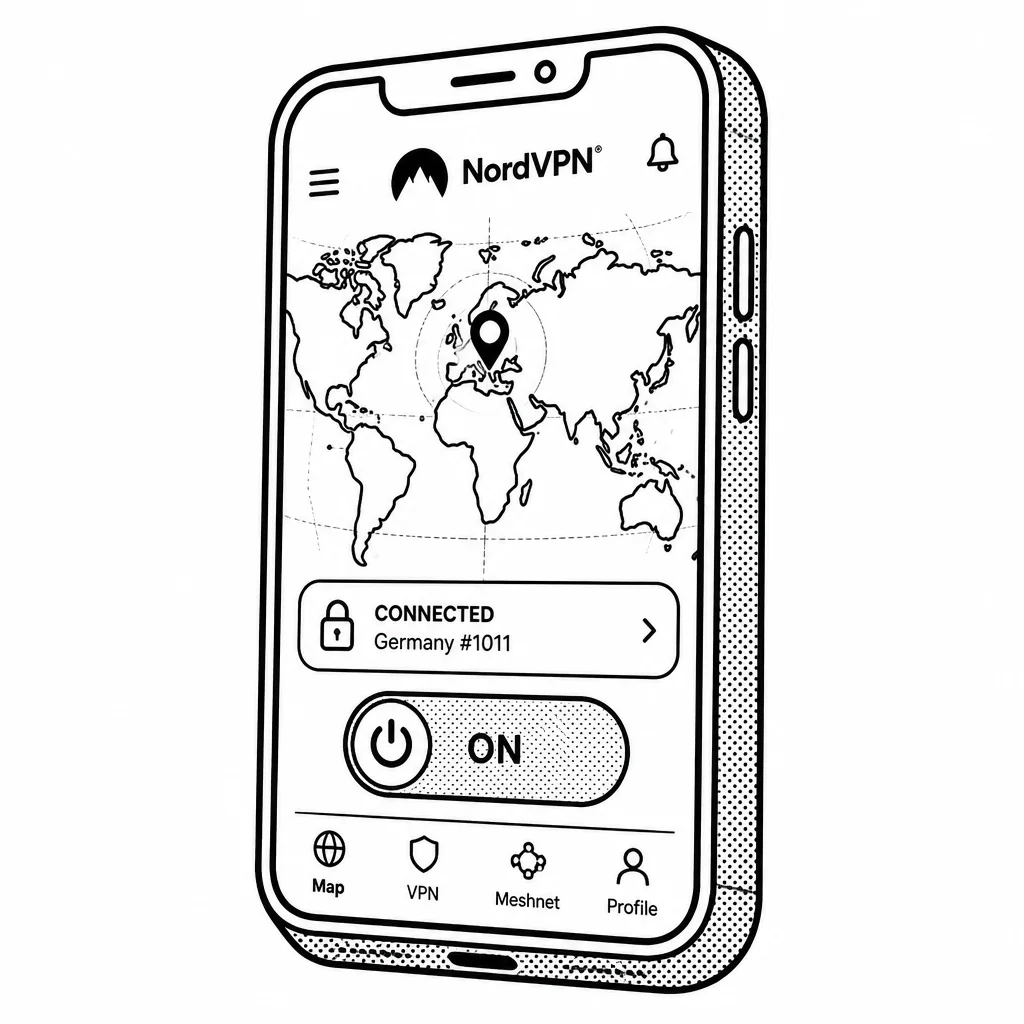
The money comes from subscriptions. Customers pay a monthly or yearly fee, and the company keeps earning as long as they stay subscribed. That makes Nord Security a recurring-revenue business, which is a fancy way of saying it gets paid again and again for the same product. The pitch to customers is partly trust and partly price: NordVPN has invested heavily in independent security audits, a huge server network, and a polished app that works on almost any device, and it prices aggressively, especially on longer plans. It competes with other big consumer VPN brands like ExpressVPN and Surfshark (Surfshark is actually part of the same group), as well as free and built-in tools. The company grew out of a Lithuanian startup scene and stayed private for years. In 2022 it raised money from investors at a valuation of roughly $1.6 billion, making it one of Europe's rare "unicorns" from the Baltics. In early 2025 it merged with Surfshark, folding a rival VPN brand under the same roof, and later that year it agreed to be acquired by CyberArk, a publicly traded security company, in a deal reported at around $1.5 billion in cash and stock. That move would take Nord Security from a private consumer brand into a larger corporate security business.
The core strength is scale and habit: once a VPN is installed and working, people tend not to switch, so subscriptions renew quietly. The vulnerability is that consumer VPNs are a crowded, price-sensitive market where trust is everything — a single serious privacy blunder or a wave of cheap competitors can hurt. The bigger strategic bet is the shift toward business customers, where security spending is steadier and contracts are larger, which is exactly the ground CyberArk plays on.
Saved answer · last researched 10 Nov 2026