Understand any stock in simple English
Enter a ticker to learn what the company does and how it makes money.
Proton AG
Proton sells privacy-focused internet tools — encrypted email, a VPN, cloud storage, and password management — to people and businesses who don't want their data snooped on.
Proton is a privacy company. It makes the everyday internet tools you already use — email, a VPN, file storage, a password manager — but builds them so that even Proton itself can't read your stuff. Its most famous product is Proton Mail, an encrypted email service, and it also runs Proton VPN, Proton Drive for cloud storage, and Proton Pass for passwords. It sells to regular people and, increasingly, to businesses that want the same protections for their staff.
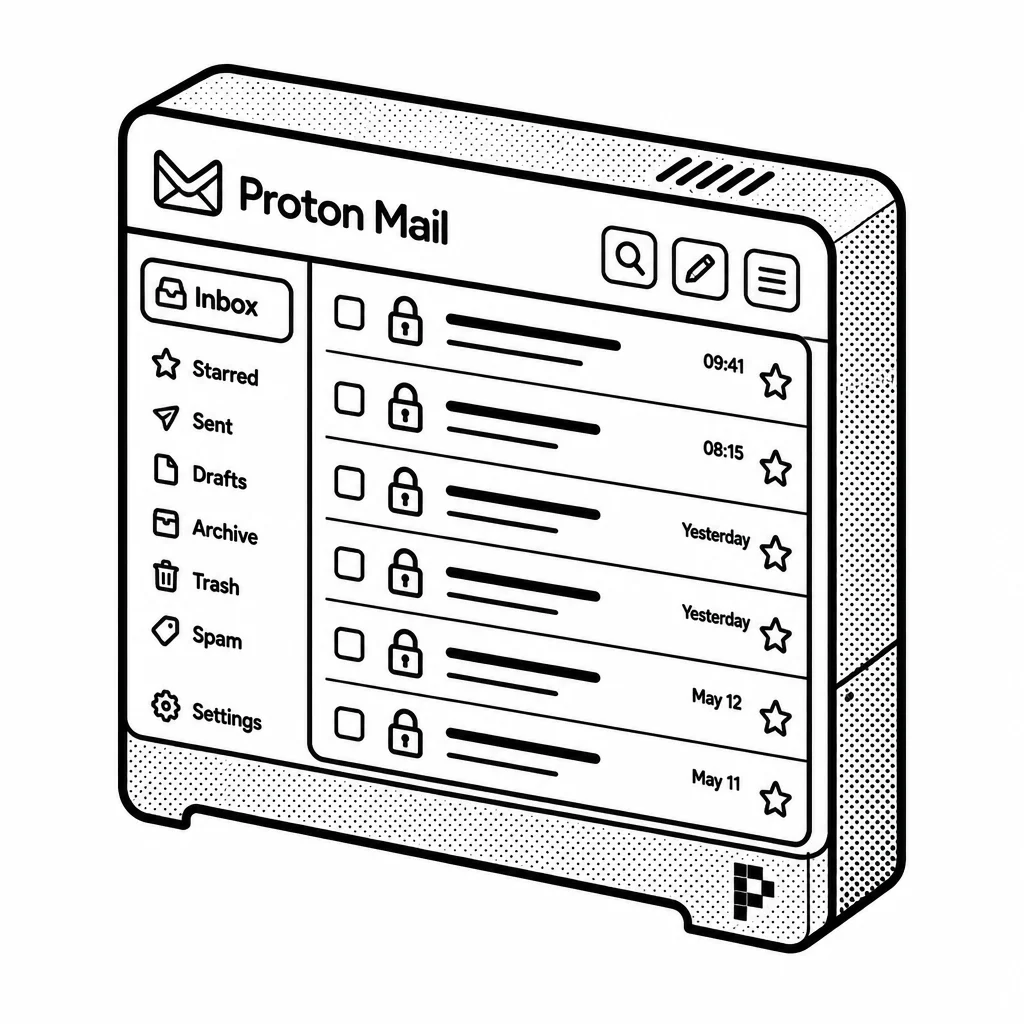
The basic idea behind the email is worth understanding. Normally, when you send an email, it sits readable on a company's servers, and that company could be hacked, subpoenaed, or just peek. Proton encrypts messages so the keys live with the user, not the company — meaning Proton is built so it *can't* hand over what it can't read. That's the whole pitch, and it's why the company attracts journalists, activists, and anyone who finds "we read your emails to sell you ads" creepy. Proton is based in Switzerland and was founded in 2014 by scientists who met at CERN, the particle-physics lab near Geneva. It got its early funding and users from a crowdfunding campaign after a privacy-focused email service called Lavabit shut down rather than hand over its keys to the US government. Proton still leans on that underdog, privacy-first story, and it is mostly funded by paid subscriptions rather than advertising — which matters, because the customer is the user, not an advertiser.
Today the big push is business customers. Proton sells bundled plans to companies that want secure communication and file sharing, and it competes with giants like Microsoft and Google for workplace email and tools. The advantage is privacy; the challenge is that most businesses are already deeply stuck in those giants' ecosystems. Proton has also expanded into other privacy products, including a cryptocurrency wallet and an AI assistant it says keeps your data private. It remains a private company, so there's no stock to buy — the bet is simply that enough people and firms will pay for tools that can't spy on them.
Saved answer · last researched 11 Nov 2026
BIG PICTURE
Three in four European public companies still run on US tech, Proton says
- 74% European listed companies using US services like Google or Microsoft
- 26% European listed companies using other providers
Proton's own survey puts the scale of the habit it is trying to break at 74 percent: that share of Europe's stock-market-listed companies uses services from Google, Microsoft or similar American providers. Proton sells itself as the encrypted, Swiss-hosted alternative, and it is pushing to triple the number of organisations it serves within two to three years. That means winning even a slice of a very large, very settled customer base. Source: Proton survey reported by Frandroid, data from 2026
Timeline
Scientists Build a Private Internet
A team of scientists who met at CERN looked at the internet and saw a problem: it was built to track and profit from people, not protect them. So they decided to build a better one where privacy comes first. They raised money from over 10,000 ordinary people in a crowdfunding campaign, and in the summer of 2014 Proton was born — an internet that puts people before profits.
From Email to a Privacy Ecosystem
Proton started with encrypted email, but email was never going to be enough on its own. In 2017 the company launched Proton VPN, a tool that hides what you do online. That moved the company from one private product into a whole ecosystem of privacy tools.
Venture Money Steps Back
Proton had taken money from a venture capital firm early on, which is normal for startups but gives investors a say in how a company is run. That year, the shares held by the investor Charles Rivers Ventures were transferred to FONGIT, a non-profit incubator. The effect was simple: less venture-capital influence over Proton's direction.
Proton Buys SimpleLogin
In April 2022 Proton acquired SimpleLogin, a small French startup with a clever trick: it lets you create email aliases so you never have to hand out your real address. The plan was to fold that feature into Proton Mail and a new product called Proton Pass, while keeping SimpleLogin running on its own.
Proton Technologies Becomes Proton AG
Just days after the SimpleLogin deal, Proton Technologies AG shortened its name to Proton AG. It was part of pulling all its products under one brand, one subscription and a fresh set of redesigned interfaces — less a collection of apps, more one company.
Proton Buys Standard Notes
In April 2024 Proton acquired Standard Notes, an app for taking notes that are encrypted end-to-end, meaning only you can read them. The plan was to bring it closer into the Proton family of products.
Founders Hand Shares to a Foundation
In June 2024 the three founders, Andy Yen, Jason Stockman and Dingchao Lu, gave their shares to the non-profit Proton Foundation, which became Proton's largest shareholder. This locked in a structure meant to keep people before profits and make a hostile takeover nearly impossible. The company's ownership now matched the promise it started with.
Lumo Arrives and Proton Looks Beyond Switzerland
In July 2025 Proton released Lumo, its own AI chatbot, and dropped a bigger surprise: it would stop running its technical infrastructure in Switzerland. Planned tightening of Swiss surveillance law pushed the company to invest over 100 million euros in the European Union instead. For a company whose whole pitch was Swiss privacy, this was a real strategic pivot — a bet that the privacy promise would outlast the flag on the servers.