Understand any stock in simple English
Enter a ticker to learn what the company does and how it makes money.
Miele & Cie. KG
Miele makes premium home appliances like washing machines, ovens, and dishwashers, plus cleaning machines for hospitals and hotels.
Miele is a German maker of high-end home appliances — washing machines, tumble dryers, dishwashers, ovens, cooktops, refrigerators, and vacuum cleaners — sold mostly under its own name. It also has a smaller professional arm that sells commercial laundry machines, dishwashers, and cleaning equipment to hospitals, hotels, and labs. The company is still family-owned, run by the fourth generation of the Miele and Zinkann families who founded it in 1899, and it is not listed on any stock exchange.
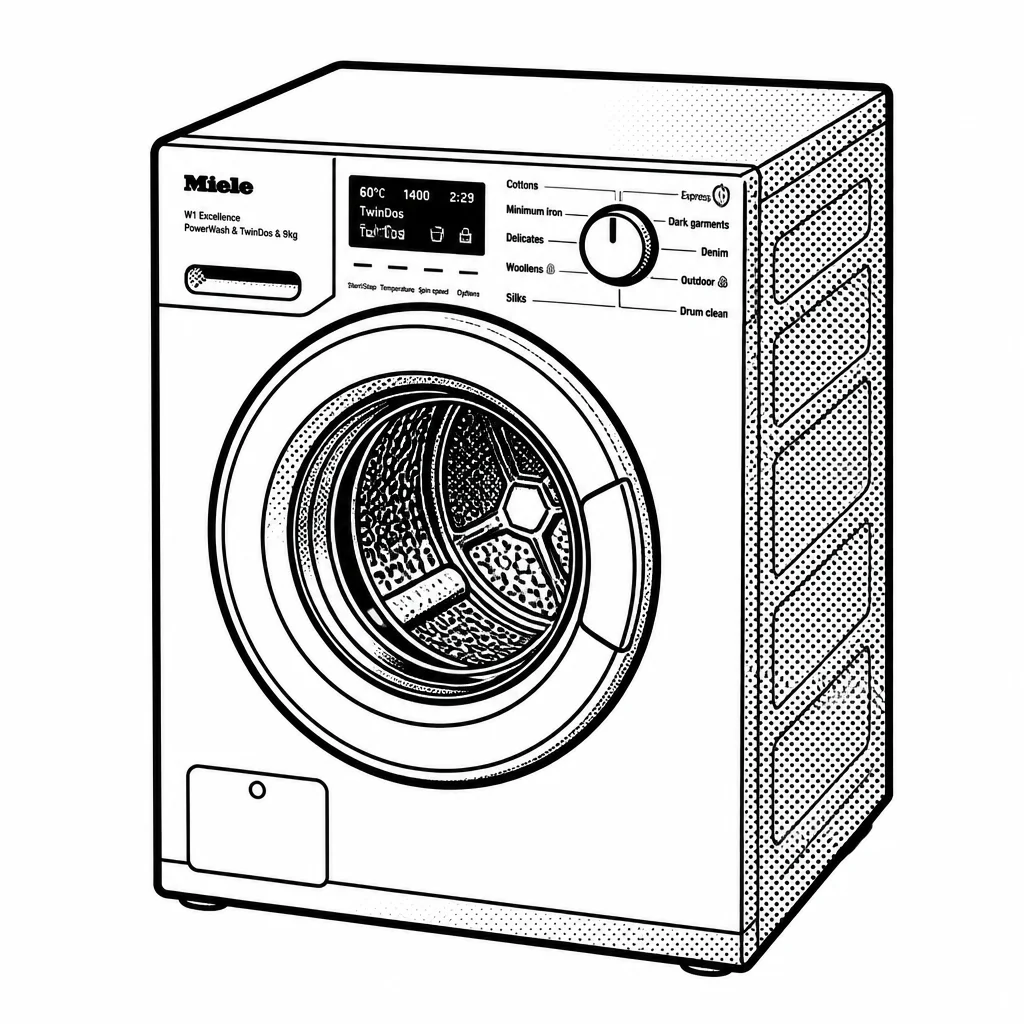
What makes Miele unusual is its pitch: build machines that last 20 years, price them well above the competition, and let word of mouth do the selling. A Miele washing machine can cost two or three times a basic model from Bosch or Whirlpool, and the company leans on that durability claim as its core marketing message. That strategy works best in Germany and across Europe, where the brand is a household name. It is weaker in the United States and Asia, where Miele has spent years trying to grow but remains a niche player compared with Samsung and LG. The trade-off is that Miele is a small player in a scale business. Big rivals sell millions of units and spread development costs across far more machines, while Miele sells fewer appliances at fatter margins. The company has publicly said it aims to grow revenue to roughly €5 billion and cut costs, after a stretch of weaker demand following the pandemic-era boom in home renovations. High energy prices and a sluggish European housing market have hit appliance sales across the industry, and Miele has responded with job cuts and a push into cheaper product lines to defend market share.
Because Miele is private, it does not publish the detailed financial reports a public company would. It is controlled through the founding families' partnership structure, which protects it from takeover but also limits how much outside capital it can raise for expansion. Owning the brand outright and keeping production largely in-house — with factories in Germany and a handful of other countries — gives Miele control over quality, which is exactly what its customers are paying for.
Saved answer · last researched 10 Nov 2026
Timeline
Two Men Start Miele in a Grain Mill
In 1899, an engineer named Carl Miele and a businessman named Reinhard Zinkann started a company in an old grain mill with eleven workers. Their first product was a cream separator, a machine that spins milk to separate the cream from the rest. The market was already crowded with these machines, so they made a choice that would define the company: compete on quality, not on price. They adopted the motto 'Immer Besser' — forever better — and it stuck.
Miele Adds a Washing Machine
Soon the company added its first washing machine, a big wooden tub with a drum you turned by hand with a lever. It was a small step, but it pointed the young company away from farm equipment and toward the appliances people use at home.
Miele Moves to Gütersloh
By 1907 the company had outgrown its old home and moved its headquarters and production to Gütersloh, with a much bigger workforce and even a railway siding to handle growing deliveries of wood. Orders were coming in beyond all expectations.
Europe's First Electric Dishwasher
In 1929, Miele built Europe's first electric dishwasher. From then on the company steadily narrowed its focus onto high-quality electrical appliances for the kitchen, the laundry and the floor.
Miele Drops Bicycles for Dishwashers
The company had also been making bicycles and mopeds, but in 1960 it stopped that production in Bielefeld. It put its effort into dishwashers instead, which were becoming more and more popular in kitchens.
Miele Buys Imperial
In 1989, Miele acquired the cooking appliance maker Imperial, with plants in Bünde and Arnsberg. This was a big step for its built-in kitchen appliance business, which had become strategically important to the company.
Miele Sells Its Kitchen Furniture Business
Miele sold its kitchen furniture business, having already sold off its milking technology division years earlier. The message was simple: stick to the core appliance business.
Steelco Joins the Miele Group
In 2017, the Italian medical technology specialist Steelco Group became part of Miele. This gave the company's professional side a stronger foothold in medical and laboratory technology.
Miele Buys Eurofilters
In 2022, Miele acquired Eurofilters in Belgium, a maker of products from non-woven fabric, including dust bags. This added a consumables business that tied neatly to its vacuum cleaners.
Miele Cuts 2,000 Jobs
In its 125th anniversary year, Miele announced 2,000 job cuts to make its core business profitable again, after a slump that followed a pandemic-era boom. Management warned of 'difficult decisions and far-reaching changes.' The company said no production sites would be closed and Gütersloh would not be abandoned.
Miele Completes Its Turnaround Programme
The performance programme launched the year before was completed successfully, hitting its 500 million euro savings target, with over 100 million of that cut from personnel costs — and compulsory redundancies in Germany were avoided. Turnover rose to 5.16 billion euros, and the professional business unit now passed 1 billion. Miele confirmed a 500 million euro investment in Germany by 2028 and plans to renew around 60 percent of its product range by then, leaning on digitalisation and AI.