Understand any stock in simple English
Enter a ticker to learn what the company does and how it makes money.
Marsavco S.A. (Compagnie des Margarines, Savons & Cosmétiques)
Marsavco makes and sells everyday household goods in Central Africa — soap, cooking oil, margarine, and cosmetics — under brands Congolese families buy at the market.
Marsavco is a Congolese consumer-goods company. It makes the things a household in the Democratic Republic of the Congo needs every week: bar and laundry soap, cooking oil and margarine, and cosmetics like skin creams and lotions. You won't find it in New York or London. It sells mainly in its home market and nearby Central African countries, where customers buy small, cheap, frequently replaced staples rather than premium brands.
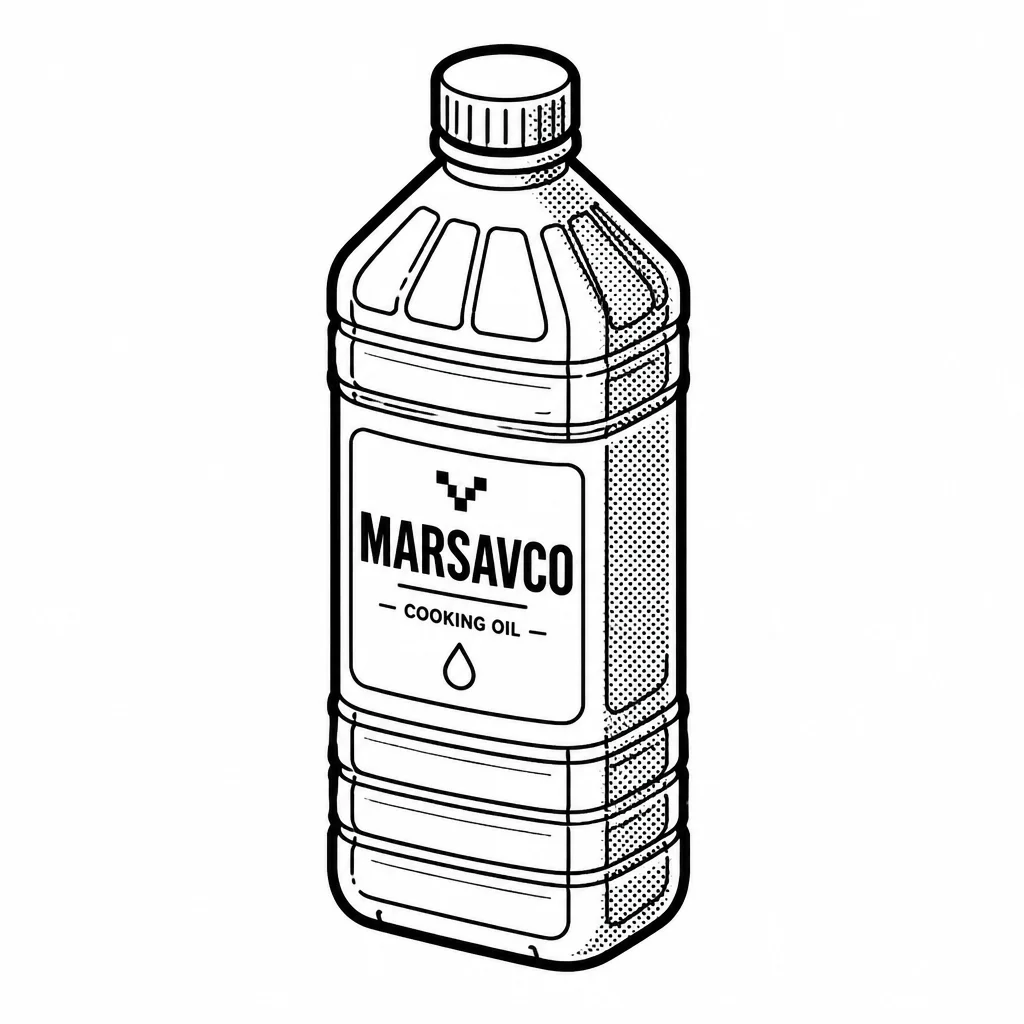
The business is built on simple economics. Soap and cooking oil are cheap to make and cheap to buy, but people run out constantly and buy again. That steady repeat demand is what a consumer-goods company lives on. Marsavco's edge comes from making these goods locally — producing close to customers, under names they recognize, and keeping prices within reach of ordinary families in a region where imported brands can be expensive. Its factories turn raw materials like palm oil into finished products; its real job is getting them onto shelves and into small shops across a vast, hard-to-reach country. The company traces back to the colonial era, when a Belgian businessman started a margarine and soap operation in the Congo in the early twentieth century. Over the decades it grew into one of the country's established manufacturers and survived the turbulence that followed independence and the long Mobutu years, when many foreign-owned businesses were seized by the state. That history matters because it explains why Marsavco is one of the few sizeable consumer-goods makers with deep local roots in a market most global companies have found difficult.
Marsavco is privately held, so it doesn't publish the detailed financials a listed company would. That makes it harder to judge from the outside how profitable or efficient it is. What is clear is the shape of the business: it depends on a poor but enormous market, on keeping factories running in a country with unreliable infrastructure, and on defending its shelf space against imports and cheaper rivals. A company like this earns its keep through volume and staying power rather than flashy growth — the kind of business that is easy to overlook and surprisingly hard to replace.
Saved answer · last researched 10 Nov 2026
Timeline
Soap Made from Palm Oil in Kinshasa
Marsavco started life in the colonial era as SAVCO, a soap maker in Kinshasa that turned palm oil and palm kernel oil into bars of soap. For most of the twentieth century it was one small piece of Unilever's sprawling international manufacturing machine.
Margarine Comes to SAVCO
New margarine-making equipment pushed the company beyond soap, and the name changed to Marsavco, short for Margarinerie Savonnerie du Congo. Soap had built the business; margarine was the first step toward a broader product range.
The Name MARSAVCO Sticks
After the margarine facilities expanded further, the company officially became MARSAVCO. That name has stayed with it ever since.
Detergents and Toilet Soaps
The company modernized again by installing machinery for synthetic detergents and toilet soaps, widening its lineup beyond plain soap and margarine. Each addition made it less dependent on a single product.
From Congo to Cosmetics
When the country was renamed Zaire, the company adapted its own identity to match, turning the old Congo in its name into Cosmetics. It was a small change on paper, but it kept the firm tied to the nation it called home.
Looting and a Broken Economy
The 1990s brought hard times, especially the looting in 1992, which fed an unstable economy and a difficult environment for doing business. The company that had grown steadily for decades now found itself surviving rather than expanding.
Unilever Walks Away
The economic situation grew so difficult that Unilever decided to stop its operations in the DRC, ending decades of ownership. That left Marsavco without the giant behind it and set the stage for a new owner.
The Rawji Group Buys Marsavco
In early 2002 the Rawji Group bought every share of Marsavco and became its sole owner, then launched an ambitious program to reorganize, rehabilitate and expand the company. Marsavco joined a group with operations across Germany, India, China, Uganda, South Africa and the UAE, giving the old soap maker a fresh start.