Understand any stock in simple English
Enter a ticker to learn what the company does and how it makes money.
Supplying Demand, Inc.
Liquid Death sells water and iced tea in eye-catching cans with a heavy-metal, punk-rock brand image.
Liquid Death is a beverage company that sells canned water and iced tea, but really it sells a vibe. It takes something boring and healthy — plain water — and packages it in tallboy cans with skulls, heavy-metal artwork, and joke-heavy marketing, so it feels more like drinking a beer or an energy drink than staying hydrated. Its customers are mostly young people who want something that looks cool in their hand at a concert, a gym, or a party, and who are tired of plastic bottles.
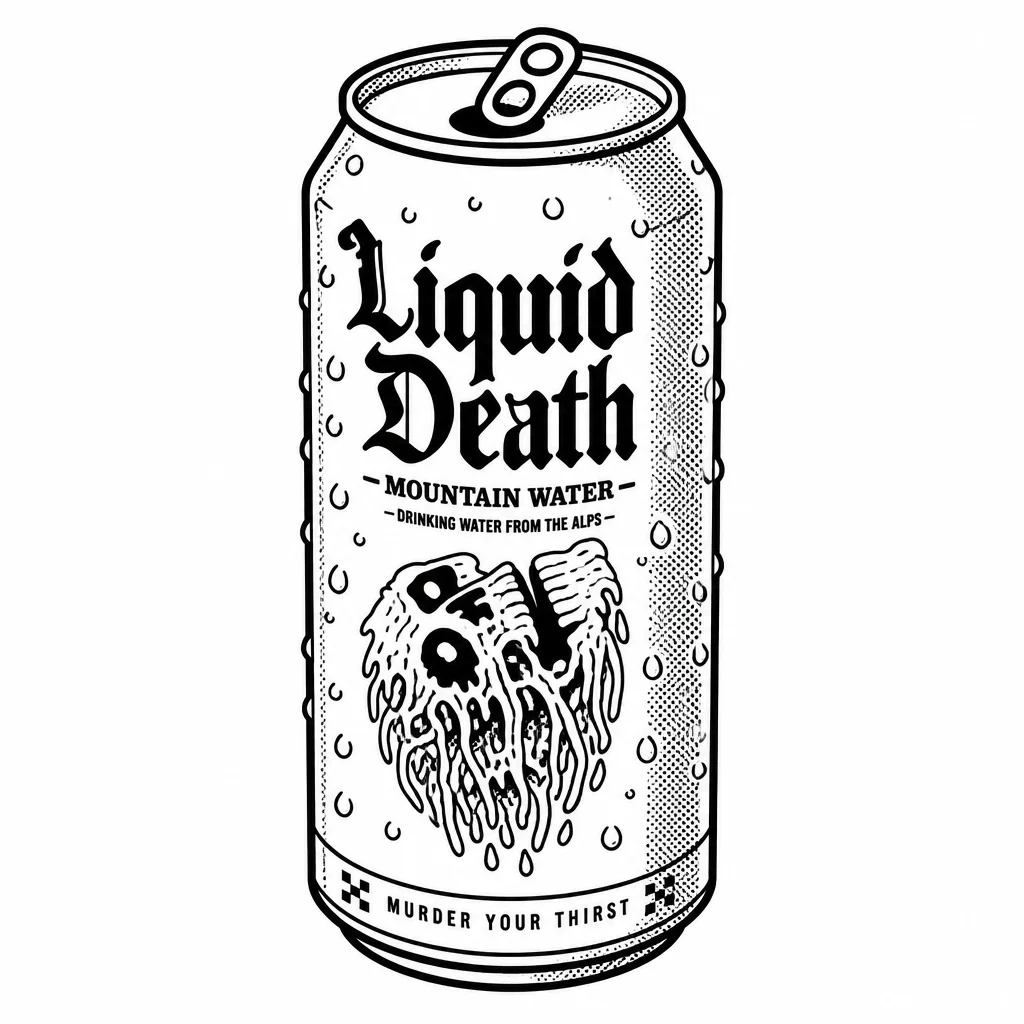
The core product is still water, sparkling water, and flavored sparkling water in cans, plus a line of iced teas it launched more recently. Cans matter for a practical reason: aluminum is recycled at much higher rates than plastic, so the company pitches itself as the less-guilty option, and it sells that story hard. Customers pay a premium for a can of water that costs more than a bottle of the same stuff, and they do it because the brand makes them feel part of something — a loud, funny, slightly rebellious club. The company was founded in 2019 and built its early audience with stunts and internet humor rather than traditional advertising, which kept costs low and made the brand spread on its own. It has grown fast and now sells through major retailers like Target and Walmart as well as online, putting it in direct competition with big bottled-water brands and with other trendy canned-water upstarts. The risk is that a brand built on being loud and funny has to keep being loud and funny, and a fad can fade; the bet is that it can turn a viral image into a lasting shelf-space business.
Its headquarters are in Los Angeles, and it remains a private company backed by venture investors rather than a public stock. That means its finances are not fully public, though it has raised large sums and reported rapid revenue growth in recent years as it expanded from water into tea and pushed into more stores.
Saved answer · last researched 10 Nov 2026
Timeline
Watching Water in Energy Cans
In 2009, graphic designer Mike Cessario was at a Vans Warped Tour and noticed something odd: people were drinking water out of Monster Energy cans. That small observation gave him a big idea. Water could be sold the way energy drinks are sold, with the same attitude and style. The product itself would be plain, but the brand around it would be loud.
A Waterboarding Ad for a Drink That Didn't Exist
Years later, Cessario filed a trademark for the name Liquid Death after trying out options like Southern Thunder. Then came the move that proved the idea was real: a cheap ad with a waterboarding scene pulled in three million views and over a hundred thousand Facebook likes, all before there was any product to buy. People were buying the joke, the attitude, and the brand.
Canned Water Goes on Sale
In early 2019, Liquid Death started selling canned water on its own website, backed by a small seed round. The pitch was never really about water. It was a lifestyle brand aimed at punk, metal, and straight-edge crowds, with water in tallboy cans and marketing that looked like it belonged to a heavy metal band. That combination became the company's core model.
From the Internet to Whole Foods
A year later, the brand made the jump from online-only sales into national retail. It landed in Whole Foods, where Eater called it the fastest-selling water brand on the shelves, and it also got trial space in 7-Eleven stores. The cans that started as an internet stunt were now sitting in real grocery aisles.
Live Nation Bets on Liquid Death
Live Nation led a funding round and agreed to sell Liquid Death exclusively at its events and venues, which put the brand right in front of concert crowds. Revenue reached $45 million that year, and the company kept adding grocery chains like Publix and Sprouts. The concert insight from the very beginning had come full circle.
A Billion-Dollar Water Company
A large funding round valued the company at $1 billion, making it a unicorn. The same year, Liquid Death launched iced tea flavors, its first real step beyond plain water. A brand built on a joke about canned water was now worth more than most serious beverage companies.
Valuation Climbs to $1.4 Billion
Another funding round pushed the valuation to $1.4 billion, and the company reported $263 million in retail sales for the previous year. The numbers kept growing, and so did the pressure to find the next big thing.
Liquid Death Takes On Energy Drinks
Next came a line of better-for-you sparkling energy drinks. Management knew that energy drinks were the top item customers bought alongside Liquid Death, so the move was partly a way to sell more to people already buying its water, and partly a way to reach new ones. That put the company face to face with the giants of the category, Red Bull, Monster, and Celsius.