Understand any stock in simple English
Enter a ticker to learn what the company does and how it makes money.
JSC Kalashnikov Concern
Kalashnikov is a Russian defense company that designs and manufactures firearms and military equipment, including the AK-47 assault rifle and its many descendants.
Kalashnikov is the Russian gunmaker whose name became a global shorthand for the assault rifle. It sells the AK-47 and its modern rifles to armies, police forces, and civilians in many countries. The company is a defense manufacturer: its customers are mostly governments and law enforcement, though it also makes hunting and sporting guns.
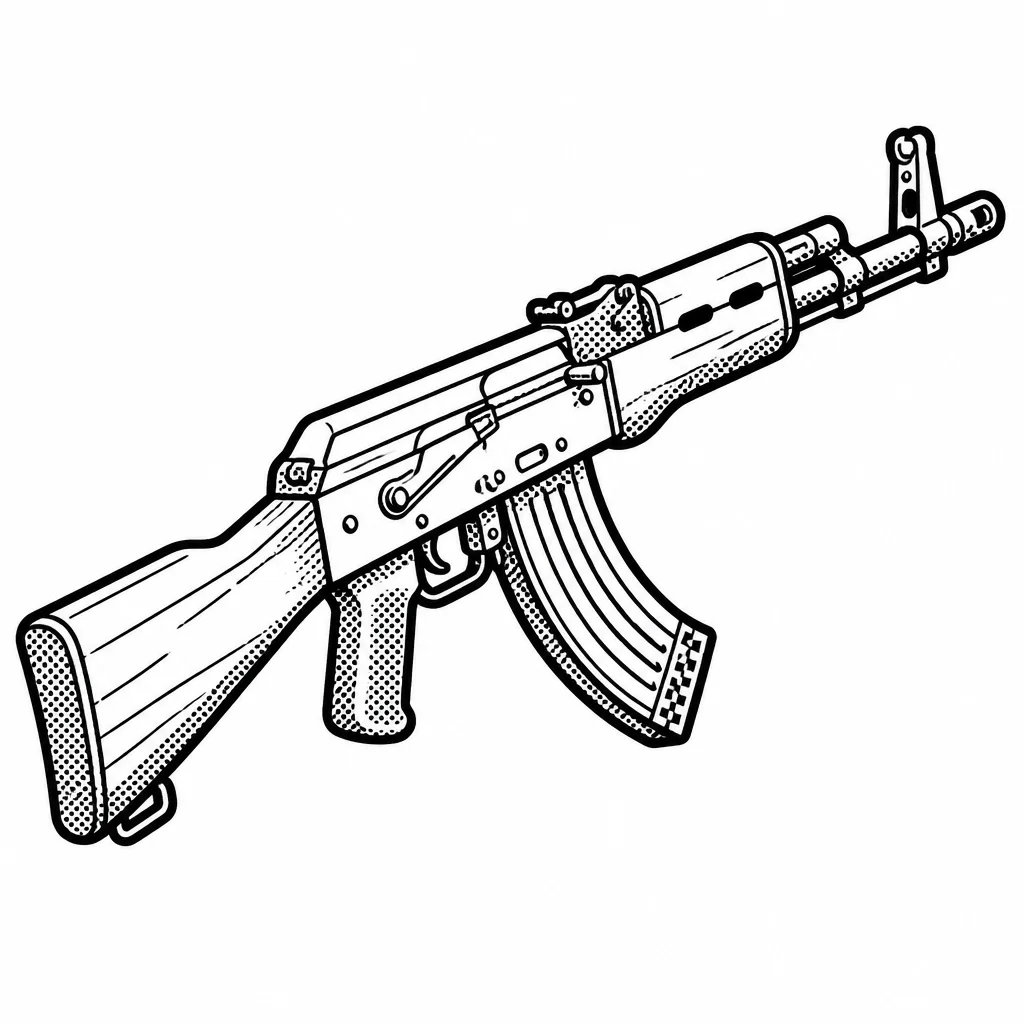
Most of its money comes from state and military orders — big contracts to arm soldiers and police. It also brings in revenue from civilian firearms and from a growing line of military gear beyond rifles, such as combat vehicles, drones, and guided munitions. The reason customers choose Kalashnikov is less about price and more about the brand's brutal simplicity: its rifles are known for being cheap, tough, and hard to break. The company sits in Izhevsk, a city in Russia's Ural region that has been a gunmaking center for centuries. Kalashnikov was founded in 1807 as a state arms factory and took the name of Mikhail Kalashnikov, the man who designed the AK-47, in 2013. It is controlled by the Russian state through Rostec, the country's giant defense conglomerate.
Kalashnikov is a politically exposed business. After Russia's 2022 invasion of Ukraine, Western countries hit the company with sanctions, which cut it off from foreign markets and much of its supply chain. Its fortunes now track Russia's war economy and state military budgets rather than ordinary commercial competition.
Saved answer · last researched 10 Nov 2026
BIG PICTURE
Kalashnikov builds more than 95% of Russia's combat small arms
- 95% Combat small arms made by Kalashnikov in Russia
- 5% Combat small arms made by other Russian producers
Russia's main credit rating agency says one company turns out more than 95 out of every 100 combat small arms made in the country. That company is Kalashnikov. Its biggest customer is the Russian Ministry of Defense, which has signed long-term contracts covering nearly its whole line of small arms, so the factory in Izhevsk knows what it is building until 2030. Almost no rival at home shares this work. Source: ACRA (Analytical Credit Rating Agency), data from 2026
Timeline
A Factory on the Izh River
In 1807, Emperor Alexander I ordered a firearms factory built in Izhevsk, right on the bank of the Izh River next to an ironworks. The idea was simple: making guns needs a lot of iron, so putting the factory next to the iron supply solved the biggest headache from day one. The first products were heavy muskets, and before long the plant was turning out thousands of guns and swords a year. That early start turned Izhevsk into one of Russia's great industrial cities.
Kalashnikov Builds the AK-47
The plant's name would eventually come from a designer, not a river. In 1947, Mikhail Kalashnikov created the AK-47, and the Soviet Army adopted it as its standard rifle that same year. The gun was cheap to make, hard to break, and easy to use, and it became one of the most widely used combat rifles in the world. That single weapon gave the factory global fame and pointed it in a new direction.
The Concern Takes Shape
By 2013, the old factory got a new identity: Kalashnikov Concern, named after the designer himself. The state corporation Rostec merged the Izhevsk plant with a nearby pistol maker, Izhmekh, creating Russia's largest small-arms manufacturer. The new concern made about 95% of Russian small arms, which is a polite way of saying it was the whole game.
New Boss, New Money
The next year brought a jolt. Alexei Krivoruchko took over as CEO, and for the first time private shareholders put their own money into the company. Output jumped sharply, up 230% from the year before, and the business expected to turn an operating profit for the first time since 2008. After years of leaning on the state, the company was starting to look like a real business.
Selling Russia's Rifle
Owning a famous product is not the same as selling it well, and Kalashnikov's product names were a mess. The company launched an aggressive rebranding campaign, complete with a unified naming system so buyers could tell one model from another. That mattered because roughly 80% of its products went to Western markets, where confusing names cost sales. The money came from the company and its private investors, not the state budget.
Kalashnikov Buys Into Drones
Guns were no longer the whole story. In 2015, Kalashnikov bought a stake in Zala Aero, a drone developer, and the two began working on reconnaissance drones and the stations that control them. It was a small step into a new business line, but it hinted that the company saw its future as broader than rifles.
The State Steps Back
The private-money experiment kept reshaping the company. Kalashnikov rolled out new rifles and handguns, and early in 2017 it added 30% more workers to keep up with rising export demand. Then came the twist: Rostec sold a large stake to managing director Alexei Krivoruchko, making the Russian state a minority shareholder. The company also began pushing into civilian products and new lines like electric mobility.
An Electric Car From a Rifle Maker
That push produced one of the strangest headlines in the company's history. Kalashnikov showed off the CV-1, an electric car prototype styled after a 1970s Soviet wagon and claiming a 350 km range. It also supplied electric motorcycles and three-wheelers to Russian police during the World Cup, and talked about selling electric bikes and exporting electric vehicles to Saudi Arabia. A gun maker was now pitching itself as a mobility company.
A New Logo and a New Slogan
By 2025, the company refreshed its logo and adopted the slogan "promoting peace," which is quite a line for a small-arms maker. The product list now ran from drones to electric motorcycles. The point was clear: Kalashnikov wanted to be seen as a diversified defense and technology group, not just the maker of one famous rifle.
Combat-Tested Drones Go Mainstream
The drone bet from a decade earlier finally paid off in a big way. The newest Goliath 2.0 and Karakurt 2.0 reconnaissance drones entered serial production, upgraded using feedback from actual combat. Kalashnikov now describes that combat experience as one of its real competitive advantages, and foreign customers treat the group as a priority partner because of it. The rifle factory by the river had become a technology group selling lessons from the battlefield.