Understand any stock in simple English
Enter a ticker to learn what the company does and how it makes money.
Smith & Wesson Brands, Inc.
Smith & Wesson makes firearms — handguns, rifles, and suppressors — for ordinary buyers, police, and the military.
Smith & Wesson is one of America's oldest gun makers, and today it sells the firearms people actually buy: handguns for self-defense and concealed carry, long guns for sport and hunting, and suppressors that screw onto the end of a barrel to quiet the bang. Its customers are mostly regular consumers walking into a gun store, plus law enforcement agencies and the military who buy in bulk. The company is headquartered in Maryville, Tennessee, a move it made from Massachusetts in 2023 after nearly two centuries in New England — a relocation driven as much by politics as by business, since Massachusetts lawmakers kept pushing bills that would ban the very guns Smith & Wesson sells.
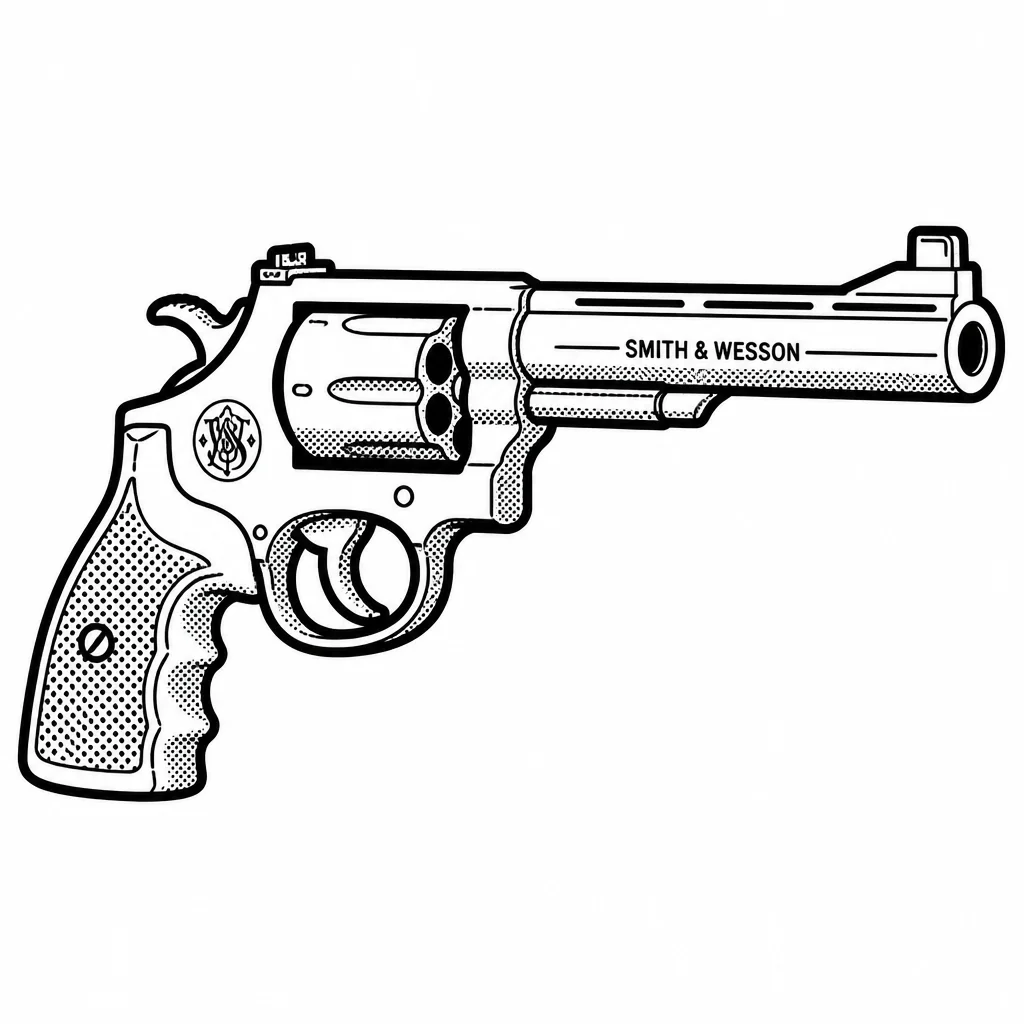
The business runs on a simple engine. It designs and builds guns in its own factories, sells them through distributors and big retailers, and collects a profit on each one. Most of the money comes from handguns, because that is what the concealed-carry wave made popular. But the industry is brutally cyclical: gun sales spike when people fear new restrictions or feel unsafe, then sag when the panic fades and shelves are already full. During the pandemic-era surge, Smith & Wesson's revenue jumped past $1 billion, and it has since settled back down as demand normalized. Its main rival is Sturm, Ruger & Co., another American maker chasing the same buyers, alongside a flood of imported pistols from brands like Glock and SIG Sauer. What makes Smith & Wesson interesting is how it treats cash. The company has been buying back its own stock aggressively — in fiscal 2024 it repurchased roughly 9% of its shares outstanding, and buybacks have continued since — because management sees the stock as cheap relative to the cash it throws off. It also pays a small dividend. That is a very shareholder-friendly posture for a company whose fortunes swing with politics and fear. A new gun-control law, a mass shooting, or a shift in which states allow concealed carry can move sales overnight, and no amount of brand heritage changes that.
For all its history — the company dates to 1852 and its revolvers are legend — Smith & Wesson today is a lean, focused American manufacturer. It spun off its outdoor gear and knife business, American Outdoor Brands, in 2020 to concentrate purely on firearms. It is exposed to lawsuits, including ones from cities and states trying to hold gun makers liable for crimes committed with their products, though a 2005 federal law shields the industry from most such claims. The brand is the moat: people ask for a "Smith & Wesson" by name the way they ask for a Kleenex, and that recognition lets it charge real prices. But the moat doesn't stop the tide. When the country stops buying guns in a panic, Smith & Wesson feels it fast.
Saved answer · last researched 14 Nov 2026
BIG PICTURE
Smith & Wesson sells about 16 of every 100 new handguns bought in America
- 17% US commercial handgun units sold by Smith & Wesson
- 83% Handguns sold by all other makers
Smith & Wesson's share of handgun units sold to ordinary American buyers reached 17 percent, according to its 2026 investor presentation. That is the market where most of its money comes from, and it means the brand sits near the top of a crowded field of pistol makers. The company says new concealed-carry models like the Bodyguard are winning over buyers. Source: Smith & Wesson Investor Day 2026 presentation (Quartr summary), data from 2026
Timeline
Two Men and a Failed Gun
In 1852, Horace Smith and Daniel Wesson teamed up in Connecticut to make a strange new kind of handgun: a repeating pistol that fired bullets with no brass case at all — the ammunition burned up inside the gun. The idea was clever, but it didn't sell. The venture failed, and the two men went back to the drawing board and started a second partnership a few years later. What they did with that second chance would outlast them both.
The Little Revolver That Fired Real Bullets
The new partnership built small revolvers that flipped open to load, and they fired self-contained metal cartridges — pre-loaded bullets you could just drop in, in a tiny caliber Smith & Wesson designed themselves. The timing was lucky: the Civil War created a huge appetite for revolvers, and Smith & Wesson became one of the country's leading gun makers.
The Army Says Yes to a Big Revolver
When the war ended, demand for small pocket guns dried up, so the company went bigger — a heavy-frame revolver in a more powerful caliber. The gamble paid off: the US Army adopted it, making it the first cartridge-firing revolver in American military service. Smith & Wesson had gone from pocket pistols to the soldier's sidearm.
The Wesson Family Sells Out
In 1965, the Wesson family sold its controlling stake to Bangor Punta, a sprawling American conglomerate. Under that roof, the company pushed beyond guns into police equipment and other gun-related products, and by the late 1970s it was the company everyone in the industry envied.
The Deal That Nearly Killed the Company
In 2000, Smith & Wesson cut a deal with President Bill Clinton: it would change how its guns were designed and sold in exchange for a preferred buying program. Gun owners saw it as a betrayal. The NRA and other groups organized a boycott, thousands of retailers and tens of thousands of customers walked away, and the CEO was pushed out. By the end of that year the stock was worth pennies a share, and the company dropped its smart-gun plans after nearly going out of business. A single handshake had almost erased a century and a half of goodwill.
The M&P Pistol Wins Back the Market
A few years after that brush with death, Smith & Wesson launched the M&P, a polymer pistol aimed at both ordinary buyers and police departments. It clicked. The company climbed back to the front of the polymer pistol market, proving it could still win customers without a government deal.
A Rifle of Its Own
Then came the M&P modern sporting rifle, which let Smith & Wesson sell the whole package — handgun and long gun — to the same buyers. The company says it grabbed the leading share of that rifle market, turning a pistol comeback into a broader firearms business.
A Second Business in Security
In 2009, Smith & Wesson bought USR, a perimeter security company, creating a second segment alongside firearms. It was a bet that the company's name could stretch beyond guns — an early hint of the conglomerate it would later try to become.
The Names on the Door Kept Changing
For years the company's official name drifted from its famous brand: it was Smith & Wesson Holding Corp through 2016, then American Outdoor Brands Corp through 2020, before finally returning to Smith & Wesson Brands. Each name told you what management thought the company was at that moment — a holding company, an outdoor conglomerate, and at last a gun maker again.
Adding Suppressors to the Shelf
The addition of Gemtech suppressor products widened what Smith & Wesson could sell alongside its guns. It was a small step, but it pointed to a bigger idea: sell the customer everything around the firearm, not just the firearm.
Back to the Lever-Action Rifle
In 2024, the company did something it had never done: it introduced its first lever-action rifle, the Model 1854, a .44 Magnum with modern touches. The move filled out its long-gun lineup alongside semi-automatic rifles and shotguns — and, with a wink to its own history, the model number echoed the year the founders first went into business.
Savage Arms Joins the Family
Smith & Wesson then agreed to buy Savage Arms from a JDH Capital affiliate in a merger valuing Savage at about $160 million, with JDH becoming the company's largest shareholder and taking board seats. The deal made Smith & Wesson a much bigger American gun maker and gave it real weight in hunting rifles, a category where it had been thin. From two men who couldn't sell a caseless bullet, it had become a company buying whole brands.