Understand any stock in simple English
Enter a ticker to learn what the company does and how it makes money.
Hancock Prospecting Pty Ltd
Hancock Prospecting is a private Australian mining company that digs up iron ore and other resources and sells them, mainly to steelmakers in Asia.
Hancock Prospecting is one of Australia's biggest mining companies, and almost everything it does flows from one product: iron ore. It owns huge mines in the Pilbara region of Western Australia, a remote, red-dirt corner of the country that happens to sit on some of the richest iron ore deposits on Earth. The company digs up that ore, processes it, and ships it mostly to steel mills in China, Japan, and South Korea, where it gets turned into the steel used in buildings, cars, and bridges.
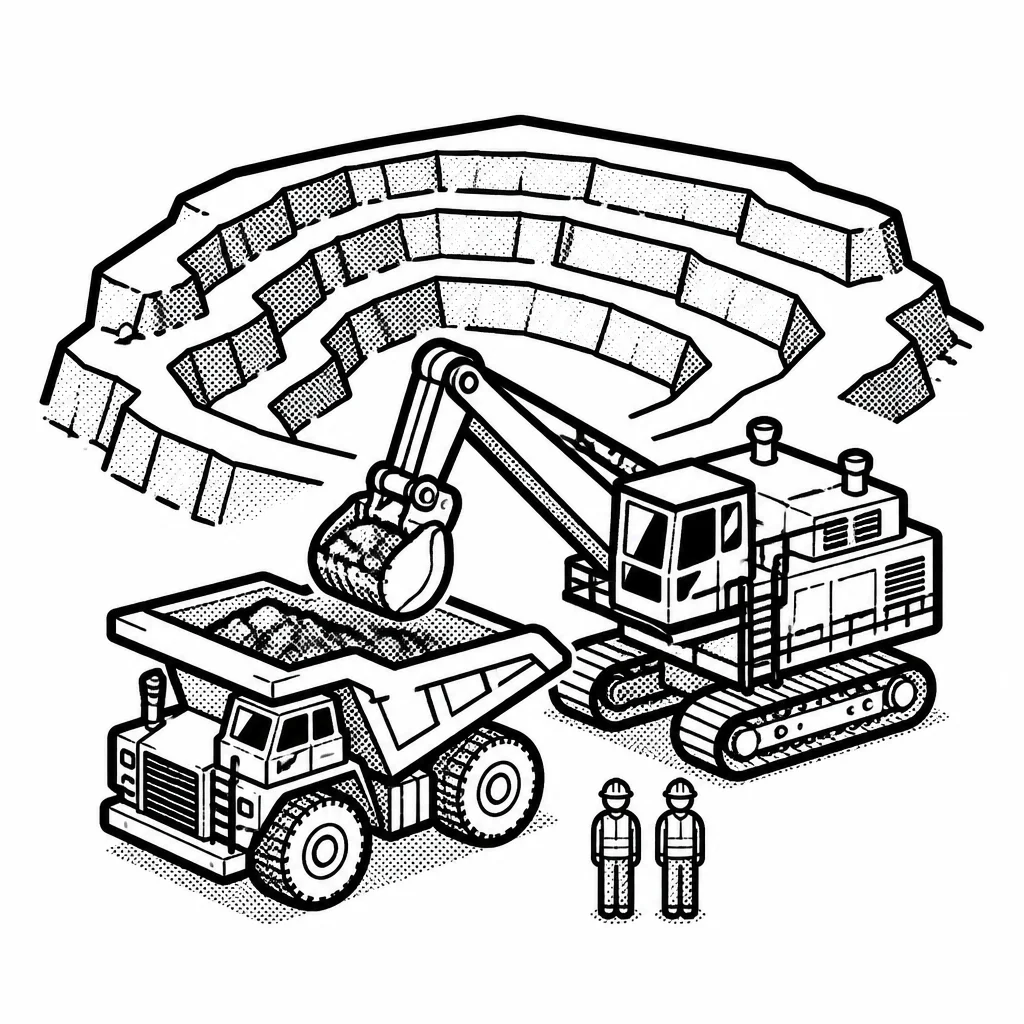
The business is dominated by the Roy Hill mine, which Hancock controls and which started shipping ore in 2015. Roy Hill is a massive operation—a mine, a railway, and a port all built together—and it turned Hancock into a genuine volume producer rather than just a company sitting on valuable land. Hancock also holds a large stake in the Hope Downs mines, run as a joint venture with Rio Tinto, and it collects royalties from other miners operating on ground it owns. Those royalties are a beautiful business: money flows in whether or not Hancock lifts a shovel, because other companies do the digging and pay Hancock for the right to mine there. Iron ore is a commodity, so Hancock cannot charge more than the market price, and that price swings wildly with Chinese steel demand. That makes it a price-taker with enormous fixed costs—mines, trains, and ports are expensive to build and run—so profits can gush when ore prices are high and shrink fast when they fall. Its edge is scale and low-cost deposits: the Pilbara ore is cheap to extract and close enough to Asian buyers to keep shipping costs manageable.
The company is private and tightly held, controlled by the family of its late founder, Lang Hancock, and his daughter Gina Rinehart, one of Australia's wealthiest people. Being private means no stock ticker, no quarterly earnings calls, and no outside shareholders demanding dividends—which lets it make big, long-horizon bets like Roy Hill. It has also branched into other resources and agricultural interests, but iron ore remains the engine that pays for everything else.
Saved answer · last researched 10 Nov 2026