Understand any stock in simple English
Enter a ticker to learn what the company does and how it makes money.
Lynas Rare Earths Limited
Lynas mines and processes rare earth minerals in Australia and Malaysia, then sells them to manufacturers around the world.
Lynas Rare Earths is a mining and chemicals company that digs up rare earth minerals and turns them into the special ingredients that go into very strong magnets. Those magnets end up in electric car motors, wind turbines, headphones, hard drives, and plenty of military equipment. Rare earths are not actually that rare in the ground, but separating them into pure, usable metals is slow, dirty, and technically hard, which is why only a handful of companies do it at scale.
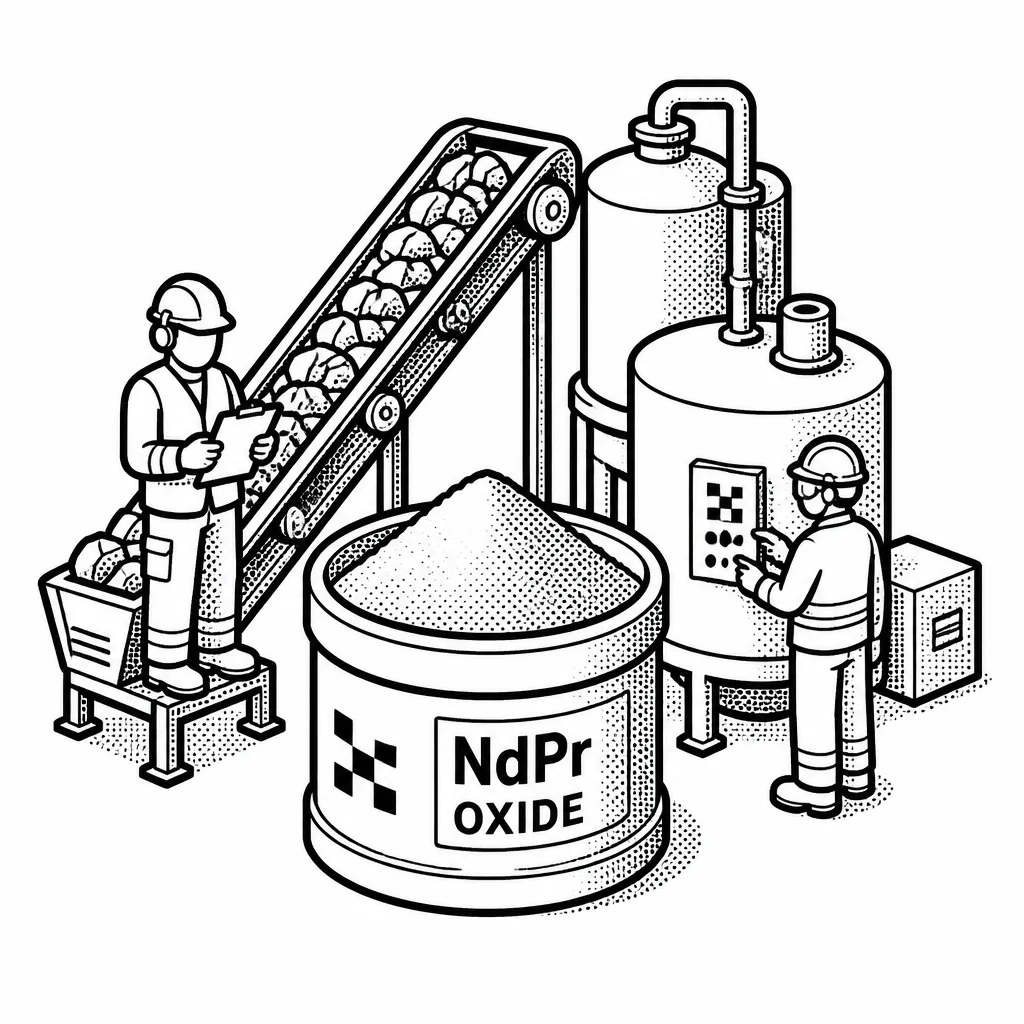
The business runs in two main parts. In Western Australia, Lynas mines ore at a site called Mount Weld, one of the richest rare earth deposits in the world. The ore is then shipped to a processing plant in Kuantan, Malaysia, where it is cracked, separated, and refined into products like neodymium and praseodymium, the key ingredients for high-performance magnets. Lynas sells these materials mostly to magnet makers and industrial customers in Asia and the West, and it earns money on the price of the separated rare earths it produces. The big strategic point about Lynas is that it is the largest rare earth producer outside China. China dominates the global rare earth supply chain, and Western governments worry about relying on a single country for materials used in defense and clean energy. That has made Lynas a quiet geopolitical asset: it receives support from the US and Australian governments to build new processing capacity, including a heavy rare earth facility in Texas and a separation plant in Kalgoorlie, Western Australia.
There are real risks. Rare earth prices are volatile and have slumped from their 2022 highs, which hits Lynas's revenue. The Malaysian plant has also faced environmental and regulatory battles over low-level radioactive waste, and the company depends on shipping ore halfway around the world because processing in Malaysia is cheaper. Still, with China tightening export controls on rare earth technology, Lynas's position as the main non-Chinese supplier keeps it strategically important, and it is investing heavily in expanding its processing and heavy rare earth output.
Saved answer · last researched 12 Nov 2026