Understand any stock in simple English
Enter a ticker to learn what the company does and how it makes money.
Culture Amp Pty Ltd
Culture Amp sells software that helps companies survey their employees, understand how people feel at work, and act on that feedback.
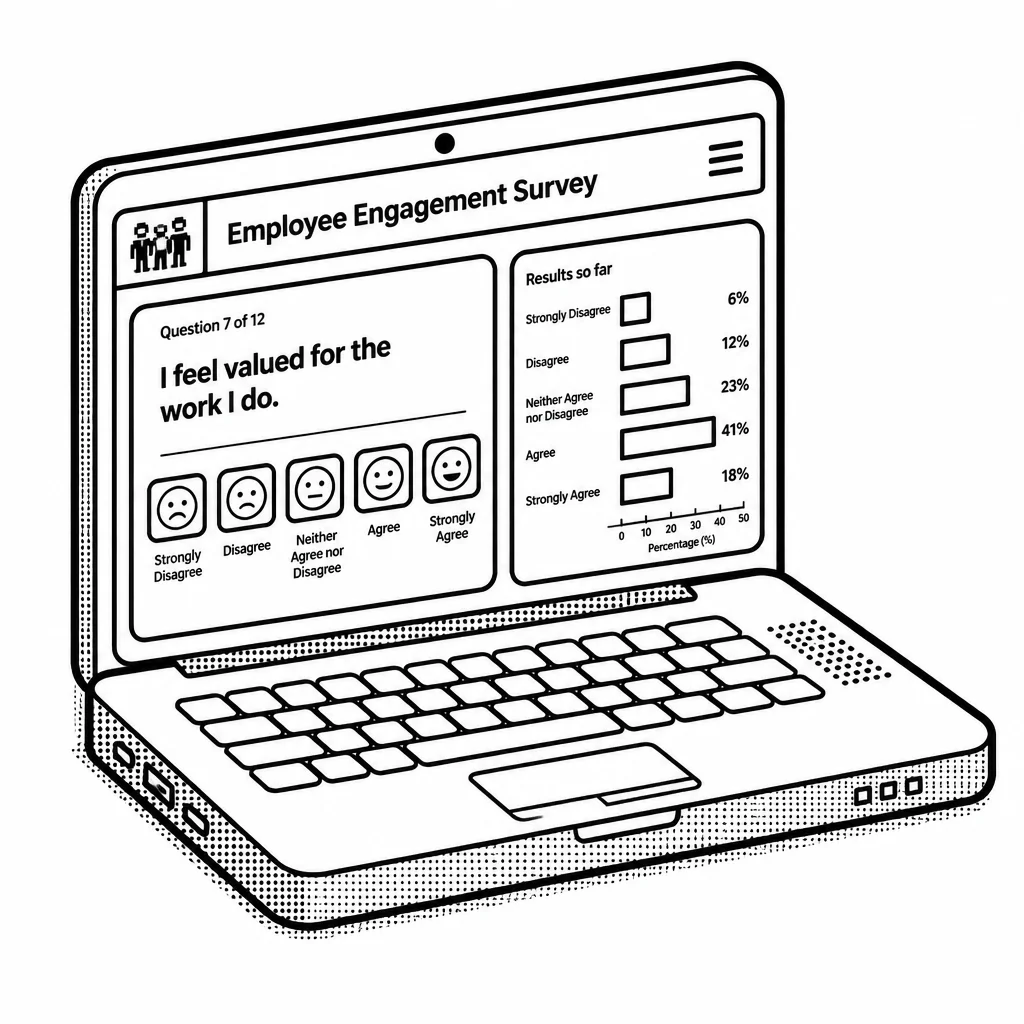
Culture Amp is a software company that helps employers figure out how their people are actually doing. Its core product is the employee survey: companies use Culture Amp to ask staff how engaged, stressed, or well-supported they feel, then get dashboards that show which teams are thriving and which are struggling. Around that survey engine it has built tools for performance reviews, goal-setting, and gathering feedback from managers and peers.
The business model is plain subscription software. Companies pay Culture Amp per employee, usually on an annual contract, and the fee scales as the customer grows. Its customers skew toward mid-sized and large employers — the kind with thousands of staff where a boss cannot personally check in on everyone. The pitch is that replacing guesswork with real data helps firms hold onto people, which matters enormously when replacing an employee is expensive and slow. Culture Amp was founded in Melbourne in 2009 by Didier Elzinga, Jon Williams, Doug English, and Rod Hamilton, and it has grown into one of Australia's best-known software exports, with offices spanning the United States, Europe, and Asia. It competes with big HR suites like Workday and SAP, plus survey specialists such as Qualtrics, and its edge is being focused and easy to use rather than a giant all-in-one system. The company has raised well over $300 million from investors, including a round in 2021 that valued it above $1 billion, making it a "unicorn."
Like most venture-backed software firms, Culture Amp has burned cash to grow quickly and has not always been profitable. That became an issue as the easy money of the 2021 boom dried up. In 2024 the company raised a fresh round of roughly $100 million and, according to reporting at the time, cut about a tenth of its staff to sharpen its focus on profitability. It also bought a small Australian people-analytics firm called Orgnostic to strengthen the data side of its product. The bet is that helping companies keep good people is a need that does not disappear when budgets get tight.
Saved answer · last researched 10 Nov 2026