Understand any stock in simple English
Enter a ticker to learn what the company does and how it makes money.
bunq B.V.
bunq is a Dutch digital bank that lets people and small businesses hold, spend, and save money through a mobile app, earning most of its money from subscriptions and interest.
bunq is a digital bank you use entirely through your phone. There are no branches and no paper forms. You download the app, sign up with a photo of your ID, and within minutes you have a bank account you can use to pay bills, send money to friends, and hold several currencies at once.
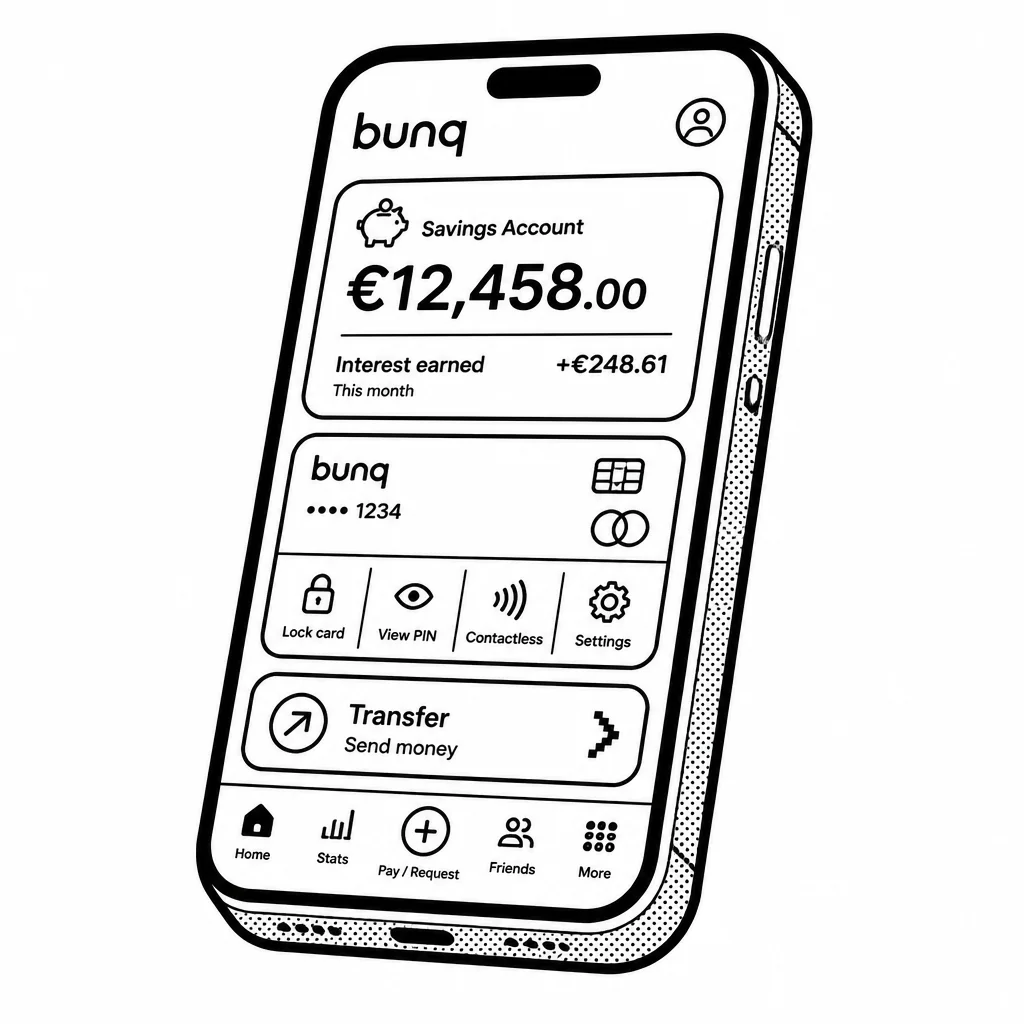
What makes bunq different from a normal bank is how it makes money. Most banks profit from lending out your deposits or charging hidden fees. bunq instead charges a monthly subscription, roughly in the range of a few euros to a bit under twenty euros depending on the plan, and it also earns interest on the money customers leave with it. So the customer is the client, not the product. It targets freelancers, expats, digital nomads, and small business owners — people who move between countries and find traditional banks slow and fussy. The company was founded in Amsterdam in 2012 by Ali Niknam, a Dutch entrepreneur who had already built and sold a payments company. He funded bunq largely himself for years, which is unusual for a startup and let it grow without the pressure of outside investors demanding a quick exit. bunq has been profitable and has expanded across Europe, and it has pushed into new areas like savings accounts that pay competitive interest and tools for small businesses to manage their money.
Its main rivals are other app-first banks such as Revolut and N26, plus the big established banks that are slowly catching up with better apps. The appeal is convenience and flexibility, especially for people whose lives span several countries. The vulnerability is that switching banks is easy, subscription fees are visible and easy to compare, and a digital bank has to keep earning trust on security and reliability to stop customers drifting away.
Saved answer · last researched 10 Nov 2026