Understand any stock in simple English
Enter a ticker to learn what the company does and how it makes money.
Boston Dynamics, Inc.
Boston Dynamics builds advanced robots—mostly four-legged and humanoid machines—that it sells to businesses, researchers, and governments for inspection, logistics, and research work.
Boston Dynamics makes robots that walk, run, and jump. The company is best known for machines that look like animals or people, and it sells them to industrial customers, researchers, and government agencies who need to inspect dangerous places, move things around warehouses, or push the boundaries of what robots can do.
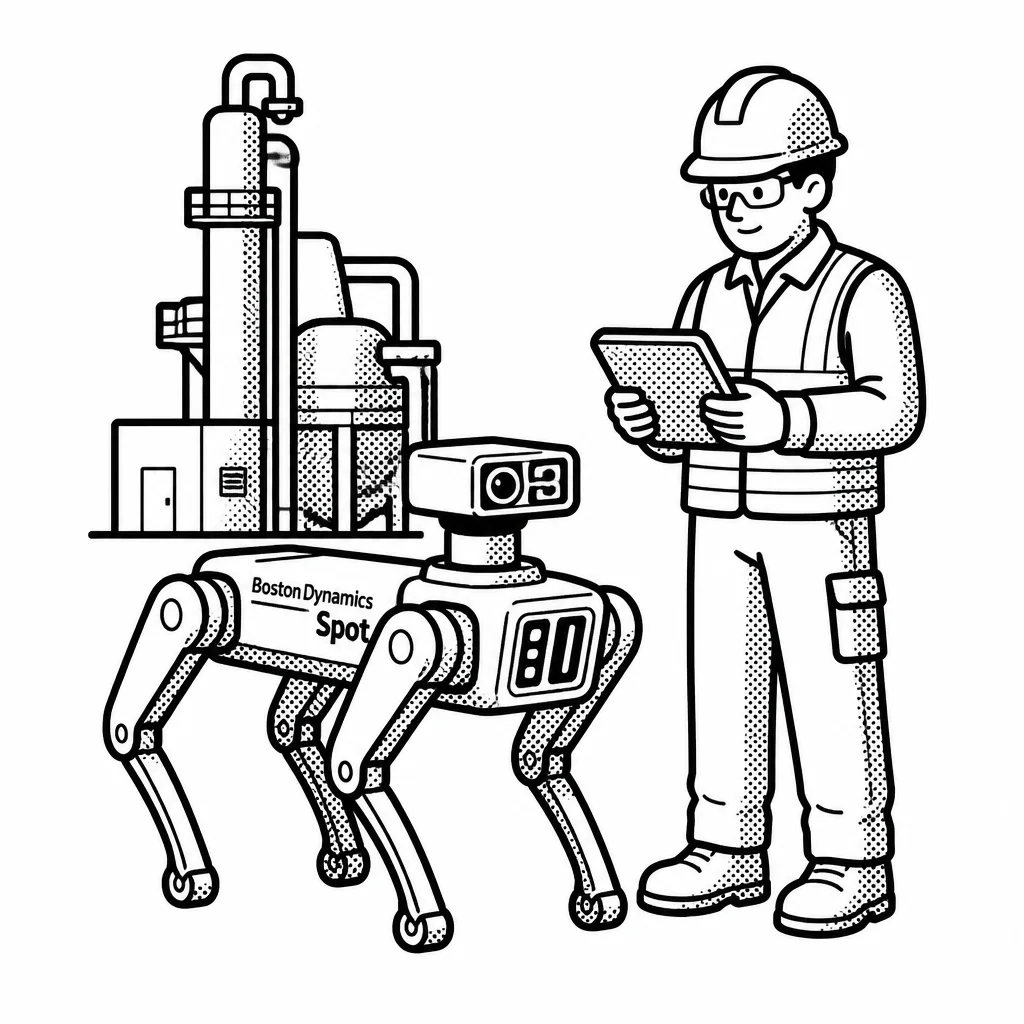
Its main products are Spot, a four-legged robot about the size of a large dog that patrols factories and inspects equipment in places humans shouldn't go; Stretch, a boxy robot with a long arm that unloads trucks and moves boxes in warehouses; and Atlas, a humanoid robot that started as a research stunt and is now being developed toward real commercial work. The money comes mostly from selling and leasing these robots, plus software and support contracts that keep them useful. Customers choose Boston Dynamics because its machines handle messy, unpredictable physical spaces—stairs, gravel, tight corners—that wheeled robots and fixed machinery can't. The company has a tangled ownership history that says a lot about the business. It spun out of MIT in the early 1990s, spent years funded largely by military research contracts, was bought by Google in 2013, sold to SoftBank in 2017, and then mostly acquired by Hyundai Motor in 2021. That revolving door reflects the awkward truth of the business: the robots are spectacular engineering, but turning spectacle into steady profits has been hard. Boston Dynamics burned through years of hype videos before selling machines in meaningful volume, and it has at times cut staff and shifted strategy as revenue lagged expectations. The bigger opportunity now is logistics and manufacturing labor. Warehouse and factory work is repetitive, physically punishing, and increasingly hard to staff, and Stretch is aimed squarely at that gap, competing with automation players like Amazon's internal robotics arm and other warehouse automation firms. Atlas, meanwhile, is part of a crowded race toward humanoid robots alongside Tesla and several well-funded startups. Boston Dynamics' edge is that its machines already work in the real world rather than in a demo video—but its challenge is making them cheap and reliable enough that customers buy fleets, not one-offs.
Hyundai's ownership matters here. The parent is a giant automaker, and it wants to use Boston Dynamics technology in factories and eventually in consumer and service robots, which gives Boston Dynamics a deep-pocketed backer and a built-in customer. The risk is the same as ever: the technology is dazzling, but the company's finances have historically been thinner than the YouTube views suggest. It is a pioneering robotics firm still figuring out how to turn incredible machines into a durable, profitable business.
Saved answer · last researched 4 Nov 2026
BIG PICTURE
Even in humanoid robots, Boston Dynamics holds just 2.2% of a market where the top 10 control only 20.5%
- 5% Toyota
- 4.6% Tesla
- 2.4% UBTech
- 2.2% Boston Dynamics
- 1.4% SoftBank
- 84.4% Others
The humanoid robot market is still so new that no company runs it. Toyota led with 5 percent in 2023, Tesla had 4.6, and Boston Dynamics held 2.2 percent, with revenue of about $52.7 million. For a company famous for viral robot videos, that small slice shows the money is spread thin across many players and the race is wide open. Source: TBRC, data from 2023
Timeline
A Leg Lab Spin-Off
Marc Raibert left MIT's Leg Lab to start Boston Dynamics, a small shop built on one stubborn idea: robots that move like animals, with legs that balance and run instead of rolling on wheels. Robert Playter joined soon after. The company spent years doing hard research, and that work quietly set the stage for the leaping, sprinting machines that would later make it famous.
BigDog Walks Into View
The first robot most people ever saw from Boston Dynamics was BigDog, a four-legged machine funded by the Pentagon's research arm, DARPA. The idea was a robotic pack mule that could haul gear over rough ground for soldiers. It moved in a way that looked almost alive, and videos of it spread widely. But it was shelved: too loud for combat.
Google Buys In
Google bought Boston Dynamics, pulling the company out of its life as a defense contractor and into a big corporate home. It was a strange fit on paper, a search giant owning a maker of running robots, but it signaled that the most famous legged robots in the world might have a future beyond military research.
SoftBank Takes Over
A few years later, Google's parent Alphabet sold the company to Japan's SoftBank. The sale said something simple and a little uncomfortable: the people who owned Boston Dynamics were not convinced humanoid robots were ready to become a real business. The robots were amazing. The customers were not there yet.
Spot Goes on Sale
Then came Spot, a dog-shaped robot anyone could buy, for about the price of a nice car. It was the company's first commercially available robot, and it marked the real turn from research and defense contracts toward selling products to the public. After decades of stunning videos, Boston Dynamics finally had something with a price tag.
Hyundai Buys a Robot Company
Hyundai Motor Group, a carmaker, bought a controlling stake for around a billion dollars and later completed the purchase. The logic was not financial cleverness for its own sake: Hyundai wanted robots inside its real factories, doing real production work. A car company was now the owner of the world's most famous robot lab.
Stretch Reaches for Warehouses
That same year, Boston Dynamics showed off Stretch, its first robot designed from scratch for one job: moving boxes in warehouses. It was a sign the company was done building demo machines and was now aiming at workplaces where the work is dull, heavy and constant.
Atlas Switches to Electric
The old Atlas, the humanoid that did backflips in viral videos, ran on hydraulics, a power system that is strong but messy and hard to mass-produce. The company retired it and built a new all-electric Atlas. That redesign was the first step toward turning a stunt machine into a humanoid product someone might actually buy.
A New CEO for Physical AI
After six years as CEO, Robert Playter stepped down, with the finance chief holding the job in the meantime. The company then named Rohit Prasad, a former Amazon Alexa executive, as its new leader. His assignment was clear: push harder into what the industry calls Physical AI, and turn years of brilliant engineering into a scaled business.
Hyundai Tightens Its Grip
Hyundai moved to buy out SoftBank's remaining stake, valuing Boston Dynamics at roughly three billion dollars. But the picture underneath was not pretty: the company had piled up large losses, its IPO had been delayed, and plans to deploy Atlas in factories had slipped toward 2028. Hyundai's answer was to go all in, aiming to put Atlas to work at its Georgia plant and build capacity for tens of thousands of units a year. The robot that once did backflips for the internet was now a bet on the factory floor.