Understand any stock in simple English
Enter a ticker to learn what the company does and how it makes money.
1X Technologies AS
1X builds humanoid robots designed to do everyday work in homes and businesses.
1X makes humanoid robots — machines shaped like people, with arms, legs, and hands — and its big bet is that these robots will eventually do boring or dangerous chores in warehouses, factories, and homes. The company's first commercial product is Neo, a two-legged robot standing a little over five feet tall that can walk, carry things, and be controlled remotely by a human operator. Its earlier robot, Eve, is a wheeled machine already being tested for security and logistics work.
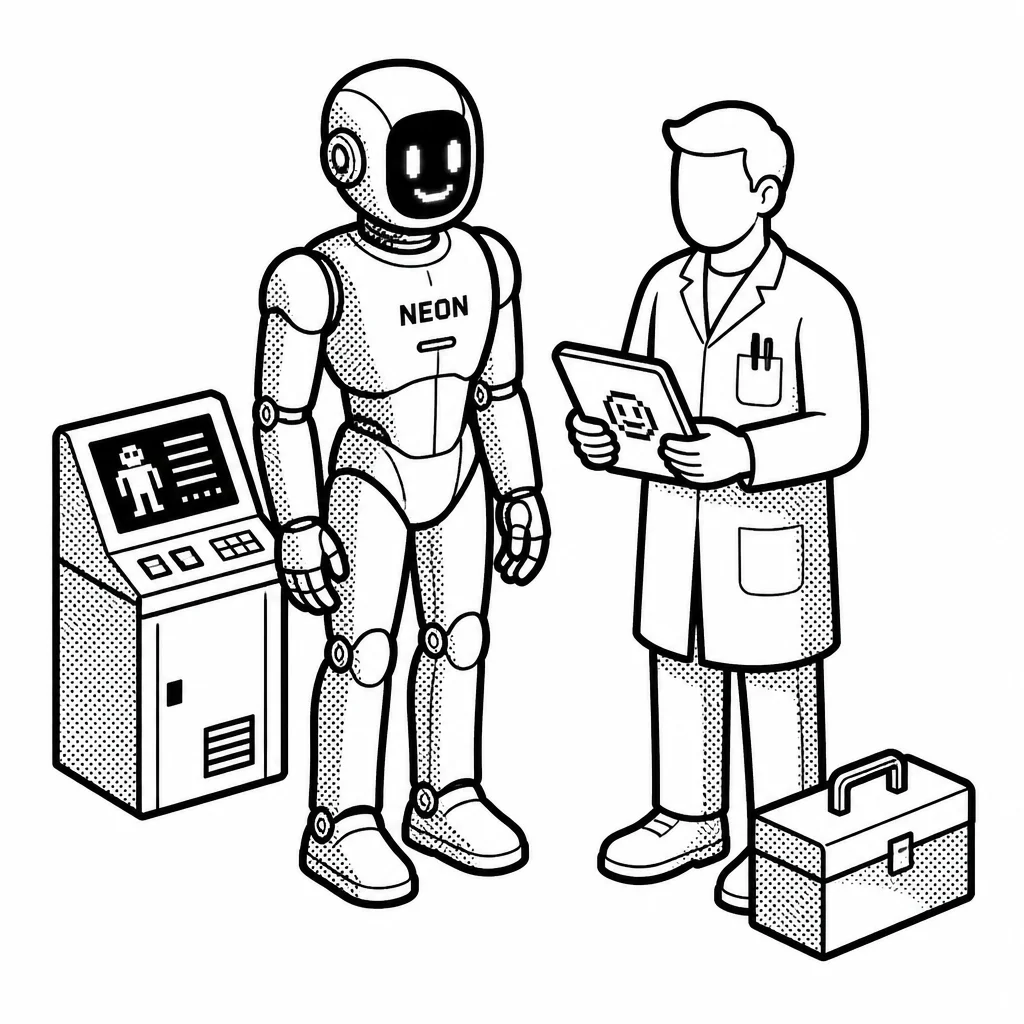
The business model is simple: build the robots, sell or lease them to customers, and keep earning money from software and services around them. 1X has said it plans to sell Neo to consumers for around $20,000, or rent it for roughly $500 a month, which is a striking price for a walking robot. The company raised a big $100 million Series B round in early 2024, led by EQT, and has drawn backing from OpenAI, which is a major signal of confidence in its approach. Most humanoid robot makers chase factory work, where robots can do repetitive tasks alongside machines. 1X is different: it is aiming squarely at the home. That is a much harder place to operate, full of stairs, pets, and unpredictable mess, but it is also a much bigger market if it works. The catch is that fully autonomous home robots are still years away, so early Neo units lean on human teleoperation — a person wearing a headset guiding the robot from afar.
Competition is heating up fast. Tesla is developing its Optimus robot, Figure-type startups are raising huge sums, and Amazon has been investing heavily in warehouse robotics. 1X's edge is focus and a head start in the home, but the company is still small, private, and unproven at scale. Whether it can turn clever demos into reliable, affordable robots people actually want in their living rooms is the question that will decide its future.
Saved answer · last researched 10 Nov 2026