Understand any stock in simple English
Enter a ticker to learn what the company does and how it makes money.
Bacardi Limited
Bacardi makes and sells famous spirits and wines, like Bacardi rum and Grey Goose vodka, to drinkers around the world.
Bacardi is one of the world's biggest spirits companies, and its job is simple to describe: it makes alcoholic drinks that people pour at parties, sip at bars, or keep on a shelf at home. You have almost certainly seen its bottles even if you have never bought one. The company owns a family of well-known brands, with Bacardi rum as the anchor and Grey Goose vodka and Bombay Sapphire gin as its other headline names. It also sells tequila, whisky, vermouth and wine, so it covers a lot of what ends up in a cocktail glass.
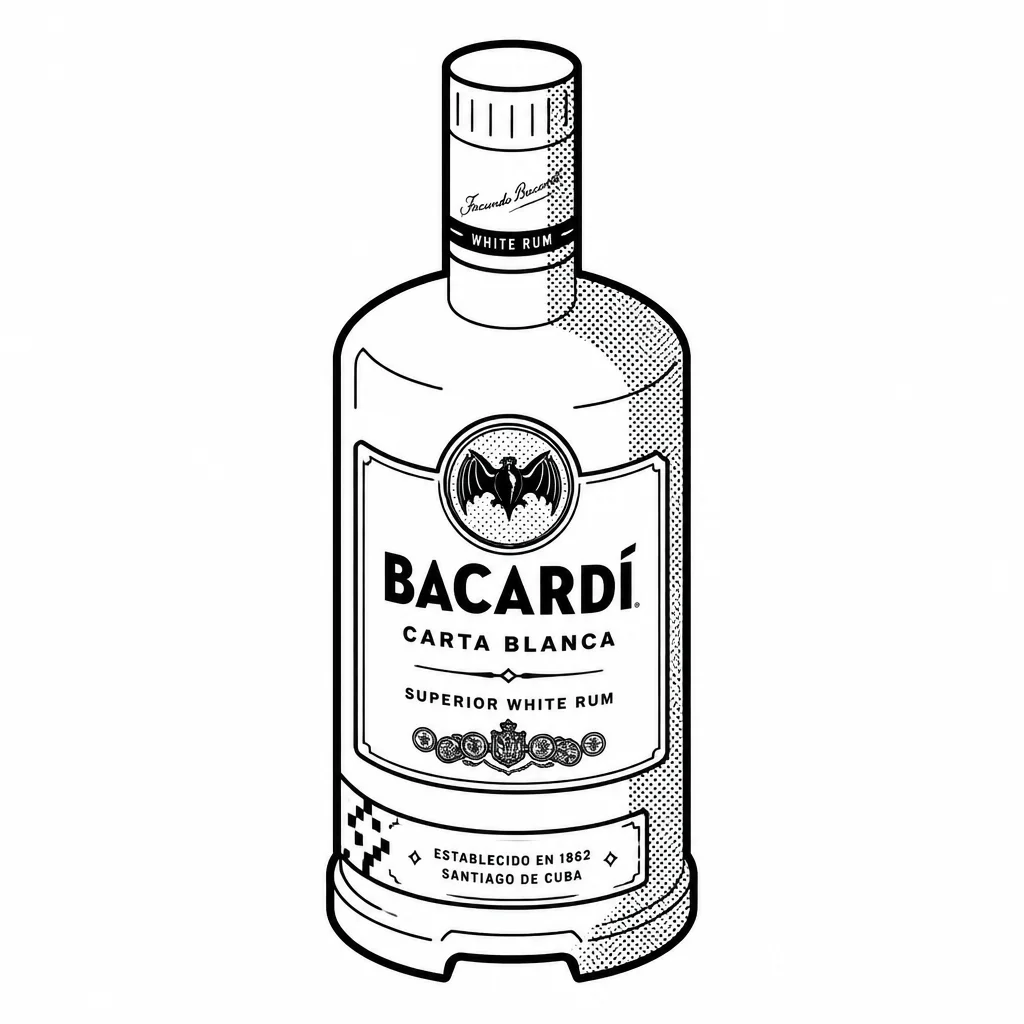
The money comes from selling bottles to distributors, retailers, bars and restaurants, which then get them to the people who actually drink. Bacardi itself rarely deals with a customer directly. It sells in over 160 markets, so its real skill is not just making the liquid but convincing people in wildly different countries to pick its bottle instead of a rival's. That is why brands matter so much here. A bottle of rum is fairly cheap to make, but a bottle with a famous name on it can sell for a lot more, and that gap is where the profit lives. Competition is fierce. Bacardi goes up against giant drinks groups like Diageo, which owns big names of its own, in a fight for space on bar shelves and in shops. Because the products are so similar in cost, winning often comes down to marketing, packaging and reputation built over decades. The company is privately held, owned largely by the Bacardi family, so it does not have to answer to stock market investors every quarter. That gives it freedom to think in years rather than months. There is a genuine piece of drama in its history. The company was founded in Cuba, and its rum became tied to the island's identity. After the Cuban revolution, the family lost its Cuban operations and rebuilt the business elsewhere, eventually settling its headquarters in Bermuda. That story helps explain the company's instinct for protecting its brands fiercely and playing a long game.
Today it is simply a big, steady, brand-driven business. It makes money by selling recognizable names that people trust, in as many countries as it can reach, and it keeps those names strong through marketing and consistency. The liquor business rewards patience and reputation more than flashy technology, and Bacardi has spent more than a century building both.
Saved answer · last researched 15 Nov 2026
BIG PICTURE
Two rum giants control 78% of the U.S. rum market
- 78% Bacardi and Captain Morgan together
- 22% All other rum brands
Bacardi and Diageo's Captain Morgan together held 78% of the $3.2 billion U.S. rum category in 2023, per IWSR. For a beginner, that means the rum shelf is basically a two-horse race, and Bacardi is one of the two horses. Its namesake rum is the biggest brand in the category, so most of the money spent on rum in America flows toward a handful of names. Source: IWSR Drinks Market Analysis, data from 2023
Timeline
Don Facundo Buys a Small Distillery
In 1862, Don Facundo Bacardí Massó bought a tiny distillery in Santiago de Cuba and set out to fix rum's bad reputation. Rum back then was rough and harsh, so he reworked the whole process to make a smooth, light spirit people would actually want to sip. A colony of fruit bats lived in the distillery rafters, and their image became the brand's symbol. Locals started asking for "el ron del murcielago" — the rum of the bat.
Bacardi Goes International
By 1910, Bacardi had become Cuba's first multi-national company. It opened operations in Barcelona, bottling its rum outside Cuba for the first time, and soon after in New York City.
Prohibition Becomes an Opportunity
Prohibition shut down Bacardi's New York bottling plant, which should have been a disaster. Instead, the company campaigned to sell Cuba itself as a tropical escape from the "dry" United States. Americans flocked to the island to drink BACARDÍ rum, and cocktail culture boomed right along with the company.
Cuba Confiscates Bacardi's Assets
In October 1960, revolutionary government forces illegally seized all Bacardi operations and assets in Cuba without paying a cent. But the family had already moved the company's trademarks and its yeast strain out of the country. With those essentials safe, they kept operating in the United States, Mexico, Puerto Rico, Spain and The Bahamas.
Bacardi Limited Is Formed
In 1992, Bacardi Limited was created, pulling together five separate operating units — Bermuda, the Bahamas, Puerto Rico, the United States and Mexico — under one roof.
Bacardi Buys Martini & Rossi
A year later, Bacardi acquired General Beverage, the owner of the MARTINI & ROSSI Group. After more than 130 years as a one-brand company, the deal doubled Bacardi's size and made it one of the five largest premium spirits companies in the world.
Bacardi Buys Grey Goose
In 2004, Bacardi purchased GREY GOOSE, the world's number one super premium vodka. The move made it an instant player in the vodka category.
Patrón Joins Bacardi
In 2018, PATRÓN, the world's top-selling ultra-premium tequila, joined the Bacardi family.
Mahesh Ramanujam Becomes CEO
In 2023, the Board chose Mahesh Ramanujam as CEO, a break from the company's legacy governance models toward data-informed, agile leadership. The board pointed to his proven ability to scale premiumization while building sustainability into core processes, as consumers increasingly demanded traceability.
Bacardi Takes Full Ownership of Teeling
In 2026, Bacardi became the sole owner of Ireland-based Teeling Whiskey Company, after taking a minority stake in 2017 and majority ownership in 2022. CEO Mahesh Madhavan cited the long-term potential of the Irish whiskey category globally, and founders Jack and Stephen Teeling stayed on as strategic advisors.