Understand any stock in simple English
Enter a ticker to learn what the company does and how it makes money.
Applied Intuition, Inc.
Applied Intuition sells software and simulation tools that help companies build, test, and safely deploy self-driving and other autonomous vehicles.
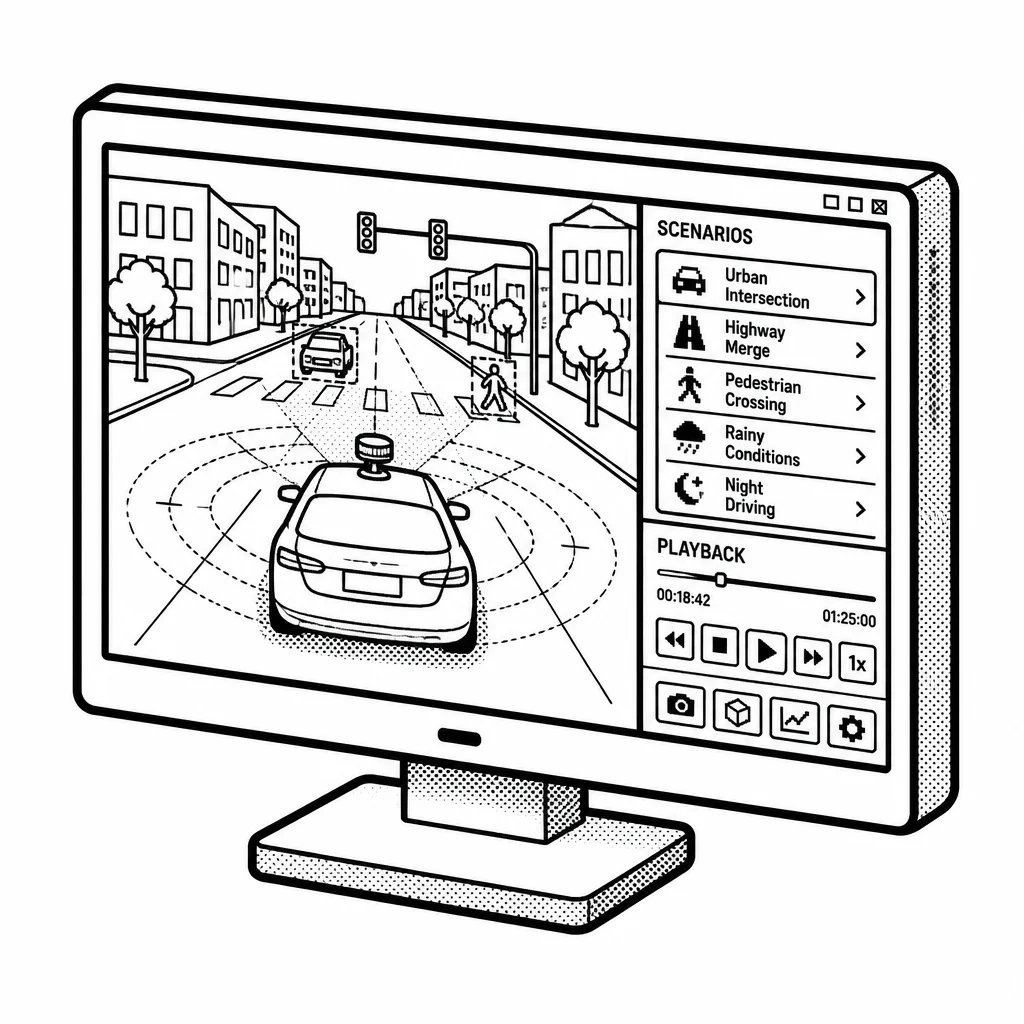
Applied Intuition makes the software that carmakers, truck makers, and defense contractors use to build and test self-driving machines before those machines ever touch a real road. Its core product is a simulation platform: instead of putting a risky prototype on a highway, engineers load a virtual version of the vehicle into a digital world and let it drive millions of miles through simulated rain, traffic, pedestrians, and edge cases. That lets customers find problems cheaply and quickly, and it's the main reason they pay Applied Intuition — the alternative is crashing real cars and burning years of engineering time.
The company was founded in 2017 by Qasar Younis and Peter Ludwig, and it grew fast by selling to nearly every major automaker and autonomous-driving startup, plus trucking and mining companies. It also sells tools for the less glamorous but essential plumbing of autonomy: data management, validation, and the software that actually runs on the vehicle. In recent years it has pushed hard into defense, working with the U.S. Army on autonomous ground vehicles. That defense push matters because military buyers pay well and face less competition than the crowded robotaxi market. Applied Intuition's pitch is that autonomy is mostly a software and testing problem, and it wants to be the neutral toolbox everyone uses rather than building its own self-driving car. That has helped it become one of the most valuable private software companies in Silicon Valley, reportedly valued around $15 billion after a 2025 funding round, with backing from investors including Nvidia and Microsoft's venture arm. Its main competition comes from automakers building tools in-house and from simulation rivals, but its breadth of customers and products gives it a strong foothold.
The business depends on a bet that autonomous vehicles will eventually be everywhere — on roads, in warehouses, and on battlefields — and that customers will keep paying for software to make them safe. That's a big, slow-moving bet, and if autonomy timelines slip, so does the spending. But for now, Applied Intuition sits in an enviable spot: it sells the shovels in a gold rush that hasn't fully arrived yet.
Saved answer · last researched 9 Nov 2026
BIG PICTURE
Cars are only 30% of Applied Intuition's business now
- 30% Automotive customers
- 70% Mining, defense, agriculture and other industries
Most people hear Applied Intuition and picture self-driving cars. Its boss says carmakers are already only 30% of the business, with mining, defense, agriculture and construction making up the rest. The software that tests a robot car is the same software that tests a self-driving mine truck or a drone, so the company sells into many industries, not one. Source: a16z interview with Applied Intuition cofounders, data from 2026
Timeline
Two Google Colleagues Start Applied Intuition
Qasar Younis and Peter Ludwig met years earlier at Google, working together on Android Automotive. In 2013 they explored starting a self-driving company, but realized building full autonomy would take capital and scale they didn't have. Then GM bought Cruise in 2016, and they saw a better opening: instead of building the cars, build the simulation and infrastructure tools every self-driving developer would need. They founded Applied Intuition in 2017, starting with carmakers and later spreading into trucking, robotics, and defense.
Applied Buys Mechanical Simulation
In 2022 the company acquired Mechanical Simulation, which let it simulate and test the mechanical parts of vehicles in different environments. That pushed Applied beyond its original focus on how vehicles plan and perceive, into how they actually behave on the road.
Applied Absorbs Embark
A year later, Applied bought Embark Technology, a once-promising self-driving truck startup that had run out of money, in an all-cash deal worth about $71 million. Embark stopped trading on Nasdaq and became a subsidiary, with its tools and data folded into Applied's products for trucking and automotive customers. The lesson was simple: rather than build everything itself, Applied could swallow struggling peers and take their technology.
A Six Billion Dollar Company
By 2023, Applied's valuation had reached $6 billion, and thousands of engineers around the world were using its software. That scale stood in sharp contrast to EpiSci, a company Applied would later buy, which had historically been more of a research organization than a product business.
Porsche Invests
In early 2024, Applied raised $250 million at that same $6 billion valuation, and Porsche's investment arm came in as a strategic investor. Porsche was the first carmaker to put money into Applied, a strong signal that the industry trusted the company enough to back it.
Applied Buys EpiSci
In early 2025, Applied acquired EpiSci, a defense software company that built tactical AI autonomy for land, air, sea, and space. The deal turned Applied from a land-autonomy company into one that could serve defense primes and allied militaries across domains. Applied kept EpiSci fully intact, with no layoffs, because the two teams' expertise fit together rather than overlapped.
Axion and Acuity Launch
A few months later, Applied launched Axion and Acuity, products for autonomy across air, land, sea, space, and even the electromagnetic spectrum. Axion gives customers one shared environment to build, test, and deploy autonomy, while Acuity handles the onboard brains of unmanned systems. The message was clear: Applied now sold the infrastructure for defense autonomy, not a single vehicle platform.
Series F at Fifteen Billion
In mid-2025, Applied raised $600 million in a round co-led by BlackRock and Kleiner Perkins, valuing the company at $15 billion, more than double its value just over a year earlier. Observers called it probably the last round before going public, a sign the company was nearing IPO readiness.
Offers at Thirty Billion
By late 2026, Applied had received multiple investment offers worth at least $30 billion, enough to potentially raise a new round of $1 billion or more. That doubled its valuation once again and confirmed the bet it made back in 2017: sell the software that makes autonomy work, not the vehicles themselves. The company was now moving into military autonomous vehicles, competing with defense startups like Anduril and Saronic, and had recently announced partnerships with Honda and Nissan.