Understand any stock in simple English
Enter a ticker to learn what the company does and how it makes money.
Anduril Industries, Inc.
Anduril builds military drones, sensors, and command software that help armed forces detect and strike targets.
Anduril is a defense company that makes the hardware and software modern militaries use to watch a battlefield and hit what they find: autonomous drones, surveillance towers, and the software that ties them together. Its customers are governments — mostly the U.S. military and allied defense agencies — and its core pitch is that it sells finished products fast, in months rather than the years a traditional defense contractor takes.
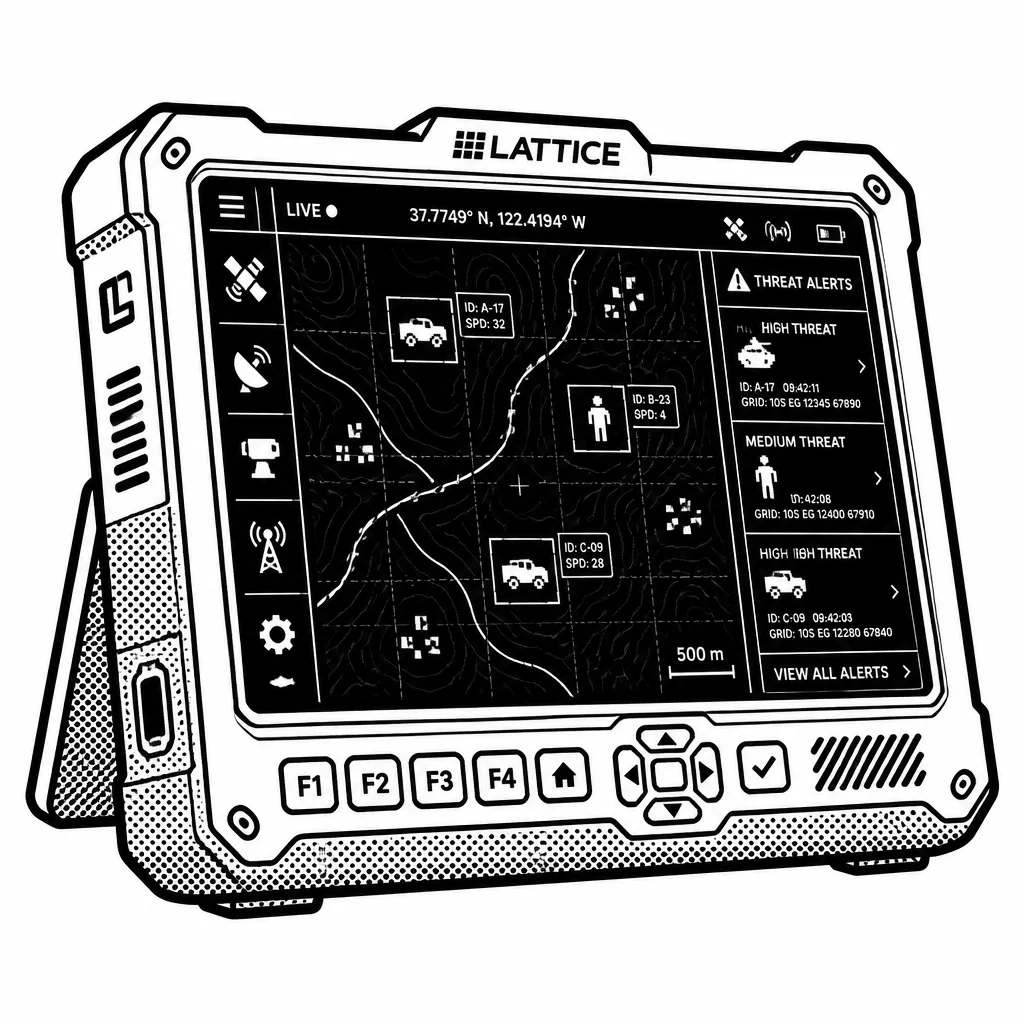
The company is best understood through a couple of flagship products. Lattice is its software brain: it pulls in feeds from drones, cameras, radar, and other sensors and turns them into one clear picture a commander can act on. On the hardware side, Anduril makes things like the Ghost autonomous drone and the Roadrunner, a jet-powered interceptor built to knock down other drones. The company also builds autonomous underwater vehicles and counter-drone systems designed to shoot hostile drones out of the sky. Anduril's edge is how it builds. Its founder, Palmer Luckey, made his name selling the virtual-reality startup Oculus to Meta Platforms for about $2 billion, and he built Anduril around a very different idea from the old defense giants: fund products with the company's own money, ship a working version, and let the military buy what already works. That approach has won it real contracts, including a U.S. Marine Corps deal for counter-drone systems and work on the Air Force's Collaborative Combat Aircraft program, which pairs crewed jets with robot wingmen. It also runs a major border-surveillance tower network for U.S. Customs and Border Protection, a business that has drawn criticism from civil-liberties groups worried about privacy and automated monitoring.
Anduril is private, so you can't buy its stock, but it is one of the most valuable defense startups in the world. A funding round in 2025 valued it at roughly $30.5 billion, up sharply from earlier valuations as investor appetite for defense tech surged. It stays funded by selling to governments, not consumers, so its fortunes rise and fall with defense budgets, geopolitical tension, and whether the Pentagon keeps betting on software-driven weapons over the traditional contractors like Lockheed Martin and RTX that dominate the field.
Saved answer · last researched 3 Nov 2026
BIG PICTURE
One Army contract for Anduril is worth nearly a third of the company's entire valuation
- 32.8% Army contract ceiling as share of Anduril's $61 billion valuation
- 67.2% Everything else in Anduril's valuation
In March the U.S. Army rolled more than 120 separate purchases of Anduril gear into one deal that could reach $20 billion over ten years. That single ceiling equals 32.8% of the $61 billion investors said the company was worth in May. It is a strange kind of concentration: one customer, one contract, one command software layer, holding up a big piece of the story. Source: Axis Intelligence, data from 2026
Timeline
Luckey Starts Anduril
Palmer Luckey had sold his virtual reality company, Oculus, to Facebook and suddenly had money and a reputation. He teamed up with a few partners to fix a broken system: the government bought defense gear in slow, rigid ways, so they built products first and offered them for sale only when they actually worked. The bet was that a startup could move faster than the giant contractors. His timing was good. His idea was simple: make the thing, prove it works, then sell it.
From Border Towers to Defense Tech
The first products were sensors and surveillance towers for watching borders. That looks like a niche business for a company with grand ambitions, and it was. The team quickly shifted toward autonomous defense systems run by their own software, called Lattice. That pivot turned Anduril from a border-security vendor into something much bigger: a defense-tech company.
Anduril Buys Area-I
To grow its product lineup, Anduril bought Area-I, a company in Atlanta that made small surveillance drones launched from tubes. The Altius drone line came with the deal. Instead of building every product from scratch, Anduril could now add proven hardware to its portfolio and plug it into its software.
A Big Funding Round
Investors were starting to believe the pitch. Anduril raised a large Series D round and doubled its valuation to $4.6 billion. The money went into expanding its autonomous defense systems. For a company only a few years old, this was a strong signal that the bet on fast-moving defense tech was paying off.
Buying Blue Force Technologies
Anduril bought Blue Force Technologies, a developer of autonomous aircraft. That purchase gave birth to Fury, a design that would soon enter the Air Force's Collaborative Combat Aircraft program. This was Anduril pushing into a new arena: pilotless fighter-style aircraft, a market dominated by the old guard.
A Spot in the Drone Fighter Program
The Air Force picked Anduril as one of five vendors to develop collaborative combat aircraft. In plain terms, the military was exploring drones that fly alongside human pilots. Anduril was now inside the emerging market for unmanned fighter aircraft, shoulder to shoulder with far older contractors. The move validated the Blue Force bet.
A $14 Billion Valuation
Anduril raised $1.5 billion in a Series F round, valuing it at $14 billion. The plan for the money was concrete: build factories to manufacture autonomous weapons at scale. The company was no longer just designing clever systems; it was preparing to mass-produce them.
Arsenal-1 Factory Announced
Anduril announced Arsenal-1, a billion-dollar hyperscale manufacturing facility near Columbus, Ohio. The goal was to churn out autonomous weapons faster than geopolitical rivals could. It was a bold statement: the startup wanted to become an industrial powerhouse, not just a software and design shop.
Revenue and a Giant Army Deal
The growth arrived fast. Revenue more than doubled to $2.2 billion, and the company signed a ten-year, $20 billion deal with the U.S. Army for software and AI-backed weapons. It also joined a consortium building the Golden Dome space-interceptor missile system. Anduril had become a central player in American defense.
A $61 Billion Valuation
The private market kept bidding the company up. Anduril raised $5 billion in a Series H round at a $61 billion valuation, double the year before, with Thrive Capital and Andreessen Horowitz leading. An employee tender offer later pushed the valuation to roughly $90 billion. All of it was preparation for a possible IPO, and a sign of how much investors believed defense tech had changed.