Understand any stock in simple English
Enter a ticker to learn what the company does and how it makes money.
Helsing SE
Helsing builds artificial intelligence software that helps European militaries make sense of battlefield data and act faster than their enemies.
Helsing is a European defense technology company that sells artificial intelligence software to armies. Its main product, called Altra, takes in everything a military can see or hear on the battlefield — drone video feeds, radar readings, sensor data, infrared images — and uses AI to stitch it all into one live picture, then helps commanders decide what to do next. Think of it as a very fast, very organized brain that turns a flood of raw information into a clear view of what is happening and what to hit.
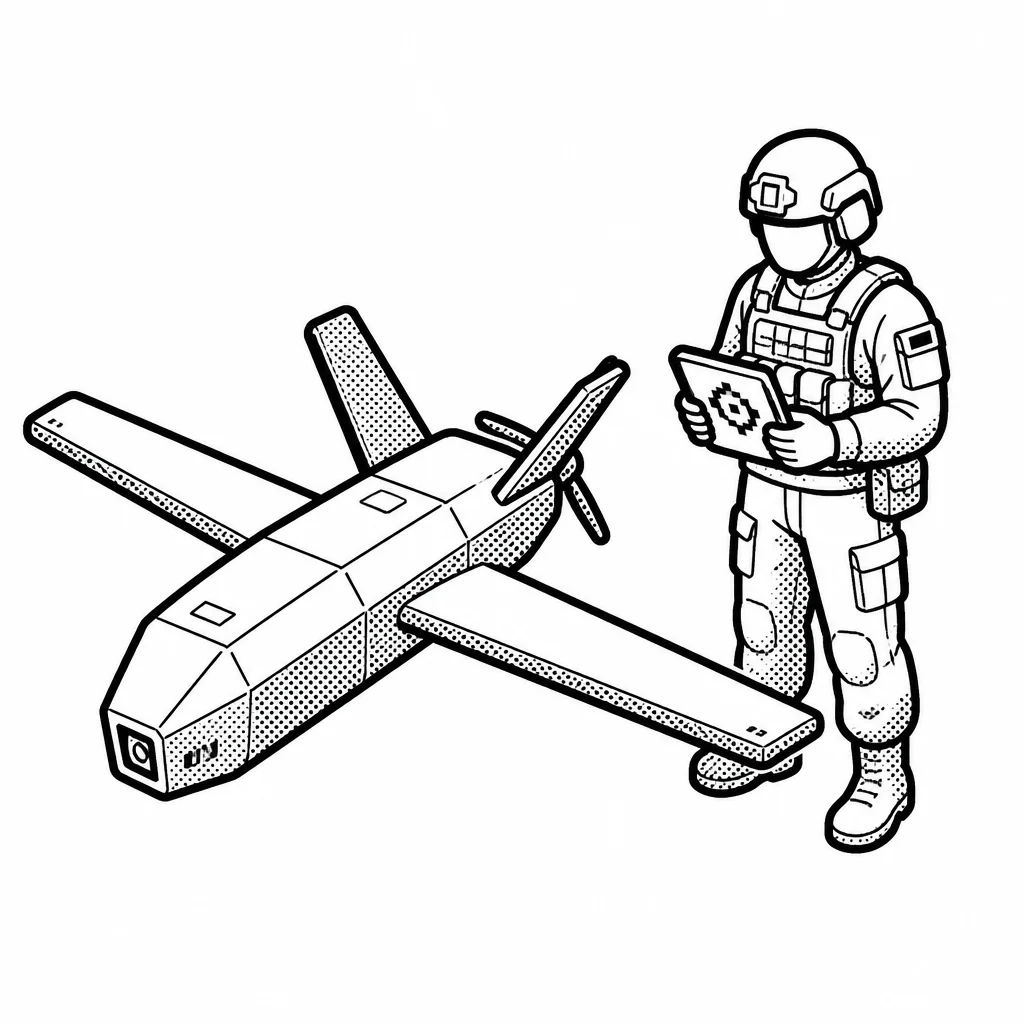
Its other big product is HX-2, an AI-powered attack drone that Helsing designed and now builds. The drone can fly itself to a target even when enemy jamming cuts the communication link, which is a real problem on modern battlefields. Helsing has also worked on AI for fighter jets and on software that lets a single pilot control several drones at once. The customers are governments, mainly Germany and Ukraine, with other European NATO countries in the mix. They pay Helsing for software licenses and for hardware like drones, because European militaries want modern AI tools without depending on American or Chinese suppliers. Helsing is a private company, so it does not sell shares on a stock exchange. It raises money from venture investors instead. In 2025 it closed a funding round of roughly 600 million euros that valued the company at about 12 billion euros, making it one of Europe's most valuable startups. Its revenue is still small compared with traditional defense giants, but it has grown quickly and has signed large orders, including a deal to supply thousands of HX-2 drones to Ukraine. The company is based in Munich and was founded in 2021 by people with backgrounds in AI and technology rather than military contracting. That outsider status is part of its pitch: it moves fast like a tech startup while selling to slow, cautious government buyers. The bet is that future wars will be won by whoever can process information and act on it fastest, and Helsing wants to be the software layer doing that work for Europe. The risks are real too. It depends heavily on government contracts and political decisions, it faces competition from established defense firms and other startups, and its valuation already assumes a lot of future growth.
Helsing is not a household name and it does not trade on any exchange, so there is no stock to buy. Its business is simple to describe: it sells AI that helps militaries see the battlefield clearly and strike faster, and it builds the drones that carry that intelligence to the fight.
Saved answer · last researched 9 Nov 2026
BIG PICTURE
Europe's biggest defence startup is about 80% European-owned, its CEO said before US money poured in
- 80% European-owned
- 20% Non-European ownership
Helsing sells itself as Europe's answer to American defence tech, and its ownership mostly matches the pitch. Co-chief executive Torsten Reil put European ownership at about 80 percent in May, before the round grew by half a billion dollars. The money still came heavily from JPMorgan, Goldman Sachs and a Canadian pension fund, which tests how sovereign the story stays as the company scales. Source: The Next Web, data from 2026
Timeline
Three Founders Start Helsing
In 2021, three people in Munich looked at the world and saw a problem: Europe was falling behind on the technologies that would matter most, just as the threats around it were growing. Torsten Reil, Gundbert Scherf and Niklas Köhler brought very different things to the table — one knew gaming and technology, one knew defence policy, one knew machine learning. Their bet was that Europe's democracies needed smarter software for their defence, and they started Helsing to build it.
Helsing Wins Eurofighter and FCAS Work
Just two years later, Helsing was picked for two major programmes. First came a deal with the German government and partner Saab to give the Eurofighter new electronic warfare abilities, then a contract for the AI backbone of Europe's Future Combat Air System. For a company so young, winning a place on big defence programmes that fast was almost unheard of.
From Software to Hardware
Then Russia's war in Ukraine changed what armies needed almost overnight: automated systems on the battlefield, and lots of them. Helsing, until then a pure AI software company, started building military hardware itself in 2024, adding drones and other autonomous machines for the air, land and sea. It was a big shift, and it widened what the company could sell.
The HX-2 Strike Drone
At the end of 2024, Helsing showed off the HX-2 — a strike drone built to be made in large numbers, powered by electricity and run by software. Ukraine received them and tested them in real combat. The clever part was the AI on board: because the drone can think for itself, it keeps working even when the enemy tries to jam it with electronic warfare.
Helsing Buys Grob Aircraft
Buying a maker of light aircraft may sound odd for a software company, but Grob Aircraft gave Helsing something it lacked: a way to build aircraft at scale, plus deep experience in airframes. The plan was to use Grob to help develop an uncrewed combat jet, mixing Helsing's AI with Grob's lightweight manufacturing. The software company was now becoming an aircraft company too.
Helsing Buys Blue Ocean
A few months later, Helsing reached underwater by acquiring Blue Ocean, an Australian maker of autonomous gliders that swim beneath the sea. That added real hardware to its maritime surveillance work and stretched the company across all three domains: land, air and sea. The ocean, long a blind spot for small defence firms, was now part of the plan.
Europe's Largest Defence Startup
By 2026, the chips had stacked up in Helsing's favour. It closed a huge funding round at a valuation of eighteen billion dollars, making it Europe's largest defence startup, and investors wanted in so badly the round was heavily oversubscribed. The money — following an earlier raise at around twelve billion euros — is meant to build new AI platforms and scale up the defence capabilities the company had been assembling. The small Munich bet on European defence had become one of the sector's biggest stories.