Understand any stock in simple English
Enter a ticker to learn what the company does and how it makes money.
Advance Information Technology LLC
Ninja is a Saudi grocery delivery app that lets people order supermarket items and get them dropped at their door, often within minutes.
Ninja is a grocery delivery app in Saudi Arabia. You open it on your phone, pick things like milk, bread, snacks, or fresh produce, and a shopper or rider brings them to your home, often in under an hour. It is built for people who want the supermarket without the trip — busy families, young professionals, anyone who would rather tap a screen than push a cart.
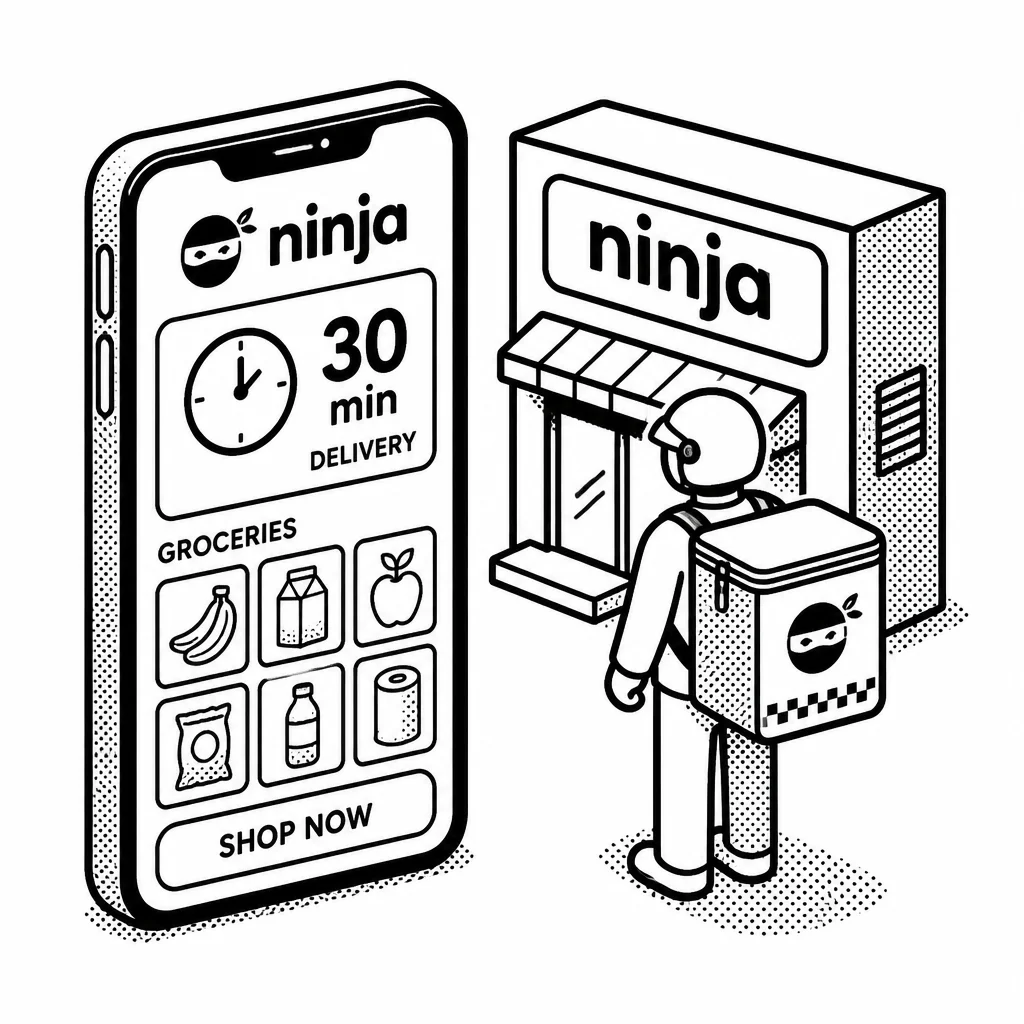
The company behind the app is Advance Information Technology LLC, which runs the business under the Ninja brand. Ninja makes its money by charging customers for delivery and by taking a cut of the sale from the stores that list their products on the platform. Grocery delivery is a thin-margin, logistics-heavy game: you need riders, small warehouses or "dark stores" stocked with fast-moving items, and enough order volume to keep all of that busy. Ninja leans on quick, small-batch fulfillment to promise speed, which is the main reason people pick it over just driving to the store themselves. Saudi Arabia's delivery market is crowded and well-funded. Competitors include regional players like Jahez and international-backed apps such as HungerStation (owned by Delivery Hero, Delivery Hero), plus the grocery arms of big retailers. Ninja's bet is that groceries — ordered often, bought repeatedly — build habit and loyalty in a way that one-off restaurant orders do not.
Like most delivery startups, Ninja's challenge is making the economics work. Delivery is expensive, customers are price-sensitive, and riders cost money every hour. The business only works at real scale, when dense order volumes let each rider and each warehouse earn their keep. That is the whole game for Ninja: grow fast enough to spread fixed costs, keep baskets big enough to cover delivery, and hold onto customers who order week after week.
Saved answer · last researched 10 Nov 2026