Understand any stock in simple English
Enter a ticker to learn what the company does and how it makes money.
Tata Motors Limited
Tata Motors builds and sells trucks, buses, pickups, small commercial vehicles and electric vehicles in India and around the world.
Tata Motors is India's biggest maker of commercial vehicles — the trucks and buses that move goods and people — and it also builds cars and electric vehicles. Its commercial vehicle arm, now formally called TML Commercial Vehicles, sells everything from tiny last-mile delivery pickups to heavy tractor-trailers and city buses, and those machines are the backbone of how stuff gets moved across India and many export markets.
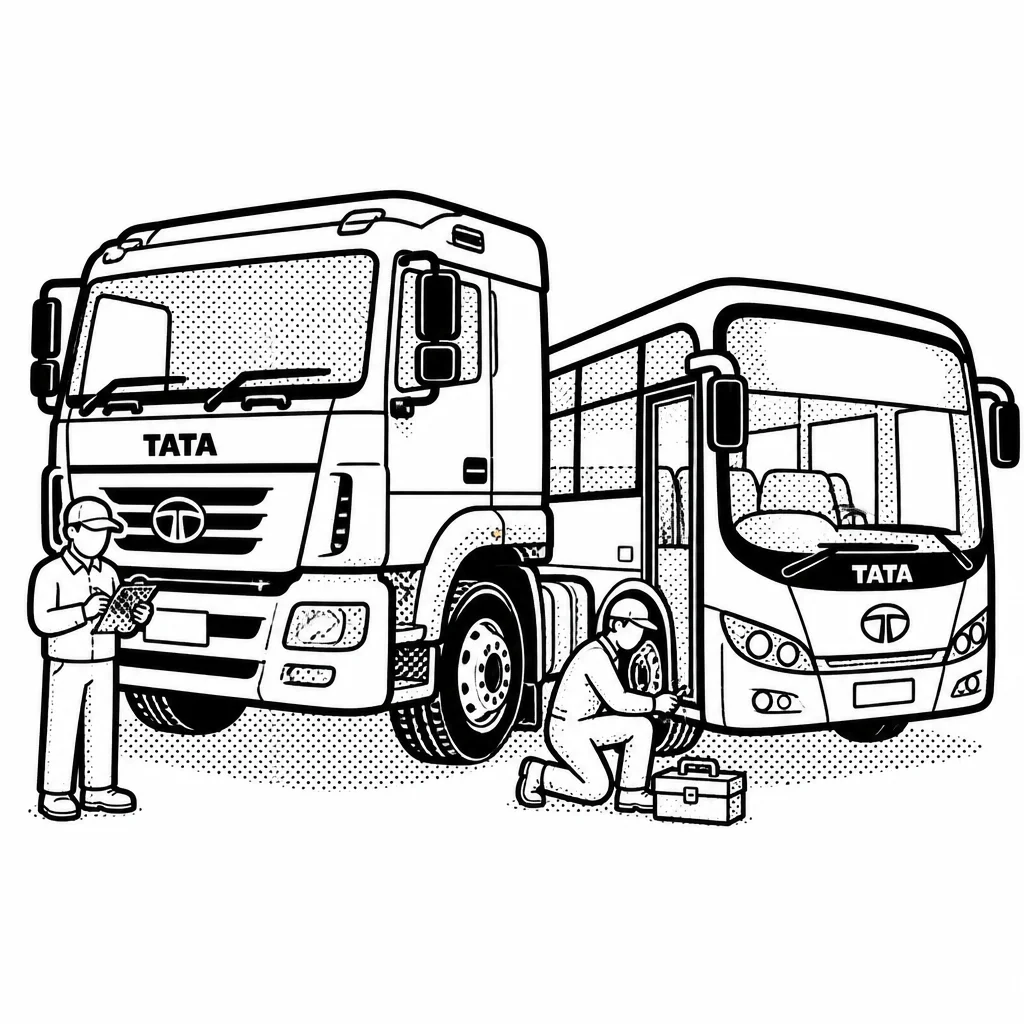
The way it makes money is simple: customers buy the vehicle up front, then come back for years for spare parts, service and financing help. Fleet owners pick Tata because its trucks are cheap to run and its dealer and service network reaches deep into small towns where a broken truck means lost income. Rivals include Ashok Leyland in trucks and buses, plus global players like Daimler Truck and Volvo at the premium end. A big strategic bet is electric: Tata dominates India's electric car market and is pushing electric buses and small electric commercial vehicles too. The company was split in 2025, separating its commercial vehicle business from its passenger vehicle and electric vehicle operations, which is why the commercial vehicle entity now trades under its own listing. It sits inside the sprawling Tata group, one of India's oldest conglomerates. The trucks and buses business is cyclical — when construction, mining and freight activity slow, orders dry up — so results swing with the economy and interest rates.
For investors, the appeal is scale and cash generation in a market where road transport keeps growing. The company spends on new models, electric drivetrains and its service network, and returns some cash to shareholders through dividends. The risk is familiar to anyone who follows heavy industry: thin margins, tough competition, and a business that rises and falls with the freight cycle.
Saved answer · last researched 12 Nov 2026
Timeline
TELCO Begins With Locomotives
Tata Motors started life as TELCO, a company that built locomotives. Tata Sons bought a railway workshop and took on a job to assemble thousands of imported wagons for the Railway Board. That was the small door through which one of India's biggest carmakers first walked in.
First Mercedes-Benz Truck Rolls Out
A deal with Daimler-Benz let the company roll out the first Tata Mercedes-Benz truck, the first heavy-duty truck ever made in India. That partnership planted the seeds of an entire automotive industry in the country.
Tata Sierra Becomes India's First Home-Grown SUV
The Sierra was India's first SUV designed and built entirely at home. It was a proud milestone on the road to self-reliance for the country's car industry.
Tata Indica Shown in Geneva
India's first indigenously developed passenger car, the Indica, was unveiled at the Geneva Motor Show. Within two years it was the top-selling car in India, proving that local design, innovation and localisation could beat the big names.
Tata Motors Lists in New York
Tata Motors became the first Indian automotive company to list on the New York Stock Exchange. Around the same time it bought the truck business of South Korea's Daewoo and renamed it Tata Daewoo, taking its first real steps onto the global stage.
Tata Ace Creates a New Market
The Ace mini truck changed how goods moved inside cities and on the last stretch of delivery. It became India's best-selling commercial vehicle and helped millions of ordinary people become small entrepreneurs.
Jaguar Land Rover and the Nano
In one bold stroke, Tata Motors bought British luxury brands Jaguar and Land Rover from Ford, turning itself into a global company overnight. The same year it launched the Nano, billed as the world's cheapest car, though that dream would not live up to the hype.
Nexon EV Leads India's Electric Push
Tata Motors launched its New Forever range of passenger vehicles, including the Nexon EV built on its own electric technology. The Nexon EV went on to become India's most popular electric car and set the standard for the market.
Tata Motors Splits in Two
Tata Motors broke itself into two separate listed companies, one for passenger vehicles, electric vehicles and Jaguar Land Rover, and one for commercial vehicles. The idea was to let each business be valued on its own and run with sharper focus, without the drag of being one big conglomerate.
Tata Motors Buys Iveco
Tata Motors closed the first part of its deal to buy most of truck maker Iveco. The combined business became a true global commercial vehicle giant, with a commanding share of India's heavy truck market and sales across more than 130 countries.