Understand any stock in simple English
Enter a ticker to learn what the company does and how it makes money.
Olin Corporation
Olin makes the basic chemicals, epoxy resins, and ammunition that other factories, builders, and the military rely on.
Olin is a chemical company at its core, but it also makes bullets. It sells chlor-alkali chemicals and epoxy resins to industrial customers, and through its Winchester brand it sells ammunition to hunters, sport shooters, police, and the military. So one half of the company supplies the raw ingredients that go into everything from water treatment to plastics, and the other half sells the stuff that goes into a shotgun shell.
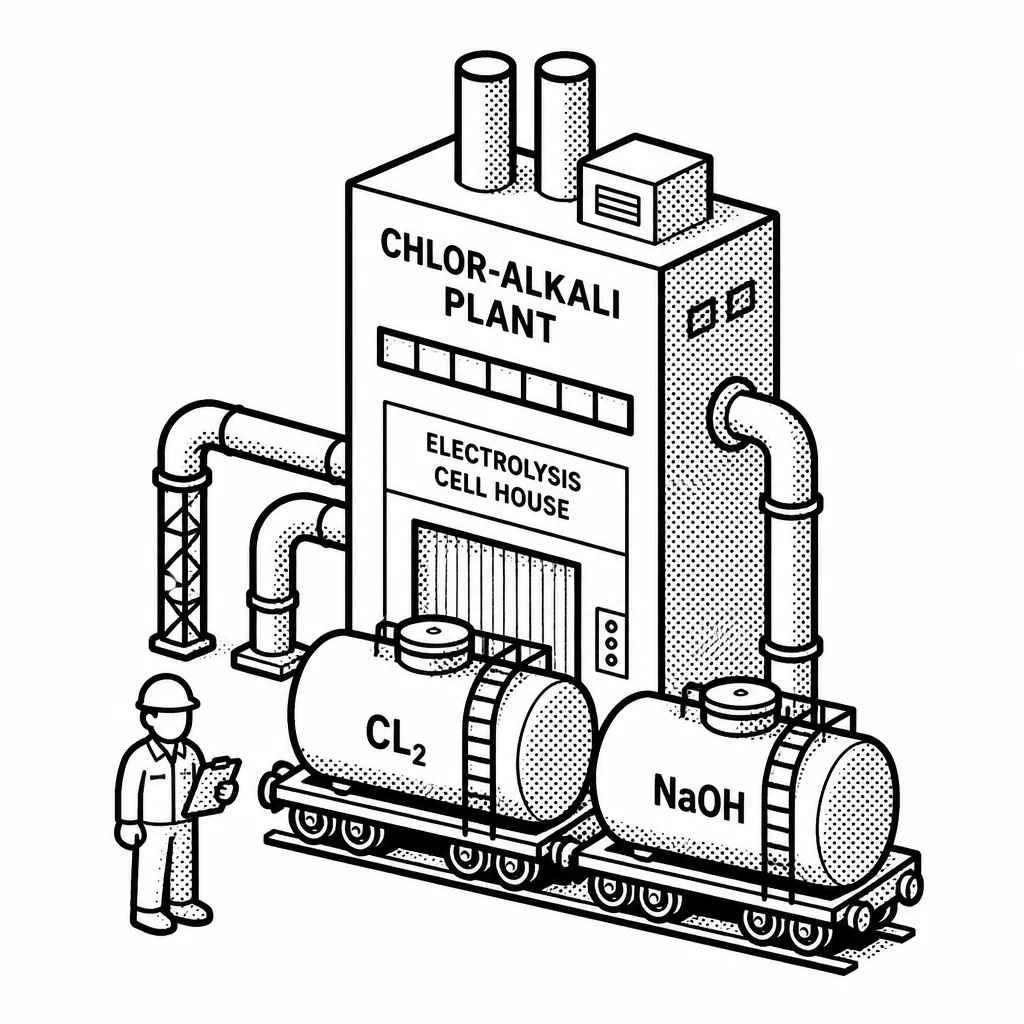
The chemicals side is built on a simple but powerful idea. Olin takes salt and electricity and splits them apart to make chlorine and caustic soda — two of the most widely used industrial chemicals on earth. Chlorine goes into water treatment and plastics; caustic soda goes into making paper, aluminum, and soap. The catch is that making one almost always makes the other, so Olin is stuck selling whatever the market wants at the moment, even when one product is in low demand. That is why chemical plants like Olin's are often called "chlor-alkali" plants — the name is the recipe. Winchester is the more famous name, and it has a long history. The brand dates back to the 1800s and has been part of American shooting culture for generations. It is also a real defense supplier, selling ammunition to law enforcement and the military. Ammunition demand tends to be steadier than chemical demand, which is part of why Olin likes having both: when chemical prices swing, the bullets help smooth the ride.
Olin also sells epoxy resins, which are the tough, glue-like plastics used in coatings, wind turbine blades, and electronics. The company has spent recent years trying to make its chemical operations more efficient and to pay down debt, and its results move with the health of the global economy — when factories slow down, so does demand for its chemicals. The stock is a bet on industrial production, construction, and defense spending all at once, which makes it a cyclical business with a well-known brand tucked inside.
Saved answer · last researched 16 Nov 2026