Understand any stock in simple English
Enter a ticker to learn what the company does and how it makes money.
Smith & Nephew plc
Smith & Nephew makes medical devices — implants for joint replacement, tools for sports injuries, ear-nose-throat instruments, and wound care products — and sells them to hospitals and healthcare providers.
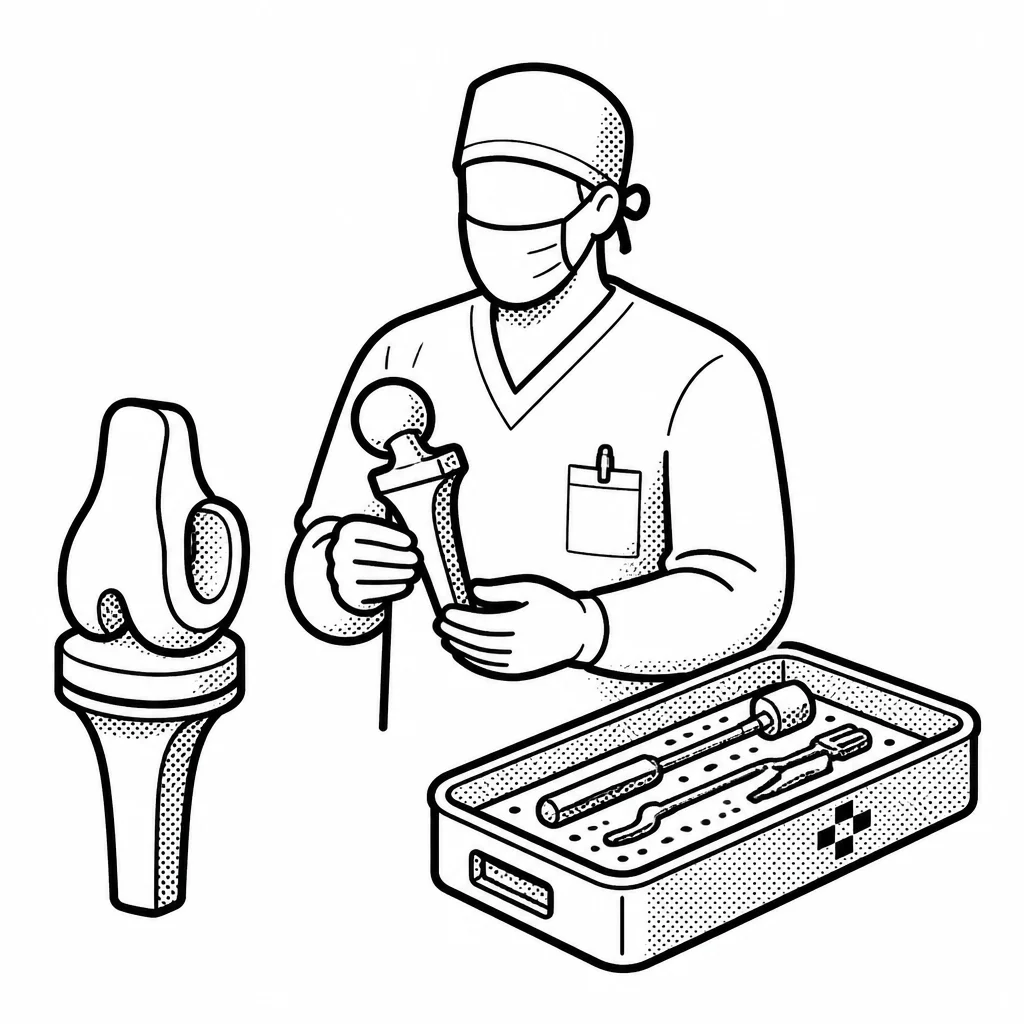
Smith & Nephew makes the replacement parts people get when their own body wears out. If your hip or knee gives out, a surgeon may install a Smith & Nephew implant. If you tear a ligament playing football, the company makes the tools and devices used to fix it. It also sells wound dressings and ear, nose, and throat instruments. Hospitals and clinics are the customers, and they buy from Smith & Nephew because surgeons trust the brands and the company trains them on how to use the gear. The business is split into two halves: orthopaedics (new hips and knees, plus the robots and tools used to put them in) and a "sports medicine and ENT" side that handles soft-tissue repair and specialist surgery.
The company is British, based in Watford near London, but it earns most of its money in the United States, where it competes with much bigger American rivals like Stryker and Zimmer Biomet in joints, and Medtronic and Johnson & Johnson in other areas. Scale matters in this business: hospitals want a supplier that can cover many product lines and support surgeons around the clock. Smith & Nephew is a strong number two or three in many markets rather than the dominant player, which is both its vulnerability and its opportunity — it wins by being nimble and by pushing into faster-growing niches. One of those niches is sports medicine, where it has built a leading position in repairing knees and shoulders, helped by buying smaller companies that make cartilage and soft-tissue repair products. Another is robotics: the company sells a handheld robotic system for knee surgery, a cheaper and simpler alternative to the big robot systems sold by rivals. Wound care is the quieter, steadier part — dressings and negative-pressure devices that help chronic wounds heal, sold to hospitals and home-care providers.
The economics are decent but not spectacular. Medical devices carry good margins once approved, but hospitals are under budget pressure and insurers push back on prices, so growth tends to be gradual. Smith & Nephew spends heavily on research and on training surgeons, which keeps customers loyal but eats into profits. It pays a dividend and has made bolt-on acquisitions to strengthen sports medicine and robotics. The company's challenge is simple: stay relevant against giants with deeper pockets while proving that its newer bets, especially robotics and sports medicine, can grow faster than the slow-moving joint replacement market.
Saved answer · last researched 14 Nov 2026
BIG PICTURE
Smith & Nephew's tendon patch cuts re-tears by 70% compared with standard repair
- 70% Reduction in re-tear rates with REGENETEN
- 30% Re-tears that still occur with REGENETEN
Surgeons repairing a torn rotator cuff often see the repair fail later. Smith & Nephew's REGENETEN patch is backed by peer-reviewed evidence showing a 70% drop in re-tear rates next to conventional repairs. That matters because sports medicine joint repair brings in roughly 30% to 32% of group revenue, and the company says adoption of the tendon procedure is growing more than 15% a year. Source: KoalaGains, data from 2026
Timeline
A Chemist's Cod Liver Oil
Thomas James Smith opened a chemist shop in Hull, in the north of England, where he worked out a better way to refine cod liver oil. That little shop was the seed of Smith & Nephew. The problem he solved was simple: cod liver oil was a popular remedy, but refining it well was hard, and his method gave the business something to build on.
From Bottles to Bandages
Half a century later, H N Smith could see that cod liver oil was losing its shine, so he bought a machine for cutting and rolling bandages and steered the family business toward wound dressings. Contracts to supply Canadian hospitals soon followed, which was the company's first step onto the international stage. It was a smart pivot: the product changed, but the skill of making something people needed for their health did not.
Smith & Nephew Lists in London
With bandages and dressings selling well, the company listed on the London Stock Exchange in 1937. Going public gave it fresh capital to grow and expand. It was the moment a family chemist's shop became a proper public company with outside shareholders.
A Leap into Orthopaedics
In 1986 the company made a big bet on bones and joints, buying Richards Medical in Memphis, a specialist in orthopaedic products, and DYONICS, which made tools for arthroscopy, the keyhole surgery used to look inside joints. These deals pushed Smith & Nephew well beyond bandages into the world of replacing hips and knees and repairing joints.
Leader in Keyhole Surgery
The orthopaedic push continued with the purchase of Acufex Microsurgical, which made Smith & Nephew a market leader in arthroscopic surgical devices, the instruments surgeons use in that keyhole joint surgery. That same year it also listed on the New York Stock Exchange, planting a flag in the huge American market.
ArthroCare Bought for Billions
In 2014 the company announced it would buy ArthroCare for 1.7 billion dollars in cash. The deal widened its sports medicine range for minimally invasive surgery, and it opened a new door into the Ear, Nose and Throat market. This was Smith & Nephew buying its way into faster-growing parts of medicine.
A Bet on Surgical Robots
A year later it bought Blue Belt Technologies for 275 million dollars. Blue Belt was a player in orthopaedic robotics-assisted surgery, a young but fast-growing field where a robot helps a surgeon place an implant with great precision. The purchase gave Smith & Nephew a leading position in that race before it became crowded.
A CEO Leaves Over Pay
In 2019 the company ran into a very British problem. CEO Namal Nawana stood down after only 18 months because he wanted higher US-style pay, and UK corporate governance standards would not allow it. Roland Diggelmann took over. It was a strange, very modern clash: the company's American ambitions colliding with the rules of its London home.
Another CEO Change
Just a few years later, Roland Diggelmann stepped down, and Dr Deepak Nath took the top job with a clear mandate: turn the company around. Investors were hoping a fresh set of hands could fix what had been drifting.
Deepak Nath's 12-Point Plan
Nath wasted little time and launched a 12-point plan to improve performance by 2025. The idea was to strengthen the supply chain and bring in new orthopaedic technologies to win back market share. Not everyone was convinced: some investors worried the plan lacked urgency and wanted the company to consider spinning off its orthopaedics unit altogether.
The J&J Deal That Fell Apart
In 2025 the company spent months negotiating a combination with Johnson & Johnson's orthopaedics business, and they even settled the financial terms and structure. Then it collapsed over a surprisingly human question: who would run the place. J&J wanted Namal Nawana as CEO, while Smith & Nephew would only go ahead with Deepak Nath. The failed deal left the company exactly where it started, still under pressure to fix its orthopaedics division.
The RISE Strategy
Once the 12-point plan wrapped up, the company introduced something new called the RISE strategy, along with targets stretching to 2028. The goals were bold: steady organic revenue growth, faster profit growth, more than a billion dollars of free cash flow, and better returns on invested capital. The strategy put the money behind its higher-growth, higher-margin businesses, Sports Medicine and Advanced Wound Management, rather than spreading it evenly.
Integrity Orthopaedics Acquired
In 2026 the company bought Integrity Orthopaedics, the maker of a rotator cuff repair system called TENDON SEAM, for 225 million dollars upfront plus up to the same amount again if it hits performance targets. It was a building block in the ambition to become the global leader in Sports Medicine. TENDON SEAM fits neatly with the company's existing REGENETEN implant, strengthening its shoulder repair portfolio.