Understand any stock in simple English
Enter a ticker to learn what the company does and how it makes money.
ISS A/S
ISS is a facilities services company that cleans, feeds, maintains, and runs the buildings of other organizations around the world.
ISS is the company that many big organizations quietly hand their buildings to. When you walk into an office tower, a hospital, or an airport and the floors are clean, the lights work, the coffee is stocked, and someone is emptying the bins, there is a decent chance ISS is behind it. It does not own the buildings; it runs the everyday work that keeps them functioning, and it sells that service to the organizations inside them.
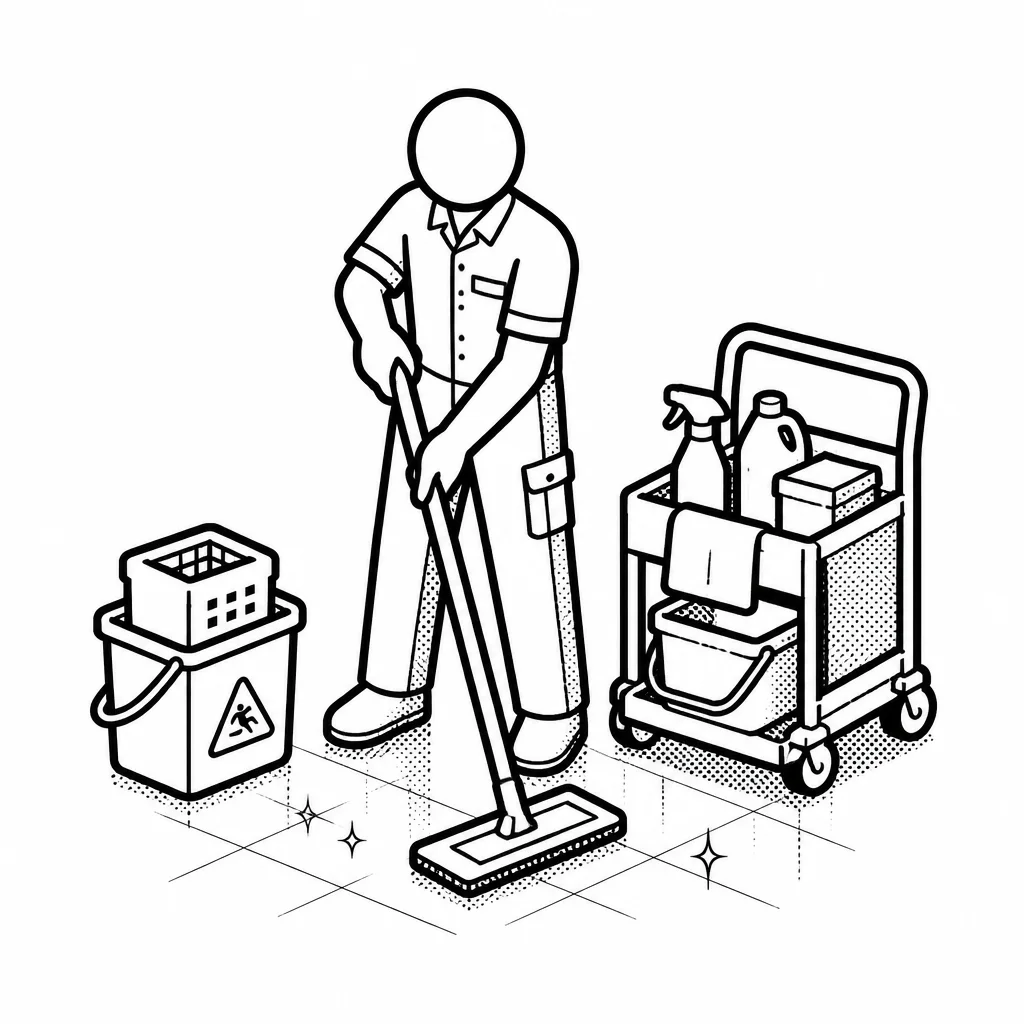
The core offering is what the industry calls facility management. Instead of hiring its own cleaners, cooks, security guards, and maintenance crews, a client signs one contract and ISS coordinates the whole lot, often using its own staff. ISS also provides standalone services like cleaning and catering for customers who just want one piece done well. The reason clients choose this is simple: it is one bill, one point of contact, and someone else carries the headache of hiring and managing thousands of low-wage workers across dozens of sites. That last part is also the business's soft spot. This is a labor-heavy industry with thin margins, and ISS employs hundreds of thousands of people worldwide, which means wage laws, union negotiations, and labor shortages hit it directly. It competes with global rivals like Sodexo and Compass Group as well as countless local providers, so winning contracts often comes down to price and execution rather than anything proprietary. The upside is that contracts tend to be sticky: once ISS is embedded in a client's operations, switching is a hassle, and many deals run for years.
ISS traces back to 1901, when a Danish watchman started a small security company in Copenhagen, and it grew into one of the world's largest employers by doing unglamorous work at enormous scale. In recent years it has pushed a "workplace experience" pitch, arguing it can make offices more appealing as companies fight to lure staff back after the pandemic. The company also spends heavily on technology to schedule staff and track service quality, because in a business this thin, small efficiency gains are the difference between profit and loss. It is a steady, cash-generating machine rather than a fast grower, and its shares have had a rough stretch as investors worried about margins and growth.
Saved answer · last researched 12 Nov 2026