Understand any stock in simple English
Enter a ticker to learn what the company does and how it makes money.
Sodexo S.A.
Sodexo is a French company that runs cafeterias, cleans buildings, and handles other everyday services for businesses, schools, hospitals, and events.
Sodexo is the company behind a lot of the stuff you never think about at a big institution: the food in the cafeteria, the person who cleans the floors, the crew that keeps the lights and heating running. It sells "food services and facilities management" — which is a fancy way of saying it feeds people and takes care of buildings for other organizations, so those organizations can focus on their real work.
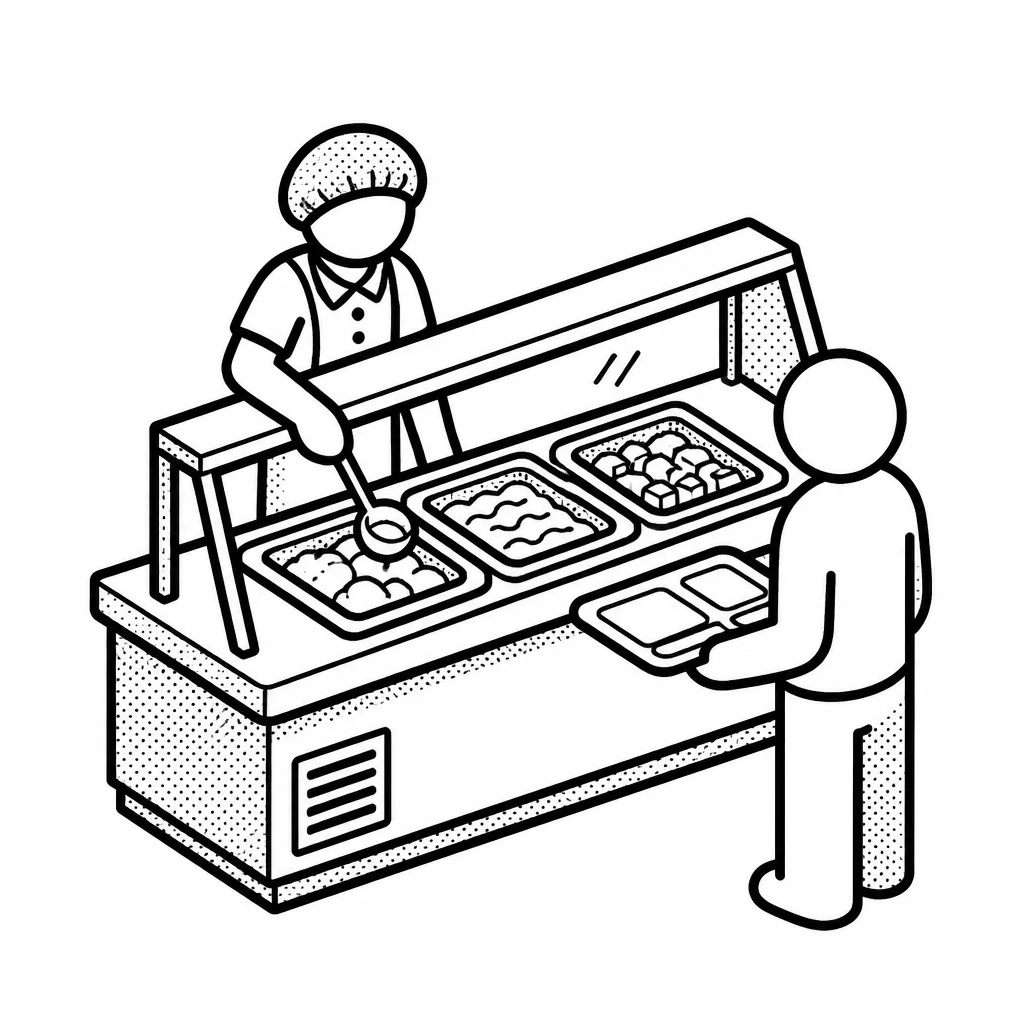
Its customers are businesses, schools, hospitals, military bases, sports stadiums, and event venues. A university might hire Sodexo to run its dining halls; a hospital might hire it to cook patient meals and keep the wards clean; a company might outsource its entire office canteen to them. Sodexo gets paid through long contracts, usually billed per meal served or per service delivered, which makes revenue fairly steady and predictable. Customers pick Sodexo because running a kitchen or a cleaning crew is a hassle that isn't their core skill, and a giant operator can do it more cheaply and reliably than they can on their own. The company is headquartered in France and is one of the two global giants in contract catering, alongside Compass Group. It also has a benefits-and-rewards arm called Pluxee, which issues meal vouchers and employee perks — a very different business that Sodexo decided to spin off as a separate listed company, a move that sharpened Sodexo's focus on its core food and facilities work.
The business is simple but not easy. Margins are thin, contracts are won and lost on price and service quality, and it employs hundreds of thousands of people, so labor costs and wage inflation hit it directly. It also took a hard knock during the pandemic, when offices and schools emptied out and demand for cafeteria food collapsed. Still, it's a scale business: win enough sites, run them efficiently, and the steady contract revenue adds up.
Saved answer · last researched 14 Nov 2026