Understand any stock in simple English
Enter a ticker to learn what the company does and how it makes money.
Hindustan Petroleum Corporation Limited
Hindustan Petroleum turns crude oil into fuels like petrol and diesel and sells them to Indian drivers and businesses, along with lubricants and gas.
Hindustan Petroleum is one of India's big state-owned oil refiners, and its business boils down to two connected jobs: turning crude oil into useful fuels, and selling those fuels to a country that runs on them. Its refineries cook crude into petrol, diesel, jet fuel, and liquefied petroleum gas (the bottled gas many Indian kitchens use). Then its network of fuel stations, pipelines, and dealers gets those products to drivers, truck fleets, airlines, and households. It also makes and sells lubricants and sells natural gas.
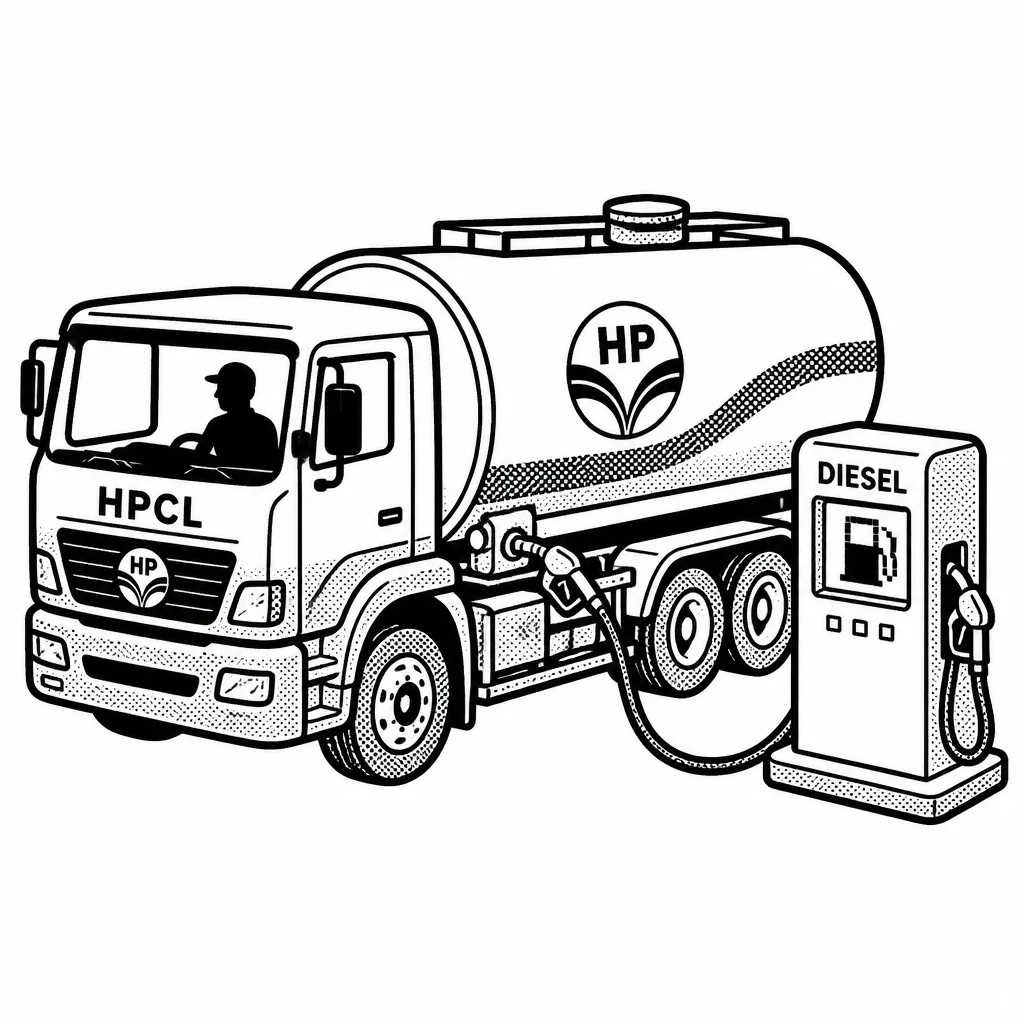
Who actually pays? Mostly everyday Indians at the pump and businesses that buy fuel in bulk. The government matters enormously here: HPCL is majority-owned by the state through Oil and Natural Gas Corporation, and fuel prices in India are heavily influenced by government policy. That cuts both ways. It gives the company a huge, protected customer base, but it also means its profits can swing sharply when crude prices move and the government decides how much of that cost can be passed to consumers. Refining margins are thin and cyclical, so a bad quarter can follow a great one. The company doesn't just sit on its oil. It spends heavily on growing its reach — new refineries, pipelines, and fuel stations — and on diversifying into petrochemicals, which turn oil byproducts into plastics and chemicals and offer steadier margins than fuel. It has also been pushing into cleaner energy, including gas and electric-vehicle charging, as India tries to reduce its dependence on imported crude. HPCL competes directly with the other state giants, Indian Oil Corporation and Bharat Petroleum Corporation, plus private players like Reliance Industries that run their own large refineries and retail networks.
The honest picture: HPCL is a giant, essential piece of India's energy machine, with a captive market and real scale. But it operates in a business where prices are political, crude costs are volatile, and returns depend on government decisions as much as on operational skill. Investors treat it less like a growth story and more like a play on India's fuel demand and refining cycles, often with a steady dividend attached.
Saved answer · last researched 15 Nov 2026