Understand any stock in simple English
Enter a ticker to learn what the company does and how it makes money.
Indian Oil Corporation Limited
Indian Oil refines crude oil and sells fuel, petrochemicals, and gas to people and businesses in India and abroad.
Indian Oil is the giant fuel company that keeps India moving. It turns crude oil into the petrol and diesel that go into cars, trucks, and tractors, the cooking gas that lights millions of kitchen stoves, and the jet fuel that gets planes off the ground. It sells these through a sprawling network of petrol pumps and gas agencies spread across the country, which is why most Indian drivers have probably filled up at one of its stations without thinking twice about it.
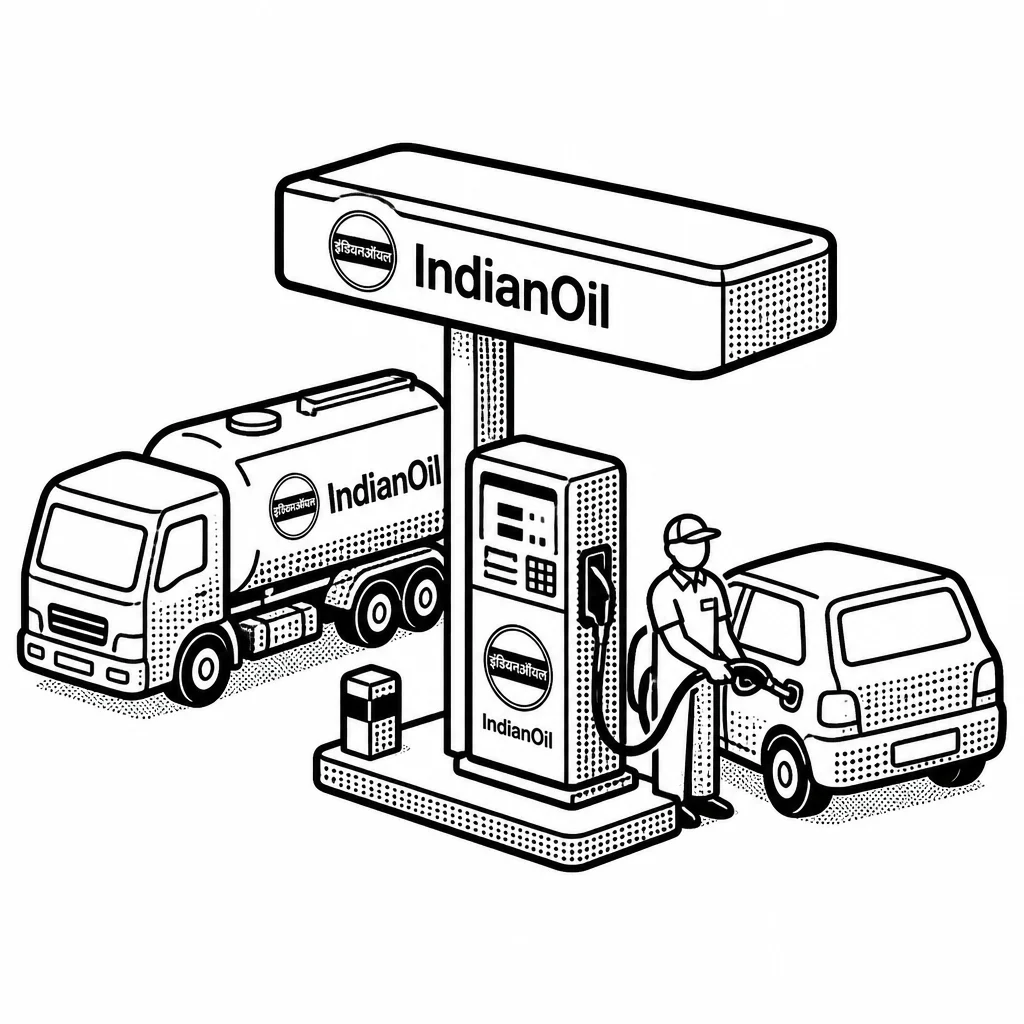
The business works like a very large middleman with refineries attached. It buys crude oil, mostly from abroad, cooks it in its own refineries to make useful fuels, and then moves those fuels through pipelines and trucks to its retail outlets and industrial customers. It also makes petrochemicals — the raw materials for plastics and chemicals — and sells natural gas. Because fuel is a low-margin, high-volume game, the company lives and dies on scale, refinery efficiency, and government pricing rules, which have historically shaped how much it earns on every litre. Indian Oil is majority-owned by the Indian government, and that ownership matters. The company is often used as a policy tool — for example, it may hold back price hikes on petrol and diesel to protect consumers, which squeezes its own profits. That creates a stubborn tension: it is a publicly listed stock with private shareholders, but its biggest owner is the state. Its main rivals are other Indian refiners and fuel retailers, including Reliance Industries and Bharat Petroleum, and it competes with private players on service and price while often carrying social duties its rivals do not.
What makes Indian Oil sturdy is its sheer reach: thousands of petrol pumps, a huge pipeline network, and refineries that process enormous volumes every day. What makes it vulnerable is exactly the flip side — thin margins, heavy dependence on imported crude, and the constant tug of government priorities. When global oil prices swing or the rupee weakens, its costs jump, and because fuel prices are politically sensitive, it cannot always pass those costs on. It is less a growth story and more a national utility dressed up as a stock, paying dividends and doing the unglamorous work of powering a country.
Saved answer · last researched 12 Nov 2026