Understand any stock in simple English
Enter a ticker to learn what the company does and how it makes money.
Flexsteel Industries, Inc.
Flexsteel makes and sells upholstered and wood furniture for homes and commercial spaces.
Flexsteel is a furniture maker. It builds sofas, loveseats, recliners, and other upholstered pieces, plus wood furniture like tables and cabinets, and sells them to people furnishing their homes and to businesses that need furniture for places like offices, hotels, and healthcare waiting rooms. The company has been around since the 1890s, and it sells mainly in the United States.
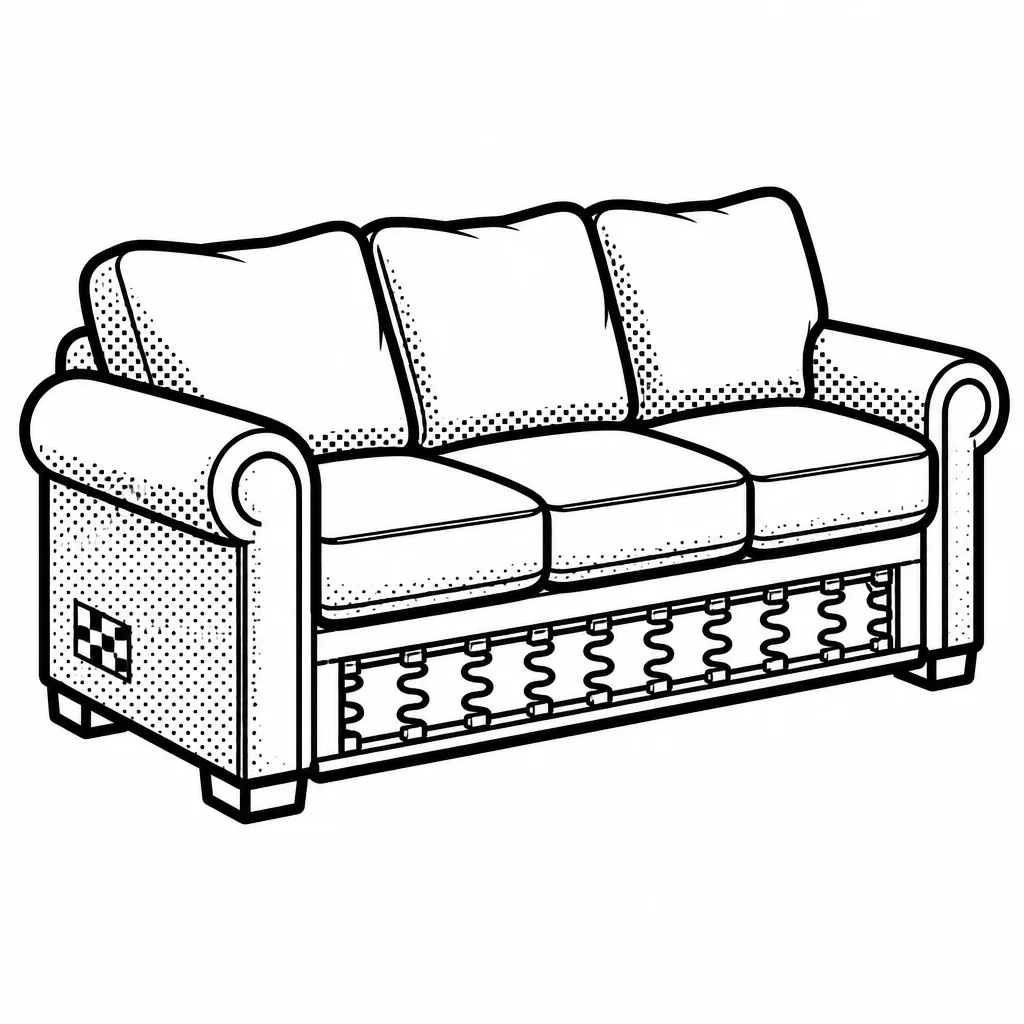
The thing Flexsteel is best known for is a piece of steel it puts inside its furniture. That's where the name comes from. The company invented a sturdy, blue steel spring system that it calls the Blue Ribbon spring, and it has used that as a selling point for decades — the idea being that a sofa built around a strong steel frame will last longer than one built with cheaper springs. That reputation for durability is a big reason customers pick Flexsteel over the many other furniture brands on the market. Flexsteel sells through furniture stores and other retailers rather than mostly through its own shops, so its revenue comes from dealers and stores that stock its products, along with its commercial business that outfits offices, hotels, and healthcare spaces. The furniture business is notoriously cyclical: when people feel good about their finances and buy homes, they buy furniture, and when they don't, they hold off. That makes Flexsteel's sales sensitive to the housing market and the wider economy, and the company has had to manage swings in demand, supply chain costs, and competition from cheaper imports.
In recent years Flexsteel has worked to simplify its operations and focus on its core upholstered and wood furniture lines, and it pays a dividend to shareholders. Like most furniture makers, its challenge is staying profitable while competing on price with big rivals and imports, which is why that reputation for solid construction matters so much — it gives customers a reason to pay for a Flexsteel sofa instead of a cheaper one.
Saved answer · last researched 11 Nov 2026
BIG PICTURE
7% of U.S. adults rarely sleep in their own beds, so Flexsteel built a chair for them
- 7% U.S. adults who don't consistently sleep in a bed
- 93% U.S. adults who sleep in their beds
Flexsteel's researchers found that about 7 in 100 American adults regularly sleep on a couch or recliner instead of a bed. That small slice became Zecliner, a chair built for a full night's sleep, and the company says such health and wellness products should reach roughly 12% of revenue. Flexsteel still sells most of its furniture through independent retailers, where a strange new product has to earn shelf space. Source: Investing.com, Flexsteel Lytham Partners Fall 2026 Investor Conference, data from 2026
Timeline
A German Apprentice Starts a Seating Business
Frank Bertsch came from Germany with just 50 cents in his pocket and learned the upholstery trade as an apprentice. In 1893 he helped found a small furniture company in Minneapolis making upholstered pieces, and a few years later he and three partners bought it and renamed it Grau & Curtis. From the very start the company made seating, which turned out to be the seed of everything that followed.
The Flexsteel Spring Arrives
In 1927 a furniture maker called Northome added a new kind of spring to its designs, dreamed up by E. Werner Schlaprittzi and modeled on the springs inside clocks and tree branches. Northome soon bought half of the company that made the spring, and that spring maker was renamed Flexsteel Spring Corporation. Products carrying the spring came with extended guarantees, later a lifetime guarantee, and that promise became the company's defining feature.
Move to Dubuque and the Assembly Line
Unionization attempts pushed the Bertsch family to move operations to Dubuque, Iowa, into an old Brunswick Victrola plant. There the company borrowed Ford's idea of a moving assembly line, among the first in the furniture industry. Over the next decade, production jumped from one million to four million units a year.
The Company Takes the Spring's Name
The Flexsteel spring became so well known that in 1958 the company renamed itself Flexsteel Industries. By then it had already opened a second plant in Lancaster, Pennsylvania, and launched its first national advertising campaign.
Flexsteel Goes Public
Flexsteel sold shares to the public after posting net income of $1.17 million on revenues of $25 million. During the 1960s it had also pushed into recliners with Flex-o-Lounger and into seating for recreational vehicles.
Buying National Furniture and a Chair Division
Flexsteel bought National Furniture Manufacturing in Evansville, Indiana, for cash and entered the exposed-wood furniture market with its Charisma chair division. By the end of the decade it had also won the entire seating and sleeping business for General Motors RVs.
A Push into Commercial Seating
Flexsteel created a commercial seating division with its own sales force, aimed at healthcare and institutional settings. That took the company beyond home and RV furniture into contract markets, and sales climbed through the 1980s to $173 million by 1990.
The Crash: ERP, Tariffs and COVID
In 2019 Flexsteel began a restructuring to simplify the business, exiting commercial office and custom-design hospitality lines and cutting its workforce. Then came a disastrous ERP rollout, tariffs on Chinese goods that made up a big slice of revenue, and COVID-19. The stock fell from a $62.46 high in 2016 to $7.99 in May 2020, an 87% plunge, and the crisis forced the company to refocus on its core residential home furnishings business.
The Strategic Reset Pays Off
Flexsteel finished a multi-year reset: exiting non-core product lines, closing a Pennsylvania plant, consolidating production and shutting its direct-to-consumer retail showrooms. The leaner cost structure brought a return to profitability in fiscal 2024. The company refocused on its wholesale dealer network of roughly 2,000 retail partners.
Derek Schmidt Becomes CEO
Derek P. Schmidt became President and CEO in July 2024, succeeding Jerald K. Dittmer. Schmidt had been central to the company's transformation since joining in 2020, and he was promoted to lead its growth strategy.
Eleven Straight Quarters of Growth
Flexsteel reported 11 consecutive quarters of year-over-year growth even in a weak furniture market, with fiscal 2026 sales just under $500 million and adjusted operating margin up to 7.5% from about 1% in 2022. New health-and-wellness products like the Zecliner and Zen lines were expected to reach about 12% of revenue, up from zero three years earlier. Management set a long-term target of $750 million in sales and 8%+ operating margins, backed by innovation and potential acquisitions.