Understand any stock in simple English
Enter a ticker to learn what the company does and how it makes money.
MillerKnoll, Inc.
MillerKnoll designs and sells office and home furniture, including famous chairs and desks, to businesses and consumers around the world.
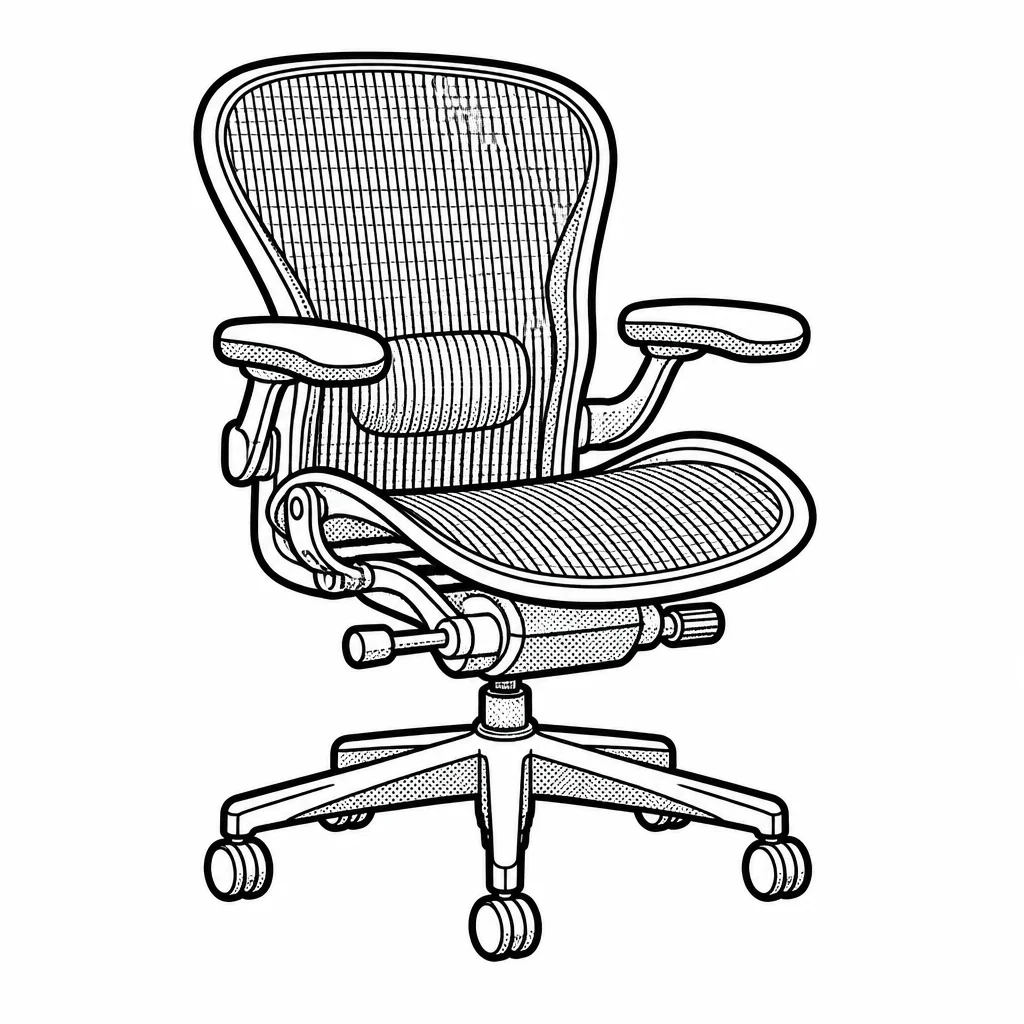
MillerKnoll is a furniture company. It makes the chairs, desks, and couches that fill offices, living rooms, and waiting areas around the world. You have probably sat in its stuff without knowing it. The company's most famous product is the Aeron chair, the mesh-backed office chair that became a status symbol in corporate America. It also owns a family of well-known furniture brands, including Herman Miller, Knoll, and Design Within Reach.
The business runs on two big customer groups. One is the contract market: companies, schools, hospitals, and landlords who buy furniture in bulk when they build or remodel offices. These buyers care about durability, design, and whether the furniture helps people work. The other is retail: individual people buying a nice chair for a home office or a couch for the living room, often through the company's own stores and websites. MillerKnoll also sells internationally, and its brands carry weight in design-conscious markets like Europe and Asia. The company's history is a story of two rivals merging. Herman Miller and Knoll were competitors for decades, both famous for mid-century modern design. In 2021, Herman Miller bought Knoll and renamed itself MillerKnoll. That deal roughly doubled the size of the business and gave it a huge portfolio of brands. It also loaded the company with debt just before the office furniture market cooled off, as companies pulled back on office spending and many workers stayed home.
That timing hurt. Office furniture demand softened after the pandemic boom in home-office buying faded, and the company has had to work through weaker sales and a heavier debt load. MillerKnoll has responded by cutting costs, paying down debt, and leaning on its retail brands, which reach ordinary shoppers rather than only corporate buyers. The bet is that its design pedigree — those iconic chairs and desks — keeps customers paying a premium even when the broader furniture market is soft.
Saved answer · last researched 11 Nov 2026
BIG PICTURE
89% of companies now require three days a week in the office, yet few are rebuilding their desks
- 89% Companies requiring at least 3 office days a week
- 11% Companies not requiring it
CBRE's 2026 survey found 89% of companies now ask employees to come in at least three days a week, up from 78% a year earlier. You might expect a rush of new desk orders. Far fewer firms are actually redoing their space: only 14% are doing a large office overhaul. MillerKnoll earns most of its money selling office furniture in North America, so returning workers bring hope, but the spending is going toward meeting rooms and flexible layouts, not rows of new desks. Source: CBRE survey, reported by 财富号, data from 2026
Timeline
Star Furniture Starts in Michigan
The company began in 1905 as Star Furniture, making bedroom sets in old-fashioned revival styles. Under Dirk Jan De Pree it became Michigan Star Furniture, and in 1923 he and his father-in-law Herman Miller bought a majority stake and put the Herman Miller name on the door. The problem was simple: they were selling furniture that looked to the past. The business would need a new idea to survive.
Rohde Bets on Modern Design
The Great Depression nearly killed the company, and bankruptcy was on the table when De Pree met a modernist designer named Gilbert Rohde. Rohde told him to stop copying antique furniture and make new designs instead. Herman Miller showed its first modern line at a big Chicago exposition, and the bet paid off — the company had found its identity.
Herman Miller Enters the Office
With Rohde supervising, Herman Miller moved into office furniture, a market it had never touched, and launched the Modular Executive Office Group. This was the first step on a path that would eventually define the company.
Nelson Builds a Design Dream Team
After Rohde died, architect George Nelson took over as design director and brought in stars like Isamu Noguchi and Charles and Ray Eames. Out of that era came pieces people still recognize today, including the Noguchi table and the Eames Lounge Chair. Design became the company's engine, not just its decoration.
The Cubicle Is Born
Herman Miller set up a research division in Ann Arbor, Michigan, and under Robert Propst it developed the Action Office line. A follow-up, Action Office II, introduced the office cubicle — a product that would shape how millions of people worked, for better and for worse.
The Aeron Chair Takes Off
Designed by Bill Stumpf and Don Chadwick, the Aeron Chair became one of the brand's best-selling products and even landed in the permanent collection of the Museum of Modern Art. A chair had become a piece of design history.
Herman Miller Buys Knoll
In April 2021 Herman Miller announced it would buy Knoll for about $1.8 billion, and the deal closed that July. The combined company held 19 brands and reached more than 100 countries — a scale that neither side had alone.
A New Name: MillerKnoll
On November 1, 2021, Herman Miller, Inc. renamed itself MillerKnoll, Inc., and its Nasdaq ticker changed to MLKN. Herman Miller and Knoll stayed as separate brands under one roof, so the new name described the umbrella rather than replacing the labels customers knew.
A Rough Earnings Miss
In 2026 MillerKnoll's stock fell 21% after an earnings miss. Sales of $926.6 million came in below the $942 million forecast, and the next quarter's guidance also disappointed analysts. A company built on design had to answer to the numbers.
CEO Andi Owen Retires
CEO Andi Owen retired on June 30, 2026, after leading the Knoll acquisition and the MillerKnoll rebrand. COO Jeff Stutz, a company veteran since 2001, stepped in as interim CEO while the board searched for a permanent leader.