Understand any stock in simple English
Enter a ticker to learn what the company does and how it makes money.
FedEx Freight Holding Company, Inc.
FedEx Freight is a less-than-truckload trucking company that moves smaller shipments of freight for businesses across North America.
FedEx Freight is the trucking arm of the FedEx empire, and it does one specific job: less-than-truckload shipping. That means it fills its trailers with freight from many different customers at once, rather than dedicating a whole truck to one shipment. If a business has a few pallets of goods that aren't enough to fill a trailer, FedEx Freight is the kind of company it calls.
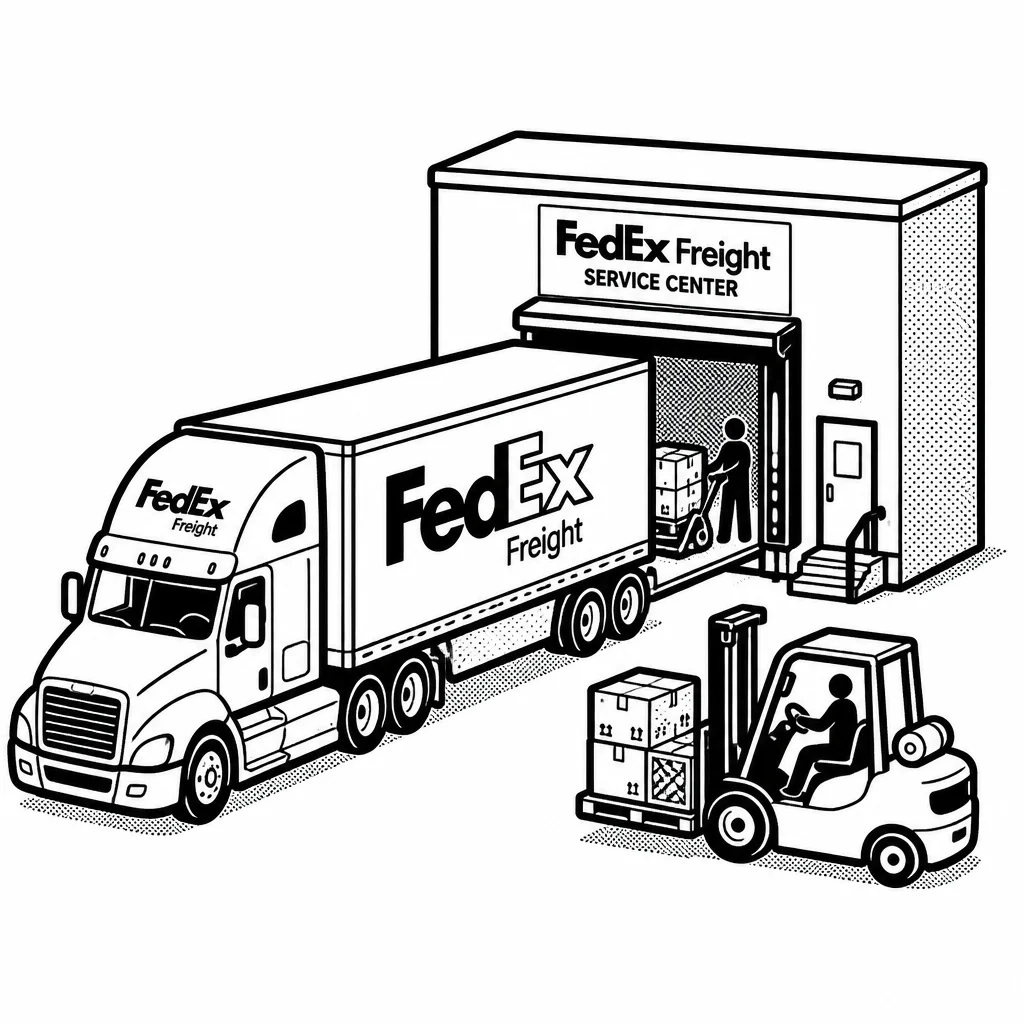
Here's the basic problem it solves. Most businesses can't fill an entire semi-trailer with their own goods, so they'd be wasting money renting a whole truck. Instead, they hand their pallets to a less-than-truckload carrier, which combines shipments from dozens of shippers into one trailer, runs them through a network of terminals, and sorts each piece onto the right truck toward its destination. FedEx Freight operates a big network of these terminals, plus a large fleet of trucks and trailers, so it can pick up freight locally, move it long distances, and deliver it the last few miles. The company is a recent spin-off from FedEx, its former parent. FedEx announced plans to separate the freight division as its own public company, and the business now trades on the New York Stock Exchange. The logic behind the split is that freight is a different business from parcel delivery — less-than-truckload shipping runs on a terminal network and industrial customers, while express parcel runs on airplanes and doorsteps. Separating them lets each be judged and valued on its own. Its customers are shippers of all sizes, from manufacturers and retailers to industrial suppliers, mostly across North America. The big competitors in this business are other large less-than-truckload carriers, such as Old Dominion Freight Line and XPO, plus regional players. The thing that makes this business strong is density: the more freight that flows through a terminal network, the cheaper each shipment becomes to handle, because trucks run full and routes overlap. That scale advantage is also why the industry has consolidated around a few big national carriers.
One honest caveat: less-than-truckload shipping is a cyclical business tied to industrial demand. When the economy slows, freight volumes fall and prices weaken, which hits profits. So the company's results swing with the broader economy more than a steady subscription-style business would. Still, as one of the largest national less-than-truckload carriers with a dense terminal network and the FedEx brand behind it, it sits in a strong position in a business where scale is everything.
Saved answer · last researched 12 Nov 2026