Understand any stock in simple English
Enter a ticker to learn what the company does and how it makes money.
Dover Corporation
Dover makes a wide range of industrial equipment and parts — from pumps and fueling systems to food equipment and clean-energy components — and sells them to other businesses.
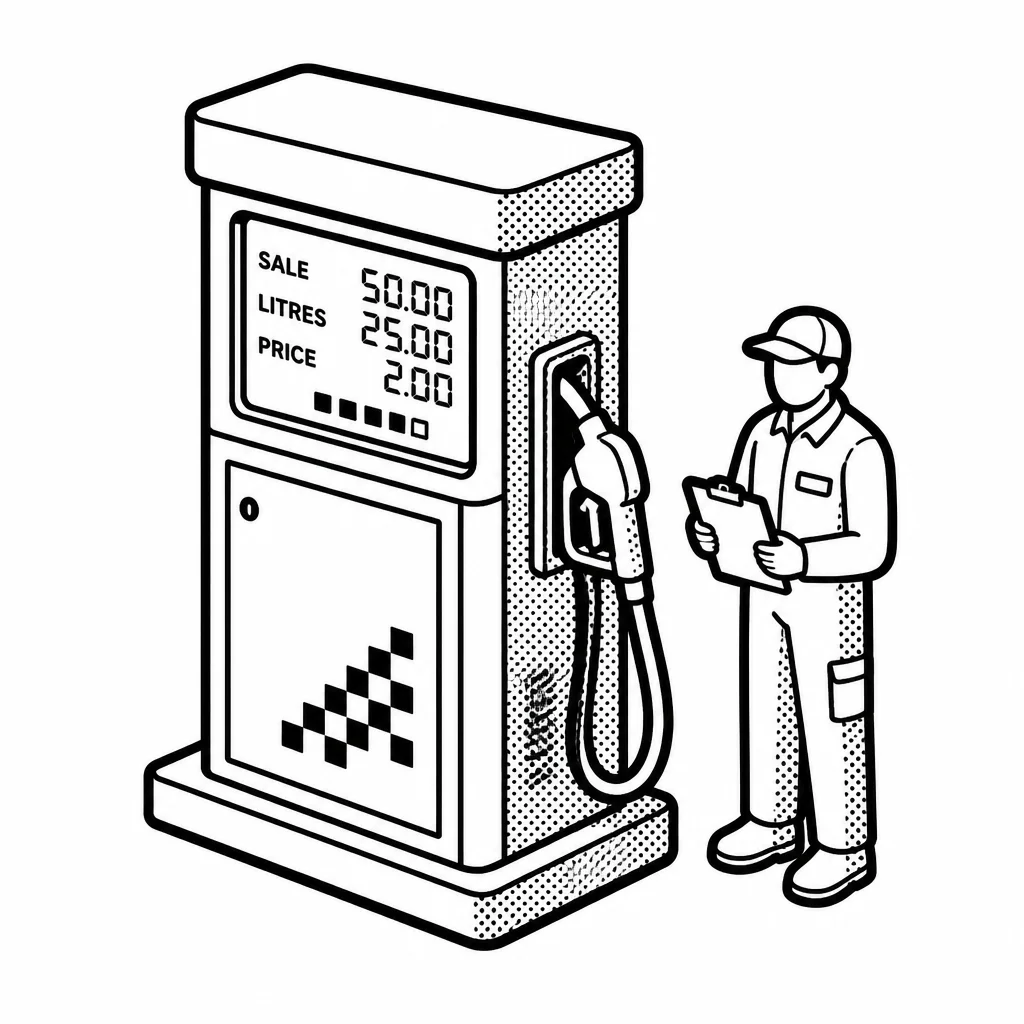
Dover is the kind of company most people have never heard of, even though its products touch their lives every day. It's a diversified industrial manufacturer: it builds the pumps that move fuel at gas stations, the machines that fill and seal food packaging, the equipment that handles fluids in factories, and components used in clean-energy and biopharma operations. It doesn't sell to you directly — it sells to other businesses, the companies that make your food, fuel your car, or build the things you buy.
Dover runs this as a collection of separate businesses under one roof, each focused on a different niche market. That setup lets it spread risk: when one market slows down, others may hold up. The company also leans heavily on aftermarket sales — replacement parts, service, and consumables — because those repeat purchases tend to be stickier and more profitable than selling a new machine once. Customers choose Dover's brands because the equipment is deeply embedded in their operations and switching is a hassle. The company generates steady cash and uses it in familiar ways: paying a dividend, buying back shares, and acquiring smaller businesses to bolt onto its existing segments. It has a long track record of raising its dividend, which matters to income-focused investors. Like any industrial conglomerate, it faces pressure from economic cycles, supply-chain swings, and competitors in each niche, but its diversified base and recurring service revenue give it a cushion.
Dover isn't a flashy growth story. It's a quiet, cash-generating manufacturer whose real edge is owning lots of small, essential businesses that customers can't easily replace.
Saved answer · last researched 12 Nov 2026
BIG PICTURE
More than a quarter of Dover's revenue now comes from fast-growing markets like clean energy and data-center cooling
- 25% Secular growth markets
- 75% Core cyclical businesses
Dover says markets it calls secular growth now bring in more than a quarter of its revenue, up from 18% in 2024. These are the corners of the business tied to long-running shifts: clean energy components, CO2 refrigeration, cryogenic parts for LNG and space launches, and heat exchangers that cool data centers. That growing slice is what management points to for expected 2026 growth. Source: TipRanks, data from 2026
Timeline
Four Small Manufacturers Become Dover
In the 1930s and 1940s, a New York stockbroker named George Ohrstrom bought four small manufacturers: one made seals and piston rings, one made car lifts, one made rods for oil wells, and one made space heaters. He brought in Fred Durham, a former business owner, to run them as one company, and Dover was born. Durham became its first president, and the company listed on the New York Stock Exchange that same year.
Dover Buys Shepard Warner Elevator
A few years later, Dover bought Shepard Warner Elevator Company, its first step into a business it would keep expanding. More elevator purchases followed, and for many years Dover stood as the third largest elevator company in the country.
Dover Buys Imaje Printing
In 1995 Dover made its biggest purchase ever, paying $200 million for most of France's Imaje Printing Products. The deal gave Dover a strong base in printing and labeling, a platform it later combined with Markem to form Markem-Imaje.
Dover Sells Its Elevator Division
Four years later, Dover sold its elevator division to Thyssen AG for $1.1 billion. The business had served Dover well, but selling it freed up money and attention for other parts of the company.
Robert Livingston Takes Over
Robert Livingston became CEO and president in 2008. Under his leadership, Dover moved its headquarters from New York City to the Chicago area, which brought operations closer together and cut administrative costs.
Dover Spins Off Knowles
In 2014 Dover spun off Knowles, its acoustics and consumer-electronics parts business, into its own public company. The move made Dover's earnings less jumpy and focused the company on energy, fluids, refrigeration and food equipment, and printing and identification.
Richard Tobin Takes Over and Apergy Spins Off
Richard Tobin, already a Dover director, became president and CEO in 2018. That same year, Dover spun off a large chunk of its Energy segment, including its upstream energy businesses, into a separate public company called Apergy.
Dover Sells DESTACO and Environmental Solutions
In 2024 Dover sold its DESTACO business to Stabilus for $680 million and its Environmental Solutions Group to Terex for $2 billion in cash. Both moves cut Dover's exposure to boom-and-bust capital goods and pointed its money toward core platforms.
Dover's Growth Markets Climb Above 25%
By 2026, fast-growing markets like AI and power infrastructure, energy transition, single-use biopharma, and space launch made up over 25% of revenue, up from 18% in 2024. Organic growth in the third quarter sped up to 7%, with bookings up 16% and backlog up 35% from a year earlier. Dover raised its full-year guidance toward double-digit adjusted earnings growth, and roughly half of its backlog was set to ship in 2027.