Understand any stock in simple English
Enter a ticker to learn what the company does and how it makes money.
Danfoss A/S
Danfoss makes the valves, pumps, compressors, and electronic controls that keep factories, buildings, and farms running efficiently.
Danfoss makes the unglamorous hardware that keeps the modern world running: valves, pumps, compressors, motors, and the electronic controls that tie them together. Its stuff sits inside office air-conditioning systems, supermarket freezers, factory production lines, and the hydraulics of tractors and excavators. Customers are mostly businesses — HVAC manufacturers, refrigeration companies, machine builders, and farmers — who buy Danfoss parts because they need them to be reliable for years and efficient enough to keep electricity bills down. The company is still controlled by the family of its founder, Mads Clausen, through a foundation, and it is headquartered in a small Danish town called Nordborg.
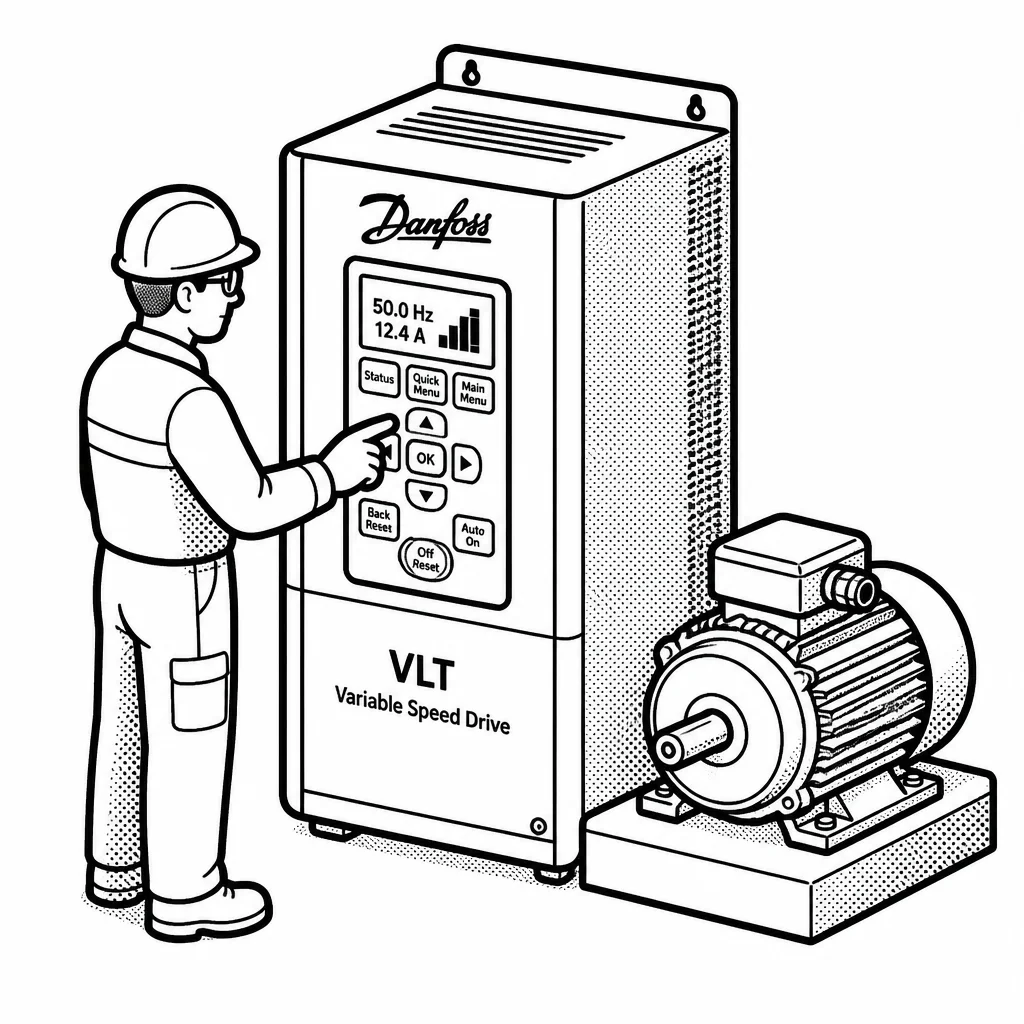
Danfoss runs three main businesses. Its Power Electronics segment makes the variable-frequency drives and power modules that let a motor run at the speed a job actually needs instead of full blast all the time — a supermarket freezer or a water pump saves real money that way. Its Climate Solutions segment sells compressors, valves, and controls for refrigeration and air conditioning, and has been pushing hard into heat pumps as Europe moves away from gas boilers. Its Power Solutions segment covers hydraulics — the cylinders and pumps that lift a tractor's front loader or drive an excavator — and also the electrification of those same machines, which is a big deal as cities and farms look to cut diesel use. Danfoss is a private company, so it doesn't answer to stock markets, but it still reports numbers. Revenue was about €10 billion in 2023. It has grown a lot by acquisition, buying Eaton's hydraulics business in 2021 to become a much bigger player in mobile and industrial hydraulics, and it has spent heavily on heat pumps and on electrifying heavy machinery. That growth has not been all smooth: like many industrial suppliers, it has had to manage a tough stretch of softer demand in some of its end markets, and it has cut costs and jobs in response. It also competes with giants such as Siemens and ABB in drives and electrification, and with Parker Hannifin in hydraulics, so size and engineering depth matter.
Its edge comes from being a specialist in the small, precise parts that big systems depend on, and from staying private, which lets it think in decades rather than quarters. The founder's foundation still owns the company, so management can invest in factories and new technology without worrying about a share price. The main risk is cyclicality: when construction, manufacturing, or farming slows, customers stop ordering valves and drives, and Danfoss feels it fast. The bet now is that the world's push for energy efficiency — heat pumps, electrified machines, smarter motors — will keep its products in demand for a long time.
Saved answer · last researched 10 Nov 2026