Understand any stock in simple English
Enter a ticker to learn what the company does and how it makes money.
Emerson Electric Co.
Emerson makes industrial automation equipment and software — valves, gauges, sensors, and control systems — that help factories, refineries, and power plants run safely and efficiently.
Emerson is a company that most people have never heard of, yet it quietly helps keep the physical world running. If you work in a chemical plant, an oil refinery, a power station, or a food factory, chances are Emerson gear is measuring your pressure, watching your temperature, and opening and closing your valves. The company sells the instruments and control systems that industrial manufacturers rely on to keep their operations safe, efficient, and running around the clock.
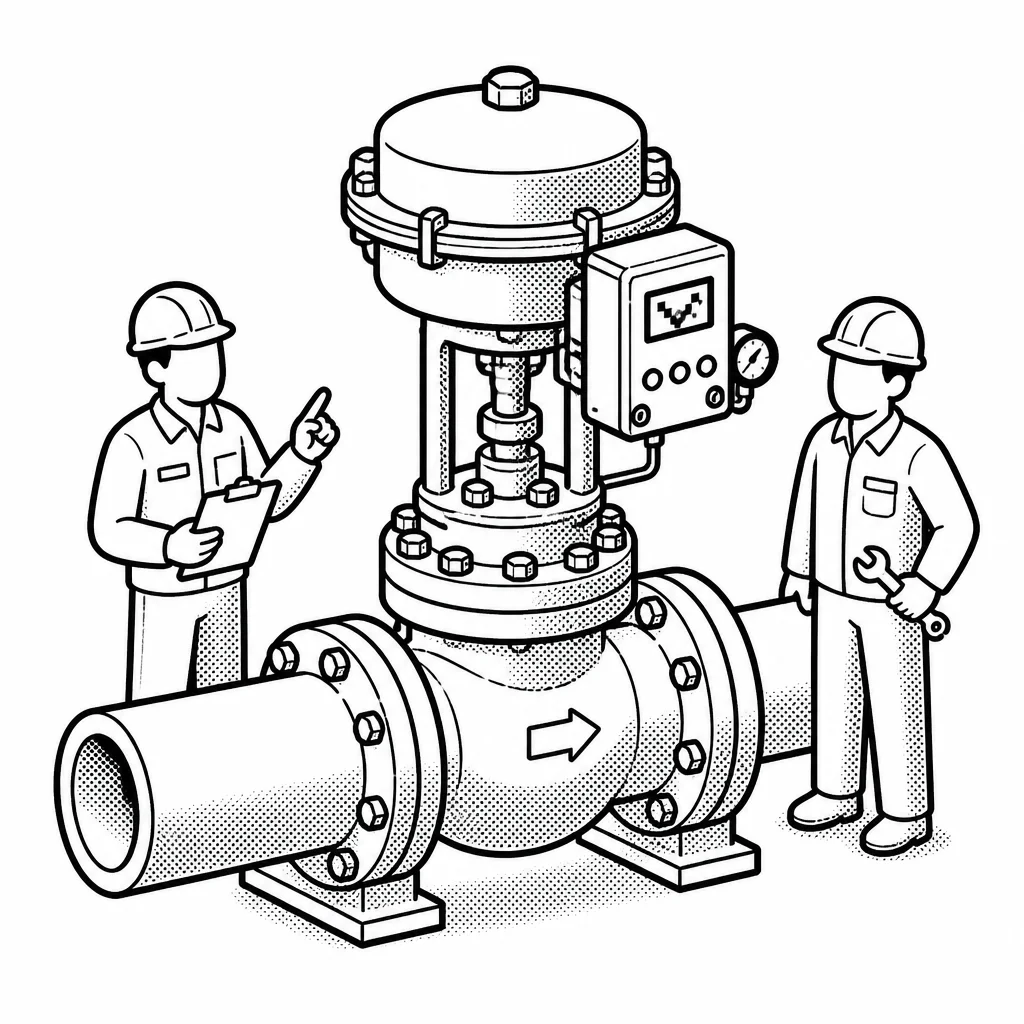
The business has two big pieces. The larger one is automation — the software and hardware that lets a plant monitor and control its processes. That includes valves, regulators, gauges, sensors, and the control systems that tie them together. The smaller piece is commercial and residential solutions, which sells things like compressors and tools; Emerson has been reshaping this side, selling off big chunks such as its climate technologies business to focus harder on automation. Customers pay Emerson because a refinery or a pharmaceutical plant cannot afford to guess whether a pipe is about to burst or a batch of medicine is off-spec — reliable measurement and control is worth real money. The company is old, founded in 1890 in St. Louis, where it is still headquartered. For decades it was known as a maker of electric motors and tools, but it has steadily transformed itself into an automation specialist, often by buying businesses that add software or niche hardware. That shift matters because automation tends to be stickier and more profitable than selling commodity hardware: once a plant builds its control system around Emerson's gear, ripping it out is painful.
Emerson's real advantage is that its products sit inside customers' operations for years, which creates recurring service and software revenue and makes switching costly. The vulnerability is cyclicality — when industrial spending slows, factories delay upgrades. The company throws off solid cash and returns much of it to shareholders through dividends and buybacks, a habit it has kept for decades. Competitors include Rockwell Automation, ABB, and Siemens, all fighting for the same plant floors.
Saved answer · last researched 12 Nov 2026
Timeline
Two Brothers Start Emerson
In the late 1800s, two Scottish brothers, Charles and Alexander Meston, noticed something odd: electric motors existed, but they were unreliable, and few businesses trusted them. They saw a huge opportunity in building motors that simply worked. With money from John Wesley Emerson, a former Union officer, judge and lawyer, they started Emerson Electric Manufacturing Co. in St. Louis, Missouri.
The Ceiling Fan Takes Off
A few years later, Emerson launched the ceiling fan, a simple product that made tall buildings livable in hot weather. It caught on fast, and the ceiling fan business quickly grew to half of the company's business.
Buck Persons Takes Charge
By the early 1950s, Emerson was a small company with sales of only $45 million and years of accumulated problems. Wallace R. "Buck" Persons became president and fixed the basics: he reorganized production around standardized parts so the company could mass-produce, and he doubled the engineering staff. More importantly, he set Emerson on a course of continuous diversification and expansion into commercial markets.
Emerson Goes Shopping
To grow beyond its old base, Emerson began an acquisition program, targeting quality producers with strong marketing skills. More than ten companies were added in the 1960s, including U.S. Electrical Motors, Ridge Tool, Therm-o-Disc, White-Rodgers and In-Sink-Erator. The deals did more than add products: they lessened Emerson's dependence on uncertain defense contracts.
The Long Search Finds Chuck Knight
Emerson ran a two-year search for its next leader, reviewing 150 candidates. The winner was Charles F. "Chuck" Knight, who had actually been a consultant helping find Persons's successor. Knight built a disciplined management planning process that became famous in business schools.
Rosemount Joins the Fold
Emerson made a strong entry into the industrial measurement and process control business by buying Rosemount, Inc. This became a core part of the company's automation business.
Emerson Drops Electric From Its Name
Emerson removed "Electric" from its name and revamped its logo, its first image change in more than 30 years. The company said it was no longer just a maker of electrical products as it was when founded in 1890. David Farr succeeded Chuck Knight as CEO around the same time.
Lal Karsanbhai Becomes CEO
Lal Karsanbhai was appointed CEO, the company's fourth CEO since 1954. He is an Emerson veteran who led the transformation into a focused automation business.
Emerson Buys National Instruments
Emerson acquired National Instruments for $8.2 billion, adding test and measurement to its portfolio. The deal was part of roughly $20 billion spent rebuilding the portfolio around automation.
Emerson Completes the AspenTech Buy-In
Emerson completed the roughly $7.2 billion buy-in of the remaining AspenTech shares it did not already own, making it a wholly owned subsidiary. It had already sold the Copeland climate technologies business (majority in 2023, remaining stake in 2024) to focus on automation. Fiscal 2025 net sales were $18.0 billion, validating the transformation into a focused automation leader.