Understand any stock in simple English
Enter a ticker to learn what the company does and how it makes money.
CEMEX, S.A.B. de C.V.
Cemex makes and sells cement, ready-mix concrete, and aggregates — the basic ingredients of buildings and roads — all over the world.
Cemex is one of the world's biggest building-materials companies. It makes the gray powder that becomes concrete, mixes and delivers ready-mix concrete to construction sites, and digs up crushed stone and sand. If you have ever watched a building go up, a bridge get poured, or a road get paved, the stuff inside almost certainly started somewhere like a Cemex plant.
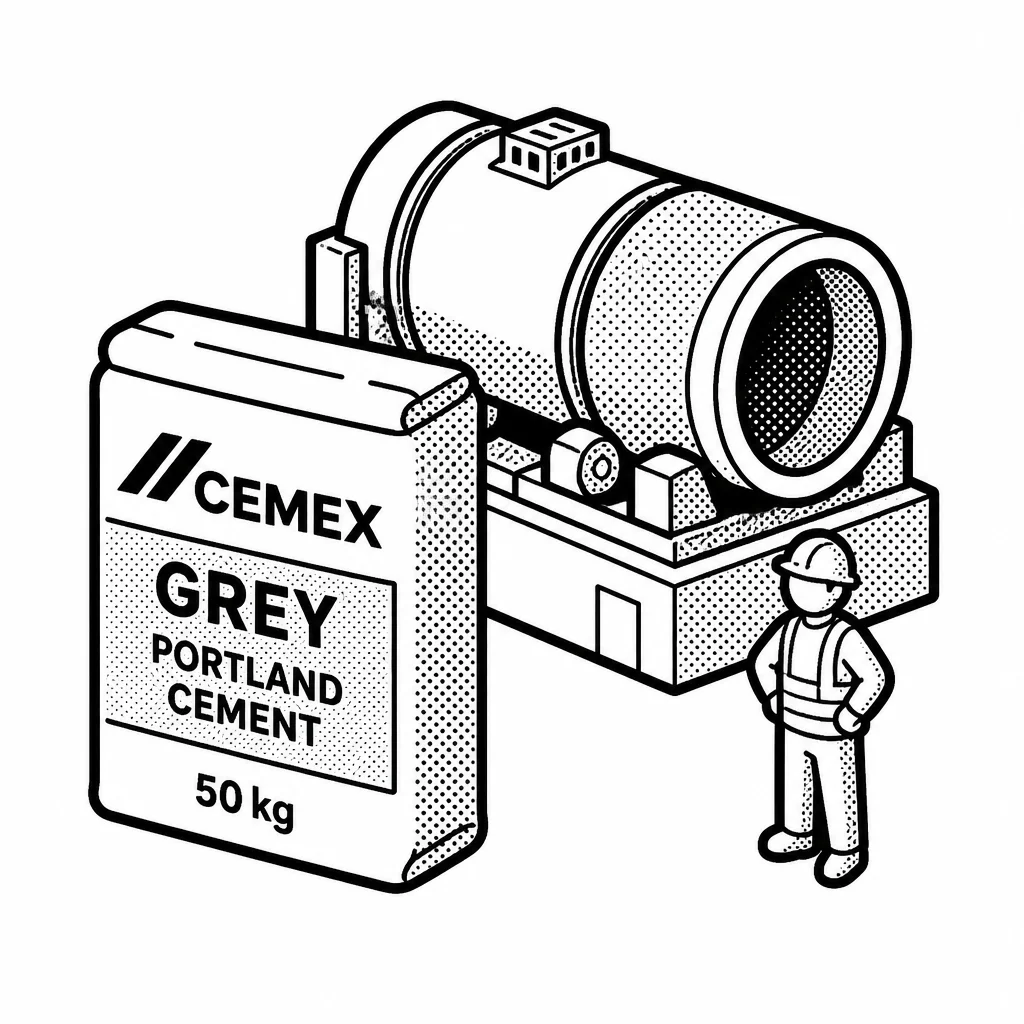
The business is simple at heart. Builders, contractors, and governments need these materials in huge volumes, on tight schedules, and in places where they are building. Cement is heavy and cheap relative to its weight, so shipping it far rarely makes sense. That is why Cemex runs a sprawling network of plants, terminals, and trucks close to its customers — its moat is really location, logistics, and scale. Its main rivals are other global heavyweights like Holcim and Heidelberg Materials, plus countless regional players. Cemex earns money by selling materials by the ton and by the truckload, with ready-mix concrete doing a lot of the heavy lifting in revenue. It sells mostly in the Americas and Europe, with a meaningful presence in the Middle East, Africa, and Asia. The company is famously tied to the economic cycle: when construction booms, it thrives; when building slows, volumes fall and profits squeeze. Cement plants are also expensive to build and carbon-intensive to run, which is why the industry faces rising pressure to cut emissions.
The company is headquartered in Monterrey, Mexico, and its shares trade on the Mexican Stock Exchange. Its history includes a bold bet — in the 1980s and 90s it expanded aggressively abroad, turning a regional Mexican producer into a global giant, though that debt-fueled growth later caused painful restructurings. Today Cemex focuses on paying down debt, raising prices, and investing in lower-carbon products. Its fate rides on interest rates, government infrastructure spending, and how fast the world keeps building.
Saved answer · last researched 12 Nov 2026