Understand any stock in simple English
Enter a ticker to learn what the company does and how it makes money.
ams-OSRAM AG
ams-OSRAM makes tiny sensors and light-based technologies that go into phones, cars, factories, and medical devices.
ams-OSRAM is a sensor and light company. Its parts are mostly invisible to the people who end up using them, but they are what let a smartphone camera focus instantly, a car's headlights adapt to the road, or a factory machine spot a defect on a production line.
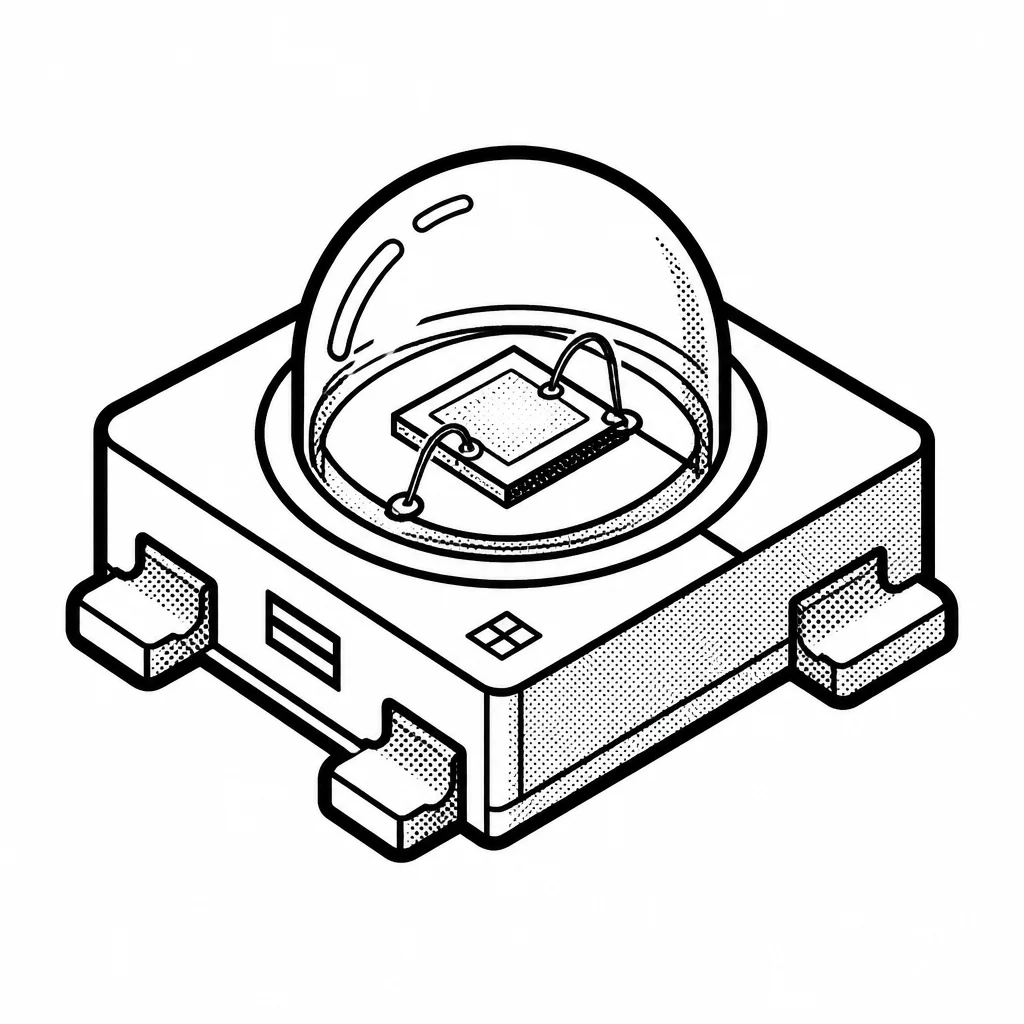
The company sells two broad kinds of technology. One is sensors — chips that detect light, color, distance, or motion and turn the physical world into data. The other is light emitters and optical systems, which produce or shape light for displays, cameras, automotive lighting, and industrial and medical equipment. Its customers are the big manufacturers that build phones, cars, and machines, and they buy these components because they are small, precise, and hard to make well. The business has been through a rough stretch. ams-OSRAM is the product of a big merger that combined ams, an Austrian sensor specialist, with Germany's OSRAM, a lighting company with deep roots in automotive and industrial lamps. The idea was to pair sensors with light to sell more complete solutions, but the integration proved painful, and the company has faced weak demand in key markets like smartphones and autos along with heavy debt from the deal. Management has been cutting costs and reshuffling its portfolio to steady the ship.
The thing to understand about ams-OSRAM is that it sits in a tough, capital-hungry corner of the electronics supply chain. It competes with much larger chipmakers and depends on a handful of huge customers, so a single design win or loss can swing its fortunes. When demand for premium phones or new cars slows, so do its orders — a reminder that behind every clever sensor is a business that rises and falls with the gadgets it helps power.
Saved answer · last researched 15 Nov 2026
BIG PICTURE
ams OSRAM already owns close to 90% of its own lamp-making spin-off
- 90% OSRAM Licht AG shares held by ams OSRAM
- 10% OSRAM Licht AG shares held by other investors
After buying the German lighting company OSRAM, ams gradually took control of its shares. By the end of the third quarter of 2026 it held close to 90% of OSRAM Licht AG, the unit behind the traditional car lamps business. That lamps unit posted an adjusted margin of 23.1%, making it one of the steadier earners while the sensor side absorbs losses and sells off pieces. Source: ams OSRAM Q3 2026 results (Business Wire), data from 2026
Timeline
A Chip Factory in an Austrian Castle
In 1981, an American chip maker and an Austrian steel company teamed up to build semiconductors together. The Austrian side was diversifying beyond steel, and it took a minority stake in a factory set in a castle in Austria — one of the country's first modern chip plants.
The Austrians Take the Reins
Six years later, the Austrian partner bought out the American side and gave the company a new name, AMS. It also opened sales offices in California and Germany, hinting that this small Austrian outfit wanted customers far beyond home.
First on the Vienna Floor
In 1993, ams became the first semiconductor company in Europe to sell shares to the public, listing on the Vienna stock exchange.
Off the Market, Into the Big Leagues
In 2000, with a private equity investor on board, the company left the Vienna exchange and renamed itself austriamicrosystems. The move freed it to build a new, larger wafer factory and strike a license deal with Taiwan's TSMC, the world's biggest chip manufacturer.
Back to the Public, Swiss This Time
Four years later, the company returned to public markets — not in Vienna, but on the Swiss exchange in Zürich.
Buying Into Light
In 2011, it paid about 320 million dollars for a Texas company called TAOS, a specialist in light sensors. That purchase pulled the company into sensor technology, which would soon become the heart of its business.
A New Name for a New Focus
The next year, the company rebranded itself as simply 'ams', blending its own name with the TAOS brand. The new name was a signal: this was no longer just a chip maker, but a sensor company.
A CEO Who Wanted It All
Alexander Everke took over as CEO in 2016 with a simple attitude: go big or go home. Over the next few years he grew revenue roughly tenfold, through both his own business and a string of acquisitions.
The Apple Peak
In early 2018, the stock hit its all-time high. The reason was a win: ams supplied the sensing technology behind Face ID in the iPhone X. But that triumph came with a hidden catch — Apple was estimated at around 60% of revenue, so the company's fortunes now hung on one customer.
Sharing the Sensor With Android
In April 2019, the stock jumped 20% in a single swoosh. The trigger: ams offered its 3D sensor technology, once reserved for Apple, to Android phone makers. Investors loved the idea of a second set of customers.
A Bidding War for OSRAM
Next came a much bolder move. After a bidding contest with the private equity firm Bain Capital, ams bought the larger German lighting company OSRAM in July 2020 for around 4.6 billion euros — paid for largely with borrowed money. Many saw the logic, but the debt made it a gamble.
One Company, One Name
By January 2022, the integration was complete enough that the company renamed itself ams-OSRAM AG.
A New Boss for a Hard Turn
In spring 2023, Aldo Kamper took over as CEO. He had run OSRAM's chip business before, and his job was clear: turn the company around while carrying its heavy debt.
The Apple Bill Comes Due
Then the catch from the Apple peak turned real. Apple slashed its orders, and ams OSRAM booked a loss of over 1.6 billion euros in 2023 as the debt from the OSRAM deal became a crushing burden. Growth talk gave way to survival mode: closing plants and cutting jobs.
The Malaysia MicroLED Bet Is Called Off
In February 2024, the company cancelled its microLED project, including an expensive factory built in Malaysia just for it. The technology turned out to be brutally complex and costly, and when Apple walked away from the project, the equipment sat there with no contract to fill it.