Understand any stock in simple English
Enter a ticker to learn what the company does and how it makes money.
TDK Corporation
TDK makes small electronic parts—like capacitors, batteries, and sensors—that go inside phones, cars, and gadgets.
TDK is a Japanese company that makes the tiny, mostly invisible parts that make modern electronics work. Its biggest products are ceramic capacitors (little components that store and release electricity to keep circuits stable), inductors and other magnetic parts, rechargeable batteries, and sensors. You rarely see TDK's name on anything you buy, but its parts are inside smartphones, cars, laptops, and industrial machines. The company sells to other manufacturers, not to shoppers directly, so its customers are the automakers, phone makers, and gadget builders who need reliable components in huge volumes.
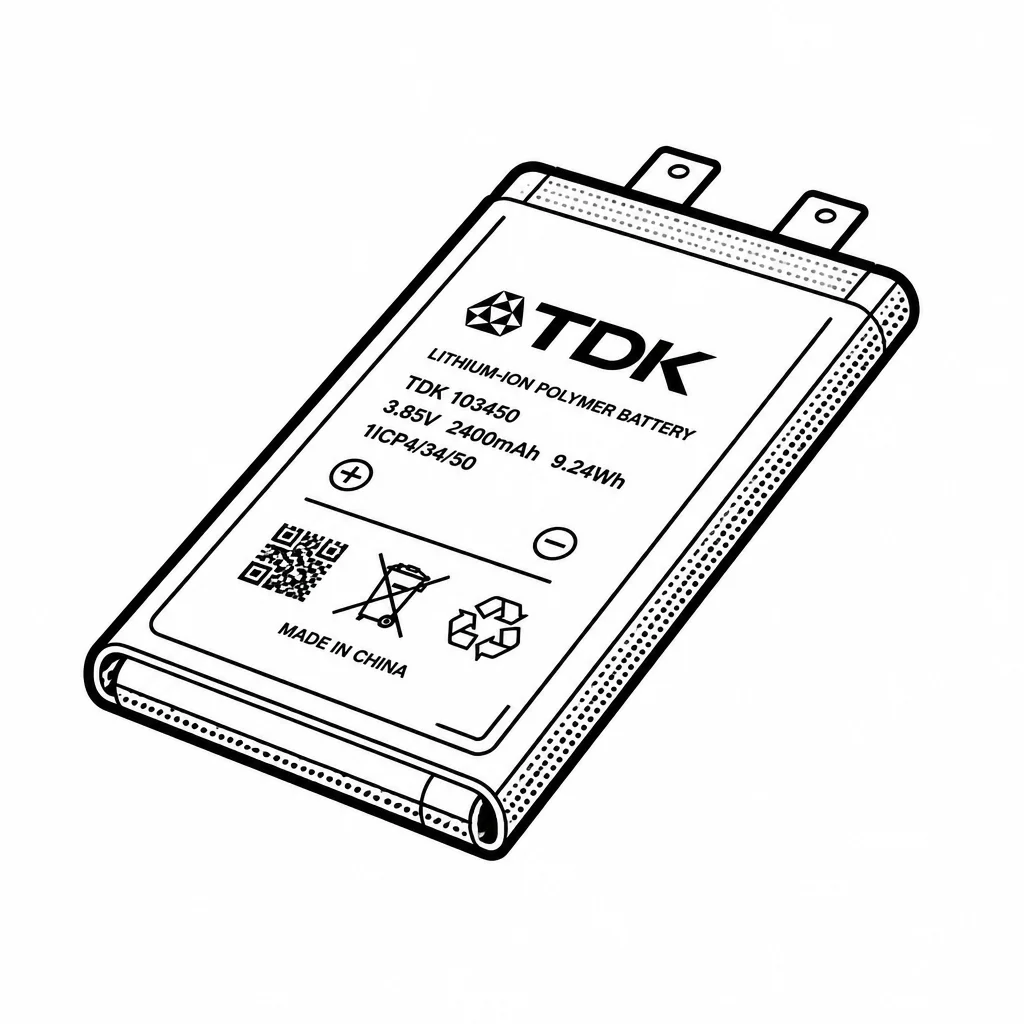
The business runs on a few big engines. Passive components like capacitors and inductors are the steady core, and TDK is one of the world's leading makers of them. Its battery business is a major growth area, especially small lithium-ion cells for phones and wearables, plus larger batteries. TDK also makes magnetic heads for hard drives, sensors for cars and industry, and power supplies. Cars are a particularly important market now, because modern vehicles are packed with electronics—sensors, power components, and batteries—and automakers pay for parts that are tough and long-lasting. TDK has an unusual history. It was founded in 1935 to commercialize ferrite, a magnetic material invented in Japan, and it built its reputation on magnetic and ceramic technology. That same materials expertise is why it can make components that are incredibly small and precise. One striking fact: TDK's lithium-ion battery technology traces back to the work that earned a Nobel Prize in chemistry in 2019, and the company has long been a key supplier of phone batteries. In recent years TDK has pushed harder into batteries and automotive electronics, betting that electric vehicles and connected devices will need more and better power and sensing parts.
The company is a genuinely global manufacturer, with factories and customers spread across Asia, Europe, and the Americas, and it competes with other big Japanese and international component makers. Its edge comes from materials science and manufacturing scale—making millions of tiny parts at extremely low defect rates is hard, and TDK has done it for decades. The risks are the flip side of that business: demand swings with the electronics and auto cycles, prices for commodity-like parts can fall, and the company must keep investing in new factories and technology to stay ahead. TDK returns cash to shareholders through dividends and share buybacks while funding that research and expansion, which is how a quiet parts maker stays relevant in a fast-moving industry.
Saved answer · last researched 12 Nov 2026