Understand any stock in simple English
Enter a ticker to learn what the company does and how it makes money.
Yamaha Corporation
Yamaha makes and sells musical instruments, audio equipment, and electronic devices to consumers and businesses around the world.
Yamaha is one of the world's best-known makers of musical instruments and audio gear. If you have ever seen a school band, a concert stage, or a home stereo, chances are good that Yamaha made something in the room. The company sells pianos, guitars, drums, and band instruments, along with electronics like audio mixers, speakers, and headphones. It also makes the chips and modules that go inside cars, phones, and other devices, and it builds industrial machinery.
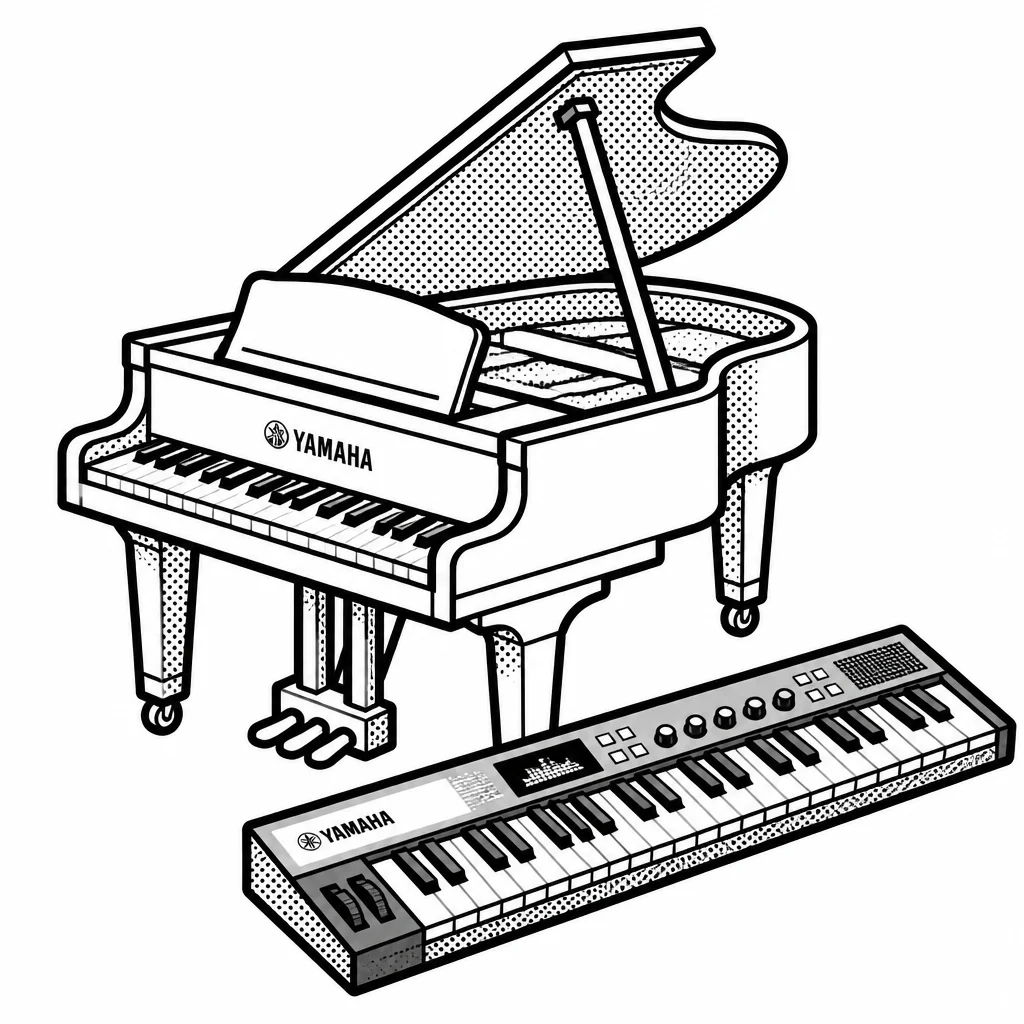
What makes Yamaha unusual is how wide it spreads itself. It sells to three very different kinds of customers: hobbyists and professional musicians who buy instruments, businesses and consumers who buy audio and networking gear, and manufacturers who buy its electronic components. That mix matters because the pieces move in different rhythms. When people stop buying pianos during a slow economy, the car-chip business can keep humming along, and when one market cools, another may pick up. Customers choose Yamaha because the brand has been trusted for generations — a parent buying a first guitar, a church buying a piano, or a carmaker sourcing a reliable chip all expect the name to mean something. The company is headquartered in Hamamatsu, Japan, a city that has become a global hub for instrument making. Its roots go back to the 1880s, when a young man named Torakusu Yamaha repaired a broken organ and then decided to build his own. That origin story still shapes the business: Yamaha is a company built by people who like to make things work, and it has spent more than a century turning that curiosity into products.
Yamaha is a large public company with annual sales in the hundreds of billions of yen, and it pays shareholders a steady dividend. It competes with other instrument makers and audio brands, and it is not the cheapest option in any of its markets. Its edge is reputation built over decades — the kind of trust that takes generations to earn and is very hard to copy.
Saved answer · last researched 13 Nov 2026
BIG PICTURE
Yamaha holds 9.7% of the global motorcycle market as one of its top brands
- 9.7% Yamaha's global motorcycle market share
- 90.3% Other motorcycle brands
Yamaha sold 482.7 million motorcycles in fiscal 2023, giving it 9.7% of a global market of 49.94 million units. That is a big slice for a single brand in a crowded field. The company's home region is Asia, where it sold 3.9 million motorcycles in fiscal 2025, or 78% of its total, mostly small commuter bikes. Source: Guohai Securities, data from 2023
Timeline
A Broken Organ Gets Fixed
A young man named Torakusu Yamaha fixed a broken reed organ at an elementary school in Hamamatsu, and by the end of that year he had built one himself. That repair job was the seed of everything: the Yamaha brand still carries his name, and the whole company grew out of one person figuring out how a musical instrument worked and then making his own.
Nippon Gakki Is Founded
A decade later, the founder turned his workshop into a real company called Nippon Gakki, with himself as its first president. The next year the company picked a tuning fork as its mark, and that simple symbol is still the logo today.
Yamaha Goes Public
Listing on the Tokyo Stock Exchange gave the company access to public money, which it used to grow into a full-range maker of musical instruments. Selling shares to strangers is how a family-style workshop becomes a serious player.
Teaching Music, Not Just Selling Instruments
Yamaha opened its own music schools and ran pilot classes, and it also made its first audio product, a HiFi player. The thinking was bigger than selling instruments: grow the number of people who play music, and build new businesses out of sound technology.
The Motorcycle Splits Off
Yamaha launched a motorcycle called the YA-1 and spun the vehicle division into a separate company, Yamaha Motor. This let the musical instrument company keep its focus on sound and music, while the motorcycle business went its own way.
A New Name for the Hundredth Year
On its hundredth birthday, Nippon Gakki changed its name to Yamaha Corporation. The legal name finally matched the brand the world already knew, the one built on the founder's own name.
Yamaha Buys Steinberg
Yamaha bought Steinberg, a German maker of music software, adding production and recording tools to its instruments and audio hardware. Software was becoming part of how music gets made, and Yamaha wanted in.
Two Premium Brands Join
Yamaha acquired Bösendorfer, an Austrian piano maker known for premium instruments, and NEXO, a French maker of professional loudspeakers. One strengthened its acoustic side, the other its audio lineup, and both added brands with reputations of their own.
Line 6 and a Guitar Empire
Yamaha bought Line 6, a U.S. maker of musical instruments and audio gear, and later added the Ampeg and Córdoba brands. Piece by piece, it built a multi-brand guitar business meant to be a growth pillar.
Disguise and a Move Beyond Sound
Yamaha agreed to buy Disguise, a London company that makes software and media servers for live and immersive shows. It is a step past instruments and audio into video, lighting and experiences, and the president called it a new pillar built around sound and music.