Understand any stock in simple English
Enter a ticker to learn what the company does and how it makes money.
Roland Corporation
Roland makes electronic musical instruments, gear, and software for musicians around the world.
Roland is a Japanese company that makes the tools musicians plug in, hit, and play through. Its best-known products are electronic keyboards and synthesizers, electronic drum kits, and the gear that guitarists and producers use to shape their sound. If you have seen a band on stage with a glowing red keyboard or a drummer tapping rubber pads instead of acoustic drums, there is a decent chance Roland made the gear.
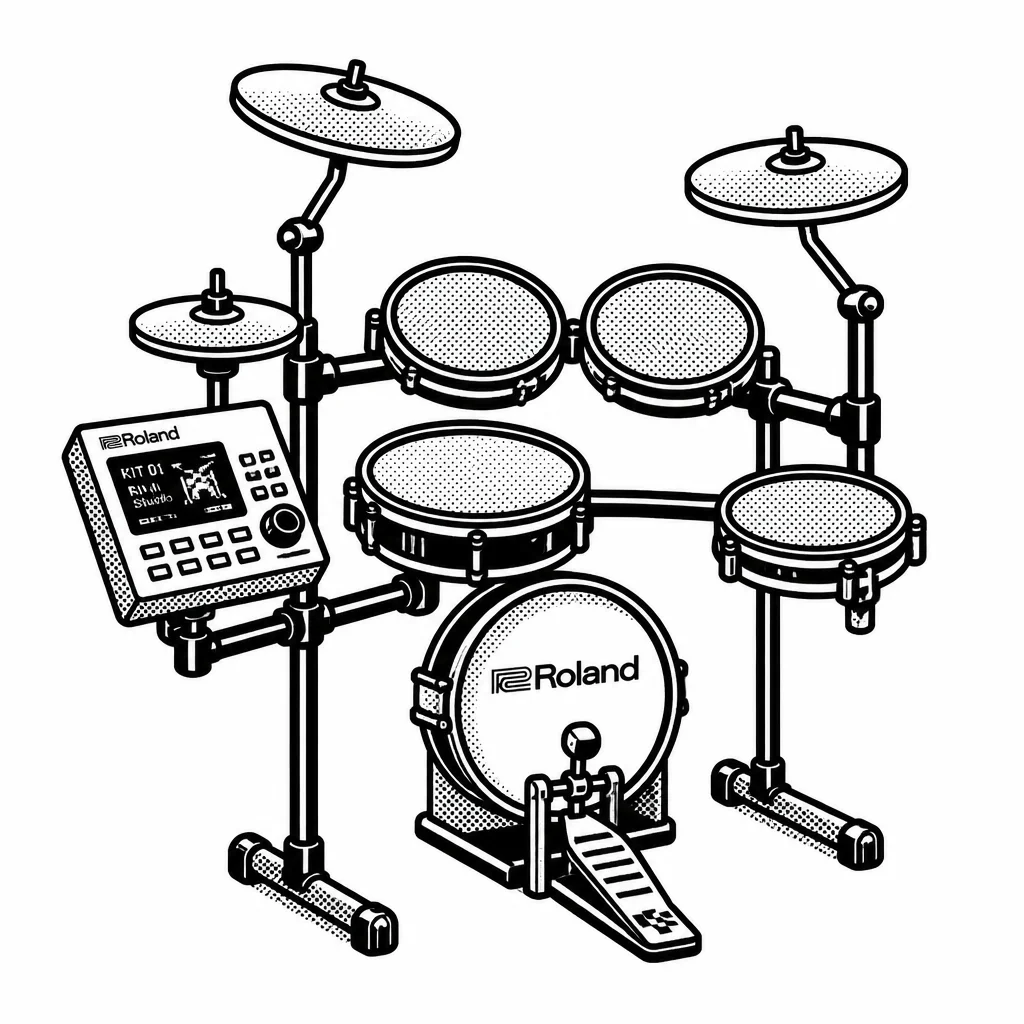
The company sells to two broad groups. One is hobbyists and working musicians who buy instruments for themselves. The other is professional studios, schools, and touring acts that need reliable equipment night after night. Roland also earns money from software and from the sounds and content that go with its instruments, so a customer who buys one of its keyboards can keep spending on updates and add-ons. Musicians choose Roland because its gear is tough, sounds good, and has a long history of being trusted on stage and in the studio. Roland has been around since 1972, and it helped shape electronic music along the way. Its drum machines and synthesizers became famous sounds in pop, hip-hop, and dance music. That history matters commercially: it gives Roland a reputation that a new brand cannot easily buy. Its main rivals are other big instrument makers like Yamaha and Korg, though Korg is not publicly listed under its own ticker, so the competitive pressure comes from a mix of large diversified electronics firms and specialist music brands.
The business is steadier than it might look. Musicians keep buying instruments through good times and bad, and Roland's mix of hardware and software gives it more than one way to make money. The risk is that hardware sales can be cyclical and that cheap software instruments now compete with physical gear. Roland's answer has been to keep pushing new products and to lean on its brand and its ecosystem of sounds and software. It is a company that sells the joy of making music, and that has been a durable business for more than fifty years.
Saved answer · last researched 14 Nov 2026
BIG PICTURE
Roland makes almost all its money outside Japan, where it was founded
- 90% Sales outside Japan
- 10% Sales inside Japan
Roland builds electronic pianos, drums and guitar gear in Japan, yet more than 90% of its sales come from overseas, with the United States and Europe as its biggest markets. For a company born in Hamamatsu in 1972, that means the health of foreign musicians' wallets matters more than the Japanese economy. Source: StartHome Research Memo, data from 2026
Timeline
Kakehashi Starts Roland
Ikutaro Kakehashi had already built one electronics company before he started Roland in Osaka in 1972. He noticed that the big synthesizer makers, Moog and ARP, were chasing professional musicians, so he went the other way: small, cheap, simple instruments for amateurs and hobbyists like himself, even though he had no musical training. He picked the name Roland because it was easy to say in export markets — he found it in a phone book, drawn by the unused letter R.
The TR-808 Drum Machine
That year, Kakehashi saw that microprocessors could program drum machines, and Roland brought out the TR-808. It was not a hit at first. Then hip hop and electronic music producers got hold of it, and the 808 ended up on more hit records than any other drum machine.
Roland Helps Build MIDI
A machine from one company could not easily talk to a machine from another. Kakehashi pushed for a shared language, bringing Oberheim, Sequential Circuits, Yamaha, Korg and Kawai on board, and Roland unveiled MIDI with Dave Smith in 1983. It is still the standard that keeps electronic instruments in sync, and it made Roland a central player in how electronic music gets made.
Roland Goes Public in Osaka
Roland listed on the second section of the Osaka Stock Exchange, and later moved up to the first sections of both the Tokyo and Osaka exchanges — a sign of how far the small-instrument maker had come.
Four Straight Years of Losses
The 2008 financial crisis hit, the economy cooled, and a strong yen made life harder for a company selling abroad. Roland posted four straight years of losses in a row.
Private Again, Then Fixed
Roland chose a management buyout backed by the US fund Taiyo Pacific Partners and delisted from the Tokyo Stock Exchange in 2014. Out of the public eye, it cleaned house: stronger governance, better development processes, selling off unprofitable businesses and merging production sites. The turnaround touched every part of the business.
Back on the Tokyo Exchange
After the buyout, Roland returned to the Tokyo Stock Exchange in December 2020 in one of the year's largest listings. Its first price came in about five percent below the offering price as the fund sold roughly forty percent of its shares — a little wobble on a big day.
Roland Buys Drum Workshop
In 2022 Roland bought Drum Workshop, the acoustic drum maker, a deal that came through CEO Gordon Raison's network. It was meant to build a foundation for the Drums & Percussion business and prepare the company for its next growth phase.
A New CEO at Roland
Raison stepped down in mid-2024 for personal reasons, and Masahiro Minowa, the operating and information chief, took over. Raison had pushed globalization as 'One Roland' and rebuilt trust with the stock market; Minowa, a technology veteran who had led the Roland Cloud business, inherited the job of leading the next stage of growth.
Roland's Profit Jumps
Under Minowa, the first nine months of 2026 brought sales up about twelve percent and operating profit up about forty-six percent, helped by new products and a US tariff refund. Roland launched its first Wi-Fi-equipped digital piano and a piano learning app under a strategy called 'Direct Connect', and both acoustic and electronic drums sold well. The company raised its full-year forecast and expected net profit to jump sharply.