Understand any stock in simple English
Enter a ticker to learn what the company does and how it makes money.
Hitachi Construction Machinery Co., Ltd.
Hitachi Construction Machinery builds and sells excavators and other heavy equipment for construction and mining, and also rents and services them.
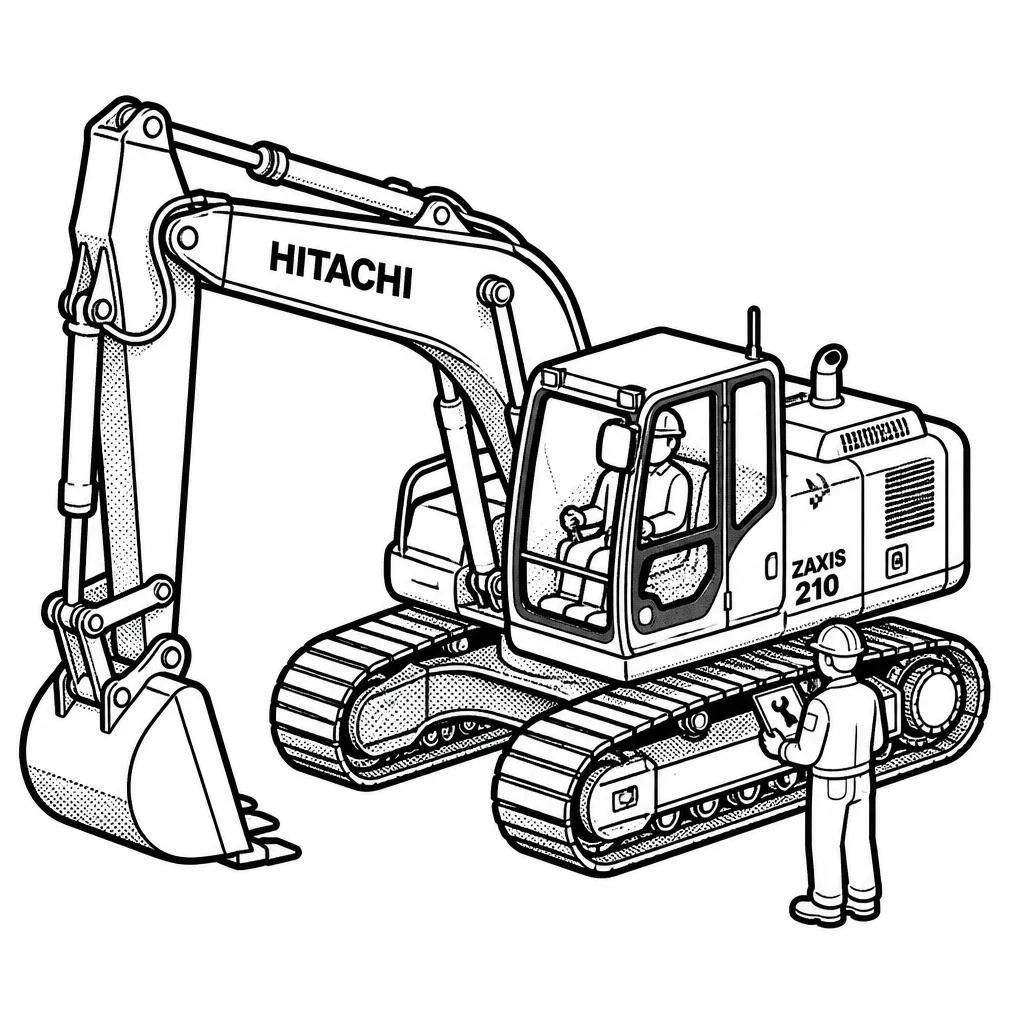
Hitachi Construction Machinery makes the big yellow machines you see digging foundations, loading trucks, and carving mines out of the earth. Its core product is the hydraulic excavator — a digger on tracks with an arm and bucket, powered by oil pressure rather than cables. Construction crews use them to move soil and rock; mining companies use much larger versions to load ore onto haul trucks. The company also sells wheel loaders, dump trucks, and cranes, and it rents equipment and supplies spare parts and service, which keeps customers coming back long after the initial sale.
Customers are mostly construction contractors, mining companies, and equipment rental firms. They buy Hitachi machines because the work is brutal — a mine excavator may run almost nonstop for years — so reliability and fast parts service matter more than a fancy brochure. That is also why the aftermarket business is so valuable: parts, repairs, and rentals bring in steadier money than selling a new machine, and they lock customers into the brand. The company sells through dealers around the world, and it has a long-standing joint venture in China, where local demand for excavators is enormous. The industry is a three-way heavyweight fight. Caterpillar is the giant American rival, Komatsu is the big Japanese competitor, and Sany Heavy Industry and other Chinese makers have been aggressively winning share, especially in China. That pressure hurt Hitachi: in 2021 it sold its stake in the Chinese joint venture to its partner, Kobelco Construction Machinery-affiliated interests aside, refocusing on markets where it can earn better returns. The company is also pushing electric and battery-powered machines, a small but growing slice as cities tighten rules on diesel fumes and noise.
Construction equipment is a cyclical business — when interest rates rise and building slows, orders dry up fast, and when commodity prices are high, miners spend. Hitachi is majority-owned by Hitachi, the sprawling Japanese industrial group, which gives it financial backing and shared technology. The bet is simple: sell tough machines at a fair price, then earn decades of steady income keeping them running.
Saved answer · last researched 14 Nov 2026
BIG PICTURE
Hitachi Construction Machinery holds 3.7% of the world's construction equipment market, ranked eighth
- 15.2% Caterpillar
- 11% Komatsu
- 3.7% Hitachi Construction Machinery
- 70.1% Others
On a ranking of the world's biggest construction equipment makers by sales, Hitachi Construction Machinery sits in eighth place with 3.7% of the market. Caterpillar, the American giant, holds 15.2%, and Japan's Komatsu is second at 11.0%. Hitachi earns most of its money selling excavators and mining machines, so a small slice of a market led by much larger rivals shows both the room to grow and the fight it faces. Source: CREX Economic Data Platform, citing KHL Yellow Table 2026, data from 2025
Timeline
First Japanese-Made Power Shovel
After the war, Japan needed to rebuild, and Hitachi's people wanted to do it with technology of their own. So they built the HITACHI U05, the first cable-operated power shovel made entirely with Japanese know-how. It was a machine that dug and moved earth, and it proved the company could stand on its own engineering.
One Company for Sales and Service
For years, the people who built the machines and the people who sold and fixed them were separate outfits. That year Hitachi pulled its domestic sales companies together with its service arm into one company, and launched the UH03, Japan's first hydraulic excavator built purely with domestic technology. Now the company could build, sell and service under one roof.
A Single Company From Design to Service
The next step was to fold the manufacturing side into the same organization. By joining the sales and service company with the manufacturing company, Hitachi Construction Machinery became one business covering development, production, sales and service. One team, one chain, from the drawing board to the customer's job site.
Hitachi Construction Machinery Goes Public
The company listed its shares on the Tokyo Stock Exchange, first on the Second Section and later moving up to the First Section. Going public gave it a wider base of owners and a public scorecard, which mattered as the business grew beyond Japan.
Tie-Ups With Deere and Telco
Hitachi looked abroad for partners. It formed a business tie-up with US-based Deere & Company to supply hydraulic excavators, and signed a technical collaboration agreement with India-based Telco. These deals were the company's first real steps into foreign markets, planting seeds that would matter for decades.
ZAXIS Excavators With Satellite Service
Hitachi launched the ZAXIS series of hydraulic excavators, the first in the world with a satellite communications function called e-Service, now known as Global e-Service. That let the company keep an eye on machines in the field, a quiet but powerful idea. The series won the Grand Prize in the 2000 Nikkei Superior Products and Services Awards.
A Second Founding in the Americas
Hitachi dissolved its joint venture with Deere & Company and set out to do business in the Americas on its own. At the same time, Hitachi Ltd. sold a majority stake, so the company was no longer a consolidated subsidiary, and it called this period its second founding. The stakes were high: the Americas hold about 40% of the global construction machinery market and 80% of mining equipment.
Hitachi Ltd. Sells Its Remaining Shares
Hitachi Ltd. sold its remaining shares in a block trade, cutting its stake from 18.16% to 9.98%. The sale of about ¥90 billion of stock at a discount weighed on the share price, which fell from a February high of ¥7,225. The long separation from its parent was nearly complete.