Understand any stock in simple English
Enter a ticker to learn what the company does and how it makes money.
Komatsu Ltd.
Komatsu builds and sells heavy machines like excavators, bulldozers, and mining trucks, plus the services and parts that keep them running.
Komatsu makes the big, heavy machines that move dirt, rock, and ore. If you have ever watched a construction site and seen a yellow excavator swinging its arm or a bulldozer pushing a mound of soil, there is a good chance it was a Komatsu. The company sells excavators, wheel loaders, bulldozers, and dump trucks to construction firms, mining companies, and rental fleets all over the world. Its customers buy these machines to do the hard, dirty work of building roads, digging mines, and clearing land — and they pay a lot for them, often millions of dollars for the largest mining trucks.
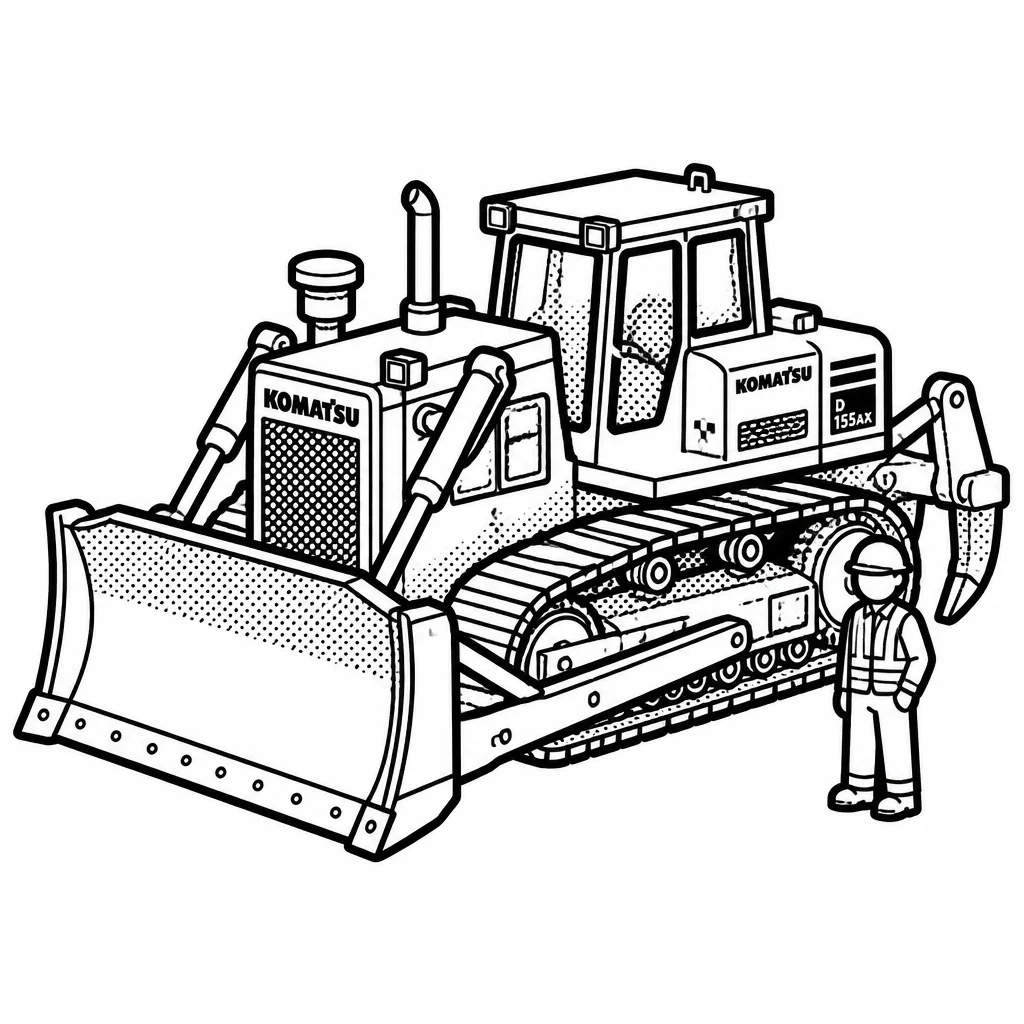
The machine sale is only part of the story. Komatsu also sells the parts and service that keep those machines running for years, and it rents equipment too. That matters because a broken-down excavator on a job site costs its owner money every hour it sits idle. So customers pay Komatsu not just for the iron but for the promise that it keeps working. This after-sales business is steady and recurring, and it helps smooth out the wild swings of selling big equipment, which rises and falls with construction activity and commodity prices. Komatsu is based in Tokyo and is one of the two giants of this industry, going head to head with Caterpillar almost everywhere in the world. Winning means more than a good engine. Komatsu has pushed hard on technology that tracks machines remotely, helps operators work more efficiently, and even runs some equipment autonomously — useful in dangerous mines. It has also invested in electric and hybrid machines as customers face pressure to cut emissions. The company is a major player in Japan and Asia, and it has grown in mining, where giant trucks and loaders are the lifeblood of the business.
The company generates a lot of cash, and it uses that cash in a fairly balanced way: paying dividends, buying back its own shares, and investing in new products and factories. Komatsu is also exposed to things it cannot control — a slowdown in China's construction market, swings in metals prices that shape mining spending, and currency moves between the yen and the dollar. When builders and miners feel confident, Komatsu sells machines; when they get nervous, they hold off. That is the simple rhythm of the business, and it is why Komatsu's results rise and fall with the global appetite for digging things up and building things.
Saved answer · last researched 12 Nov 2026
Timeline
Komatsu Iron Works Becomes Komatsu Ltd.
Meitaro Takeuchi started Komatsu Iron Works in 1917 to build mining machinery for a copper mine, and a few years later it split off to become its own company, Komatsu Ltd. He believed no nation develops without a machine industry, so he set four rules from day one: quality first, technological innovation, develop people, and go global. The young company began with mining equipment, then branched into a big press and, in the early 1930s, Japan's first crawler-type farm tractor.
The Maru-A Project
When Japan opened its doors to trade, the world's biggest US construction equipment maker got ready to sell into Japan, and people said Komatsu would sink within three years. Komatsu fought back with a company-wide effort called Maru-A: engineers were told to ignore cost and make bulldozers better than the Japanese standard, matching the Americans. Paired with quality control across the whole company, it worked. Komatsu reached world-class quality and held its home market.
A Joint Venture with Dresser
Komatsu teamed up with Dresser Industries of the US in a joint venture, picking up the ultra-large electric dump truck business along the way. It was one move in a long run of partnerships and purchases that stretched Komatsu's lineup far beyond its core bulldozers.
Driverless Trucks and a Hybrid Excavator
Komatsu launched the world's first Autonomous Haulage System, driverless mining dump trucks that run themselves. The same year it brought out the world's first hybrid hydraulic excavator, which cut fuel use by about a quarter. Machines were starting to think and save fuel on their own.
SMARTCONSTRUCTION
Komatsu rolled out SMARTCONSTRUCTION, a set of digital tools that help run a construction job site. It was a shift toward selling digital and automation-based offerings alongside machines, building on the smart bulldozers and excavators it had already made.
Buying Joy Global
Komatsu bought US mining equipment maker Joy Global for about $3.7 billion including debt, renaming it Komatsu Mining Corp. The deal joined Komatsu's surface mining machines with Joy's brands for underground and surface mining, added over 10,000 mining professionals, and turned Komatsu into a full-range mining solutions provider.
Buying GHH Group
Komatsu completed its acquisition of GHH Group GmbH, adding underground loaders, articulated dump trucks and tunnelling equipment. The deal deepened its underground mining lineup and let it sell more into its existing dealer and mine accounts.
Buying Astec's Road Division
Komatsu agreed to acquire the road construction equipment division of Astec, bringing the Roadtec and Carlson brands into the company. The deal adds pavers, milling machines, material transfer vehicles and stabilizers, expanding its road construction capabilities. Komatsu called it a step in strengthening its construction business in North America, one of its key markets, with closing expected at the start of 2027.