Understand any stock in simple English
Enter a ticker to learn what the company does and how it makes money.
Liaoning Port Co., Ltd.
Liaoning Port operates ports in northeastern China, earning money by loading, unloading, storing, and moving cargo like oil, ore, grain, and containers for ships and traders.
Liaoning Port is a port operator in northeast China. It runs the docks and terminals around Dalian and Yingkou, two big coastal cities in Liaoning province, and it makes money by handling the cargo that moves through them. When a ship arrives loaded with iron ore, crude oil, grain, coal, or containers full of manufactured goods, Liaoning Port provides the cranes, berths, storage yards, and workers to get that cargo on and off, and it charges a fee for the service. It also does related jobs like tugboat help, towing, and piloting ships safely into harbor.
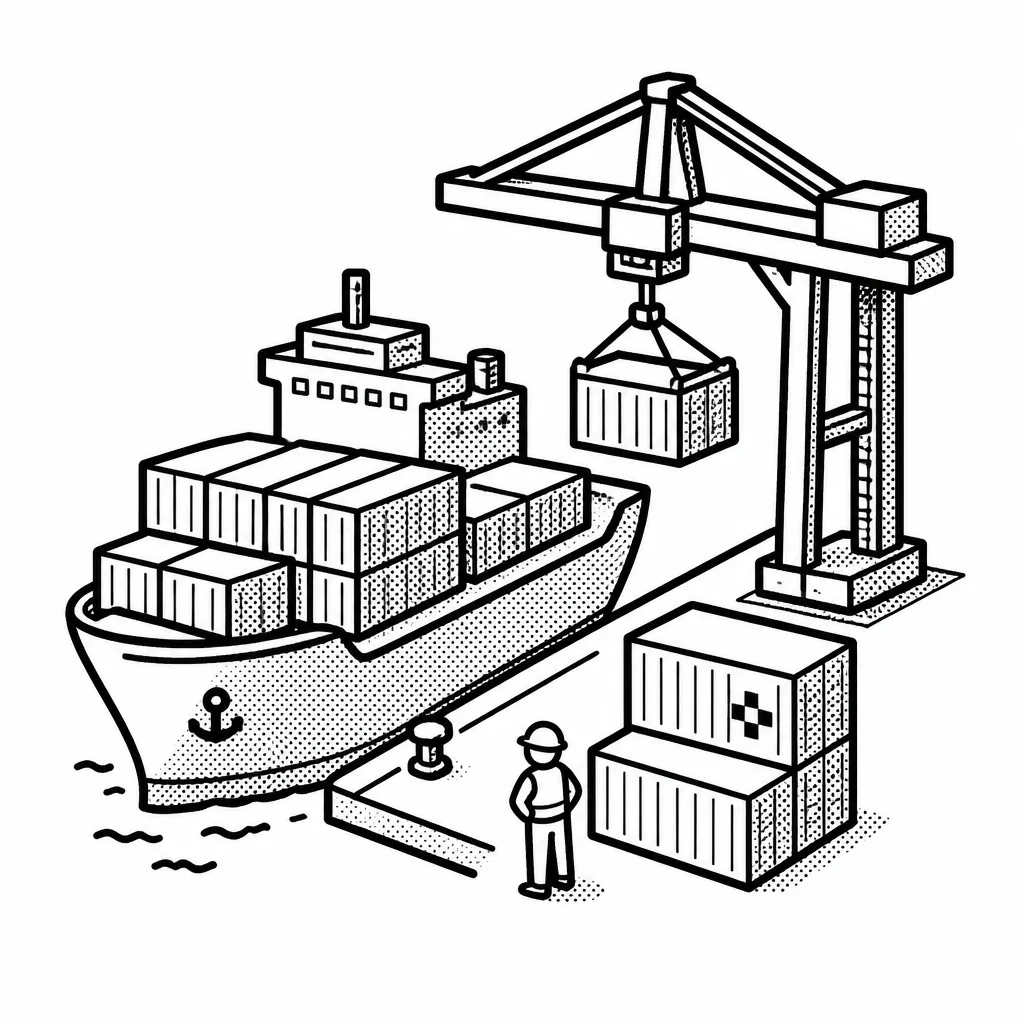
The port business is a toll booth on trade. Factories in China's industrial northeast need imported iron ore for steel and imported oil for fuel; farms and traders need to ship out grain; and shipping lines need somewhere to load and unload their containers. Liaoning Port sits at the gateway for that region, so cargo has little choice but to pass through facilities like its own. The company earns its keep from the volume and type of goods flowing through — bulk cargo like ore and oil brings steadier, lower-margin fees, while container handling is more competitive but adds scale. Because ports are expensive to build and hard to duplicate, the biggest operators tend to keep a strong grip on their local trade. Liaoning Port was formed by merging the port assets of Dalian and Yingkou into one listed company, a move meant to stop the two neighboring ports from competing against each other and instead share resources. That consolidation is the key to understanding the firm: it controls a large share of the region's port capacity, but it also carries the cost of big infrastructure and depends heavily on the health of heavy industry and commodity trade in northeast China. When steel demand or oil imports slow, the tonnage moving across its docks slows too.
The company's main risk is that it is a pure play on cargo volumes. It does not set the price of iron ore or oil, and it faces competition from other Chinese ports and from rival transport routes. It also invests heavily in terminals and equipment to keep capacity ready, which eats into cash. Still, as an infrastructure operator with steady fees and a strategic location, it appeals to investors looking for exposure to Chinese trade and shipping rather than to a fast-growing tech-style business.
Saved answer · last researched 8 Nov 2026
BIG PICTURE
辽港股份每10个集装箱当中有1个是空箱吗?不,是油品吞吐量下降了19.4%。
- 19.4% 油化品吞吐量同比变化
- 80.6% 其他货种或上年同期基数
2026年前九个月,辽港股份的油化品吞吐量为3794.2万吨,较上年同期下降19.4%。同期集装箱和散杂货吞吐量均实现增长。油品是公司装卸的主要货种之一,这项业务的下滑会改变公司收入来源的构成。 Source: 招商证券, data from 2026
Timeline
大连港公司成立
In 2005, a port business was set up in Dalian, in northeast China, built around the docks and cargo traffic of Dalian port. It started as the region's port operator and grew into the largest one in the northeast. That local base was the seed for everything that followed.
Listed in Hong Kong
The next year the company sold shares to the public in Hong Kong, which gave it money to grow and a public price tag on its business. It also made the company the first port operator in China listed both in Hong Kong and on the mainland.
Listed in Shanghai
A few years later it added a listing in Shanghai, completing the second half of that two-market setup. Now it could raise money from investors in both places.
China Merchants Takes Control
In 2019, control of the company passed to China Merchants Group, a big state-owned conglomerate. That change pulled the company into a larger corporate family and set the stage for a bigger plan: pulling the ports of Liaoning province together.
Renamed Liaoning Port
In early 2021, the company changed its name from Dalian Port to Liaoning Port. The new name was meant to match a new reality: after a merger, its business would cover ports across the whole province, not just one city.
Merger with Yingkou Port
Soon after, the company absorbed Yingkou Port by swapping shares instead of paying cash, and the combined company's new shares began trading in Shanghai. It became the first port company in China to pull off this kind of share-swap merger. The result was one platform running port logistics across Liaoning, from Dalian's bays to Yingkou's docks.
Raising More Money
Later that year the company raised about 2.1 billion yuan to support the merger, which made its capital base bigger and stronger.
New General Manager
In 2026, the general manager changed from Wei Minghui to Liu Cheng. The switch came as the company was working on sharpening its business mix and cutting costs.
Profits Rise as Cargo Mix Shifts
That year told a simple story: revenue slipped a little, but profit grew, and in the third quarter it jumped sharply. More containers and general cargo came through the gates, including new routes to Vietnam and Thailand, while lower-margin oil and chemical traffic fell. With costs under control, the company was earning more from each unit of business, and that is the main thread it is pulling today.