Understand any stock in simple English
Enter a ticker to learn what the company does and how it makes money.
Kakao Pay Corp.
Kakao Pay lets people in South Korea pay for things with their phones and use that same app for money transfers, savings, insurance, and investing.
Kakao Pay is South Korea's biggest mobile payment app, and its job is simple to describe: it lets people pay for things with their phones instead of pulling out a card or cash. The app grew out of KakaoTalk, the messaging app nearly everyone in South Korea uses, so it starts with a huge built-in audience. You link a bank account or card once, then pay in stores or online by scanning a code, and the money moves almost instantly. For many Koreans, it has become the default way to send money to a friend or split a dinner bill.
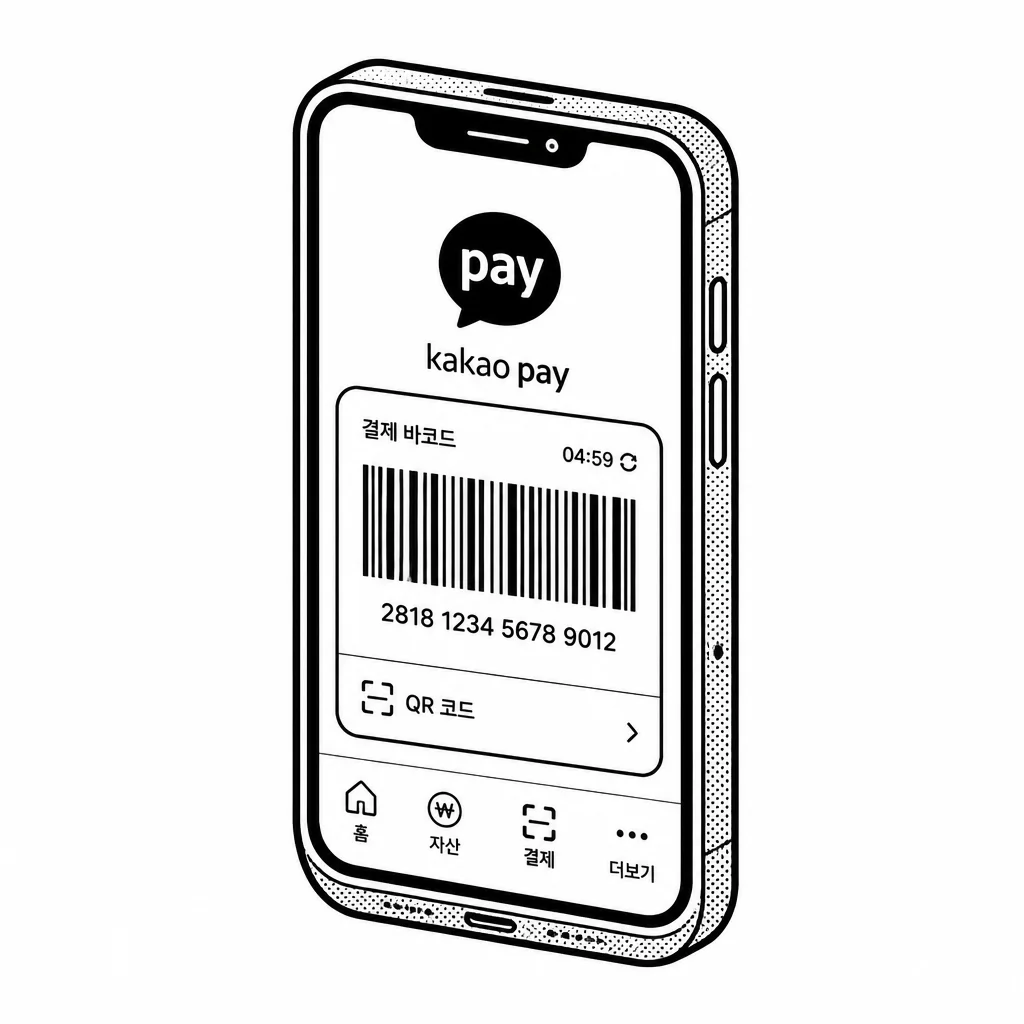
Payments are the front door, but the real business is what sits behind it. Kakao Pay earns a small fee from merchants on payments, and it makes more money by selling financial products through the same app: money transfer, a savings-style account, insurance, and stock trading. It also runs bill payments, coupons, and even digital ID cards and mobile driver's licenses. The logic is that a payment app you open constantly is a cheap place to sell you a loan, a fund, or a policy, because it already knows you and holds your money. The company sits inside the sprawling Kakao group, and it listed its shares on the Korea Exchange in late 2021 in a hot IPO. That listing has been rough. The stock fell hard from its debut, and the company has struggled to turn its enormous user base into steady profit. It has also faced legal trouble: in 2024 a Seoul court acquitted Kakao Pay's leadership over allegations tied to a large insurance-related payment deal, and the company has dealt with regulatory scrutiny and political controversy over its ties to the wider Kakao empire.
Its main rivals are the payment apps attached to Korea's big internet and finance players, including Naver Pay, run by Naver, and Toss, the fintech app from Viva Republica. Banks and card networks also compete for the same transactions. Kakao Pay's edge is the KakaoTalk habit — the app is already on the phone, so using it feels like a reflex. Its weakness is that payments alone are a thin, low-margin business, and turning that reflex into real lending, investing, and insurance revenue is the hard part it is still working on.
Saved answer · last researched 14 Nov 2026
BIG PICTURE
Naver Pay wins at the checkout, but nearly half of Koreans send money through Kakao Pay
- 45.2% Kakao Pay users for mobile money transfers
- 54.8% People using other apps, or none, for transfers
In South Korea's mobile money transfer market, 45.2 percent of users pick Kakao Pay, ahead of Toss Pay at 32.6 percent and Naver Pay at 22.3 percent. The reason is social: 38.9 percent say they use it because the person receiving the money uses it too. Money transfers pull people into the app, and Kakao Pay then sells them investing, insurance and savings products. Source: Yonhap News Agency, data from 2026
Timeline
KakaoPay Launches Inside KakaoTalk
In 2014, Kakao launched a payment service that lived right inside KakaoTalk, the messaging app almost everyone in Korea already had. That was the whole idea: paying should be as easy as sending a text. At first, even getting credit card companies to join was a struggle, and some partners walked away just before launch. But the day it went live, share prices of old-school payment companies fell hard. The market saw the future coming.
Kakao Pay Becomes Its Own Company
In 2017, Kakao's fintech business was pulled out into a standalone company called Kakao Pay Corp. That same year, Ant Group, the giant Chinese payments firm behind Alipay, put in $200 million. It was a serious vote of confidence in the idea that a chat app could become a money app.
Buying a Securities Firm
Kakao Pay signed a deal in 2018 to acquire Baro Investment & Securities, an actual stock brokerage. Payments alone could only take the company so far. Owning a broker was the door into a much bigger business: stocks and investing.
Securities Arm Comes Under Kakao Pay
In 2020, that brokerage became a full subsidiary, Kakao Pay Securities. Now the payment app could offer stock trading and investment, not just sending money. The company was no longer just a wallet; it was becoming a financial platform.
The Big Stock Market Debut
In November 2021, Kakao Pay listed on the Korean stock exchange. The offering raised roughly 1.6 to 1.7 trillion won and valued the company at about $11 billion. On day one, the stock closed more than double its IPO price. For a company that started as a button in a chat app, it was a stunning market moment.
A New CEO Takes Over
In 2022, Kakao Pay named its strategy chief, Shin Won-geun, as the new CEO, and he took office that March. The former CEO moved over to help run the parent company, Kakao Corp. The leadership change came just as the stock was about to face a much harder test.
The Stock Crashes
Kakao Pay's stock had peaked at around 248,500 won, then fell more than 80 percent to about 45,800 won. One reason was ugly: executives had sold shares shortly after the IPO, and critics called it a pump and dump. Broad market troubles and doubts about sky-high valuations made it worse. The market darling suddenly looked very human.
Kakao Pay Finally Turns a Profit
In 2025, Kakao Pay reported its first full-year operating profit, about 50 billion won. The engine was financial services, with revenue up 59 percent and now 40 percent of the total. Stock trading volume at Kakao Pay Securities jumped 159 percent. The broker that once looked like a side bet was now carrying the company.
Record Results and a Securities Boom
The turnaround kept accelerating. In the second quarter of 2026, revenue hit a record, up 41 percent, and operating profit rose by triple digits. Digital finance was now 52 percent of revenue, powered by big jumps in investing and insurance. Kakao Pay Securities managed 21 trillion won in assets, with six straight quarters of money flowing in. The chat-app payment button had grown into an investment platform.