Understand any stock in simple English
Getac Holdings Corporation
Getac makes rugged laptops and tablets built to survive rough handling, plus structural parts and aerospace fasteners.
Getac builds computers that are designed to be dropped, soaked, frozen, and baked — and keep working anyway. Its rugged laptops and tablets are sold to soldiers, police, firefighters, factory workers, and field crews who need a screen that survives a muddy truck bed or a desert sandstorm. Alongside those devices, the company makes structural components and precision fasteners for airplanes and cars.
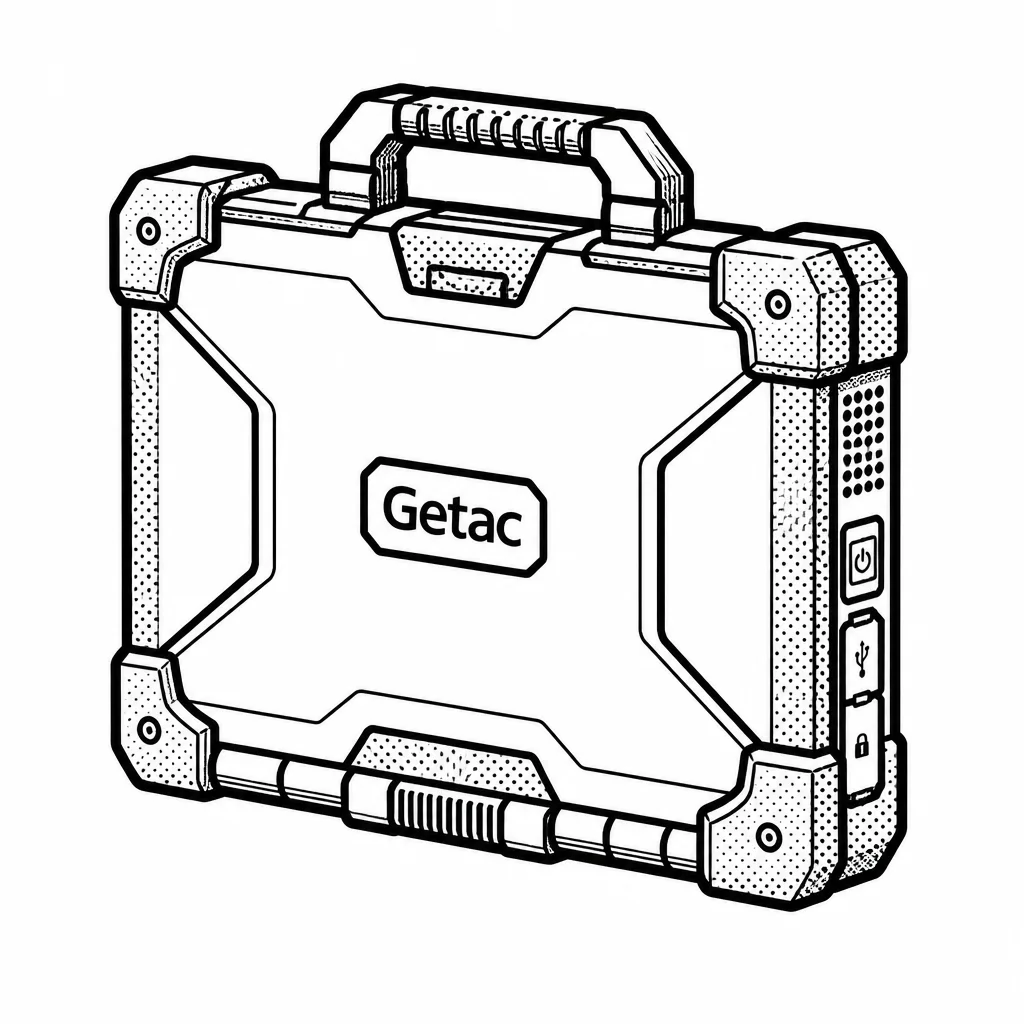
The logic is simple. A normal laptop dies if you drop it on concrete or leave it in the rain. Getac's machines are sealed, reinforced, and tested to military standards, so a utility worker can bang one around a job site and a soldier can carry it into the field. That toughness is what customers pay a premium for, and it is why Getac wins business instead of a cheap consumer brand. The company is based in Taiwan, near the electronics supply chain that makes such devices possible. Getac sells three kinds of things. The rugged computers are the star, aimed at defense, industrial, and public-safety customers. Then there are structural components — the metal and plastic parts that go into other companies' products. And there are aerospace fasteners, the precision screws and bolts that hold aircraft together, sold to aviation and automotive manufacturers who cannot afford a weak joint.
The business rides on defense budgets and industrial spending, which can be steady but also tied to government cycles. Rugged devices face competition from rivals like Panasonic and Dell, so Getac leans on certifications, durability, and specialized configurations rather than low prices. The fastener and component arms add diversity but are smaller and more tied to manufacturing demand. In short, Getac sells reliability in places where failure is expensive.
Saved answer · last researched 20 Nov 2026
BIG PICTURE
Getac's rugged computers fight in a market where three firms hold about 90%
- 90% Top three rugged computer makers
- 10% Everyone else selling rugged computers
Chairman James Hwang told investors this month that the top three players control roughly 90% of the rugged computer market. Getac is one of them, and it says it took share from US and Japanese rivals this year by cutting prices even as component costs rose. That puts most of its main business in the hands of a very small club. Source: BigGo Finance, data from 2026
Timeline
Two Partners Start Getac
In 1989, GE Aerospace and MiTAC teamed up to build electronics for Taiwan's defense sector. The idea was to make a local company that could produce cost-effective defense products, mixing GE's quality standards with MiTAC's manufacturing muscle. It was a joint venture born out of a simple problem: defense buyers needed good equipment, made locally, at a reasonable price.
Getac Merges With MiTAC's Notebook Division
A decade later, Getac merged with MiTAC's notebook division and got a new name: MiTAC Technology Corporation. The company was no longer just a defense supplier. It was now making commercial notebooks too.
Getac Lists on the Taiwan Stock Exchange
In 2002, the company went public on the Taiwan Stock Exchange. That gave it access to public capital, money it could use to grow its computing and mechanical businesses.
Getac Pushes Into Rugged Computing Overseas
As global economic and industry conditions shifted, the company expanded its rugged computing product lines and started selling Getac products to overseas markets. This was the turn toward its own rugged brand and international sales.
The Getac Name Returns
In 2009, MiTAC Technology Corporation renamed itself Getac Technology Corporation. The new name signaled a real strategic move: away from contract manufacturing and toward building its own branded rugged-computing business.
Getac Invests in WHP Workflow Solutions
Getac put money into WHP Workflow Solutions to develop combined software and hardware products. It was the start of a push beyond just selling hardware into video and software solutions.
Getac Buys WHP Workflow Solutions
In 2018, Getac acquired US-based WHP Workflow Solutions through a share swap. That expanded its Getac Video Solution business and strengthened its body-worn camera and mobile video segment beyond rugged computers.
Getac Becomes an Investment Holding Company
In 2021, Getac Technology Corporation turned into an investment holding company and was renamed Getac Investment Holding Corporation. The group was restructured to oversee its rugged computing, mechanical, and aerospace fastener businesses.
Getac Hits Record Profits
In 2024, consolidated revenue reached about NTD 35.7 billion, up 2.5% from the year before, while operating profit and net profit after tax hit record highs since the company began. Growth came from defense and public safety procurement in the US and Europe, plus 5G and AI-driven enterprise demand.
Getac Holdings Corporation Gets Its Name
The company renamed itself from Getac Investment Holding Corporation to Getac Holdings Corporation, completing its holding-company identity under the Getac name.
Getac Wins Drone Ground Control Orders
Getac secured two new orders from US and European customers for rugged-computer-based ground control solutions for unmanned vehicles. The new drone business is expected to reach 5% to 10% of revenue the next year, and Chairman James Hwang expects 5% to 10% revenue growth overall, supported by defense demand.