Understand any stock in simple English
Enter a ticker to learn what the company does and how it makes money.
TSI Co., Ltd.
TSI makes the machines that help build batteries and semiconductors, plus the parts and services that keep them running.
TSI is a South Korean machinery maker that sells the equipment factories use to manufacture lithium-ion batteries and semiconductors. Its main products are electrode mixing systems — big machines that blend the chemical slurry that becomes a battery electrode — along with equipment for making secondary-battery components and handling wafers in chip plants.
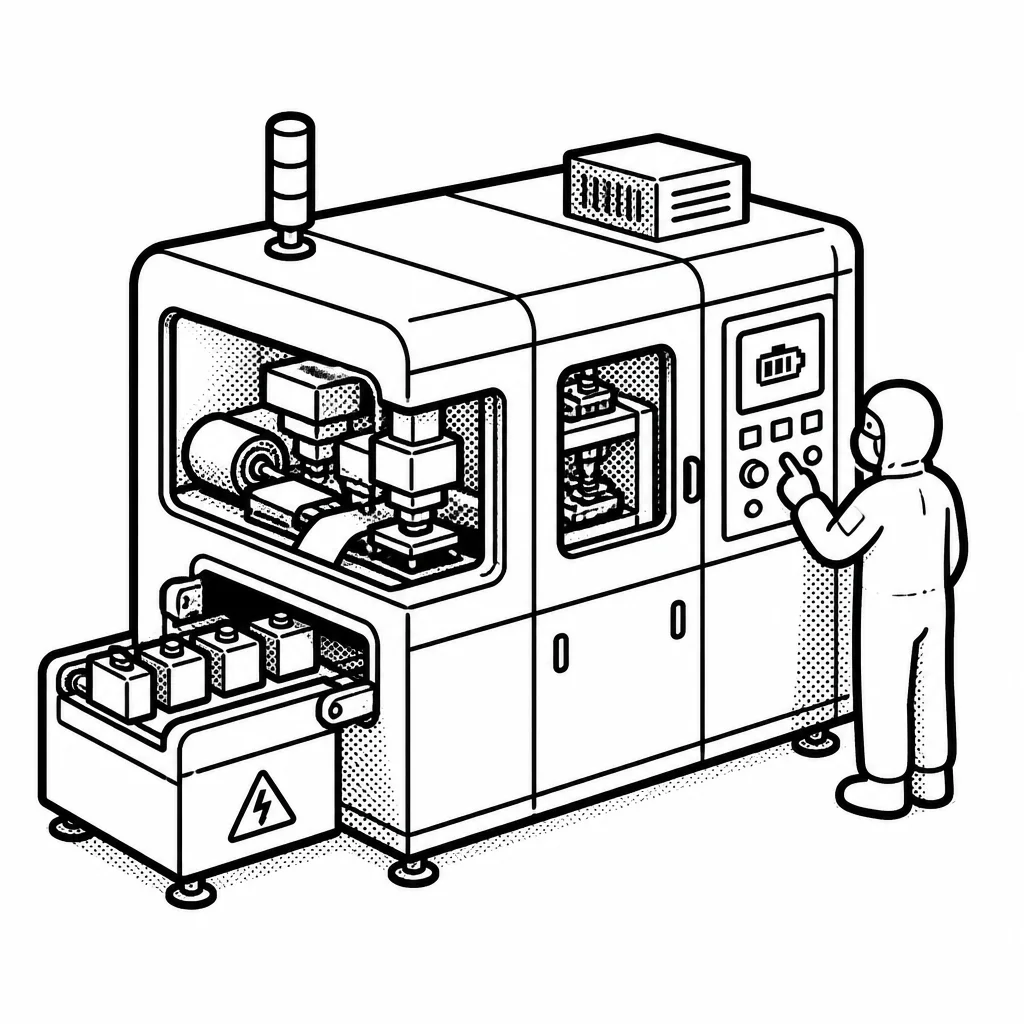
Battery makers are the core customers. When a company like LG Energy Solution or Samsung SDI builds a new plant, it needs mixing, coating, and other process tools, and TSI is one of the suppliers competing for those orders. The business is lumpy: revenue depends on how many new battery and chip factories are being built in a given year, so orders and profits swing with the capital-spending plans of a handful of large manufacturers. TSI also earns recurring money from spare parts, retrofits, and maintenance on machines already installed, which is steadier than the new-equipment business. Its edge comes from being a local supplier with deep process know-how in battery slurry mixing, an area where getting the recipe and equipment right matters a lot for battery quality and yield. The risk is concentration: a slowdown in battery plant construction, or losing a big customer to a rival toolmaker, hits results quickly.
The company listed on KOSDAQ in 2018 and has ridden the global battery building boom, with revenue rising sharply in recent years before cooling as battery makers slowed their expansion. Founded in 2002, it grew from semiconductor equipment into the battery-machinery market that now drives most of its growth potential — a bet on electric vehicles that pays off only as long as the world keeps building battery factories.
Saved answer · last researched 8 Nov 2026
Timeline
A Suwon Machinery Shop Opens
In March 1996, a small company called Taesung Industrial Machinery opened in Suwon, South Korea, making industrial machines. It had no special claim to fame yet. Over time, it found its real calling: the machines that mix the ingredients for rechargeable batteries. That humble shop would one day grow into a global player.
Taesung Becomes TSI
In July 2011, the company changed its legal shape and its name, becoming TSI Co., Ltd. Its founder, In-sik Pyo, took the CEO chair and has held it ever since.
Jeil Machinery Sues TSI
Then came trouble. In June 2018, rival Jeil Machinery sued TSI for about two billion won, claiming TSI had copied trade secrets and a product called the PD mixer. The suit surfaced during TSI's IPO preparations, and soon false rumors spread that customers had stopped taking deliveries. A legal fight like that can haunt a company for years.
TSI Goes Public
In July 2020, TSI listed on KOSDAQ at 10,000 won a share, with Korea Investment & Securities as underwriter. Retail investors piled in with a record 1621-to-1 subscription ratio. The stock jumped at first, then fell on its very first day.
The First-Day Drop
Shares opened at twice the IPO price, climbed higher, then slid into the 14,000 won range within three days. TSI blamed profit-taking and the old rumors tying the Jeil lawsuit to lost Samsung SDI deliveries. CEO Pyo promised to personally cover any damages, a bold pledge meant to calm nervous investors.
AndaH Takes the Reins
In March 2023, the founder stepped back from the top of the shareholder list. A fund run by AndaH Asset Management, the TSI-AndaH general private equity fund No. 6, became the largest owner with a 38.75% stake, reshaping who controlled the company.
The Gigafactory Boom
The battery world was building factories everywhere, and TSI's mixing machines rode the wave. Revenue roughly tripled from 67.3 billion won in 2021 to 261.1 billion won in 2023. TSI opened subsidiaries in Hungary and a joint venture in China, and registered its Pyeongtaek campus factory.
TSI Wins Over DJK
In 2026, TSI landed a roughly 24.1 billion won contract to supply mixing equipment to Japan's DJK, about nine percent of its prior-year revenue. It beat Japanese equipment makers on their home turf, and the deal became a calling card for chasing customers worldwide.
A Bigger Order Book
By the first quarter of 2026, revenue hit 50.9 billion won and operating profit jumped nearly 88 percent from a year earlier. TSI held a 342.6 billion won order backlog. The push came from growing demand for energy storage and the industry's shift to LFP batteries, which need more of the mixing systems TSI builds.