Understand any stock in simple English
Enter a ticker to learn what the company does and how it makes money.
JUSUNG ENGINEERING Co., Ltd.
Jusung Engineering builds the machines that make semiconductors, displays, solar cells, and LED chips.
Jusung Engineering makes the big, expensive machines that other companies use to build chips and screens. If you picture a semiconductor factory as a giant kitchen, Jusung sells some of the ovens. Its tools deposit incredibly thin layers of material onto silicon wafers or glass panels, and they etch tiny patterns into those layers. Without this step, there is no chip and no display.
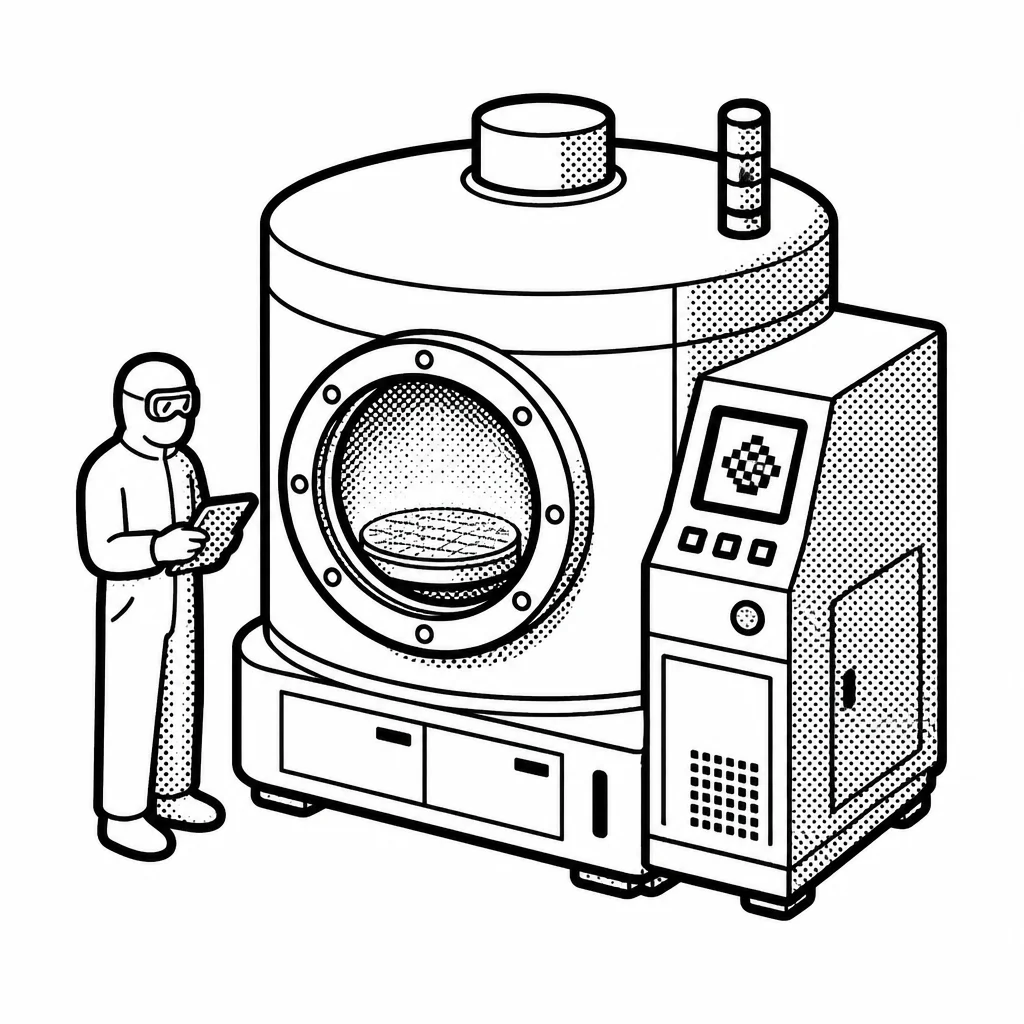
The company sells four main kinds of equipment. Its semiconductor tools handle deposition and etching for making chips. Its display tools do similar work for the screens in phones, TVs, and monitors. It also makes equipment for solar cells and for OLED and LED lighting. Customers are the big manufacturers who run these factories, mostly in South Korea and across Asia, and they buy from Jusung because the tools are precise and the company has spent decades refining them. That customer list is both a strength and a weakness. Chip and display manufacturing is dominated by a handful of giant buyers, so a few large orders can swing a year's results, and a slowdown in their spending hits hard. Jusung competes with much larger equipment makers, including Applied Materials and Lam Research in semiconductors and Applied Materials again in displays. Its edge is specialized know-how and lower-cost Korean engineering rather than sheer size.
The company is based in Gwangju, South Korea, and its story has a notable twist: it grew out of a business founded by Hwang Chul-joo, who started out making parts for other equipment makers before betting on building complete machines. That bet turned Jusung into one of Korea's few homegrown suppliers of chipmaking tools. The business remains cyclical and tied to how much its big customers choose to invest in new factories, so its profits rise and fall with the capital spending cycle rather than with steady everyday demand.
Saved answer · last researched 12 Nov 2026