Understand any stock in simple English
Enter a ticker to learn what the company does and how it makes money.
Walsin Technology Corporation
Walsin Technology makes tiny electronic components like capacitors, resistors, and inductors that go inside phones, computers, and cars.
Walsin Technology makes the tiny, boring parts that every electronic device needs but nobody ever sees. Its main products are multilayer ceramic capacitors (MLCCs), chip resistors, and inductors — small components soldered onto circuit boards to store charge, control current, and filter signals. Without them, a smartphone, laptop, or car couldn't work. Walsin sells these parts to electronics manufacturers and electrical equipment makers, mostly in Asia, who build them into their products.
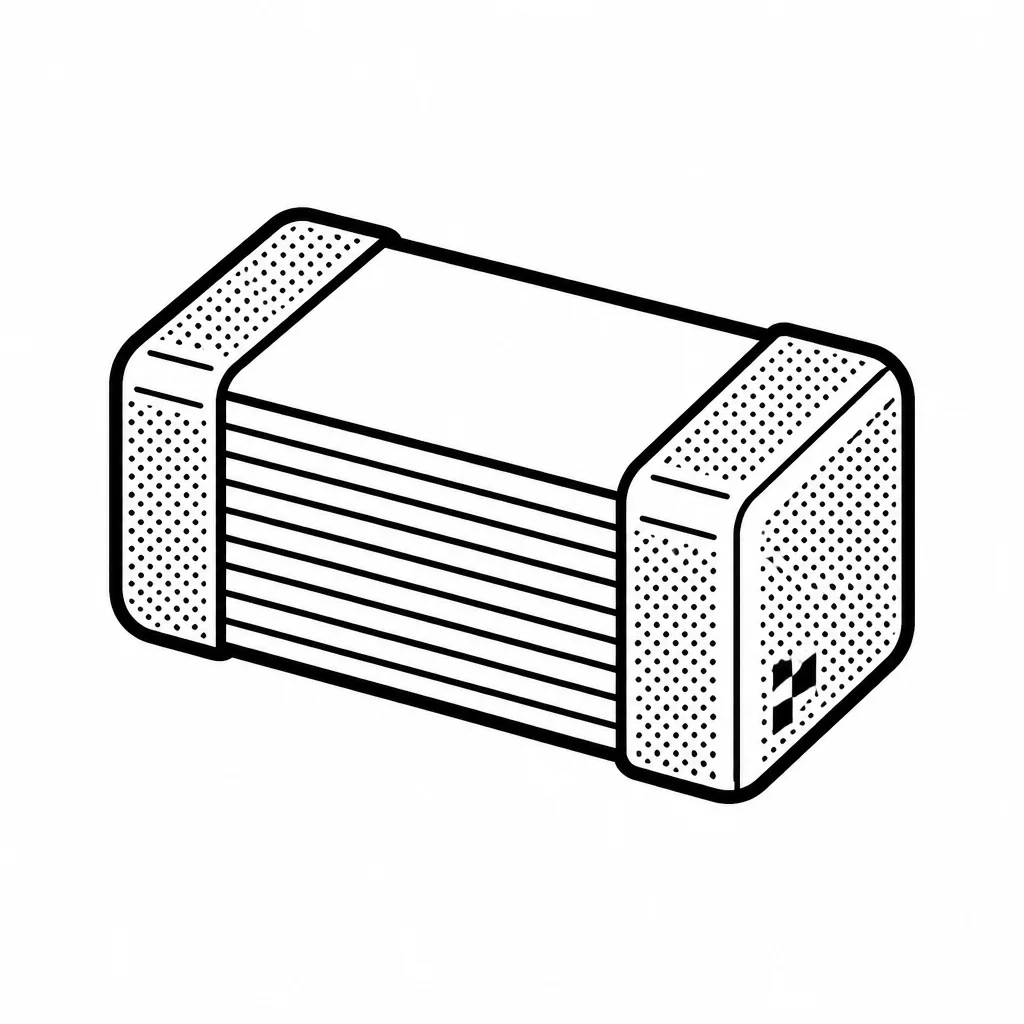
The business is a commodity game with a twist. MLCCs are cheap, standardized, and made by the billions, so Walsin competes on price, scale, and reliability against giants like Murata Manufacturing, Samsung Electro-Mechanics, and Yageo. What makes it interesting is the cycle: when demand spikes and factories can't keep up, prices soar and everyone rushes to build more capacity; when demand cools, prices crash. Walsin rides this rollercoaster alongside its peers, and its profits swing hard with it. Headquartered in Taipei, Walsin is part of the Walsin Lihwa group, a sprawling Taiwanese conglomerate with roots in wire and cable. The company has spent years expanding capacity and moving upmarket into smaller, higher-value components for automotive and industrial use, where margins are steadier than in consumer electronics. Cars, in particular, are packed with thousands of MLCCs, and automakers demand parts that survive heat, vibration, and decades of use — a tougher, stickier business than selling into a phone factory that switches suppliers on price.
Walsin's vulnerability is the same as its strength: it's a volume manufacturer in a market dominated by bigger rivals. When the cycle turns down, overcapacity crushes margins, and Walsin has less cushion than Murata Manufacturing. When it turns up, the company can print money. Investors treat it as a cyclical bet on electronics demand rather than a steady compounder, and its dividend and capital spending tend to follow the cycle.
Saved answer · last researched 12 Nov 2026