Understand any stock in simple English
Enter a ticker to learn what the company does and how it makes money.
Murata Manufacturing Co., Ltd.
Murata makes tiny ceramic electronic parts—capacitors, filters, sensors, and batteries—that go inside phones, cars, and countless other devices.
Murata makes the tiny, mostly invisible parts that let electronic devices work. Its most important product is the ceramic capacitor, a speck of material that stores and releases tiny bursts of electricity to keep voltage steady. A modern smartphone contains hundreds of them, and a car can hold thousands. Murata is the world's largest maker of these ceramic capacitors, which gives it real pricing power and a reputation for quality that electronics makers pay for.
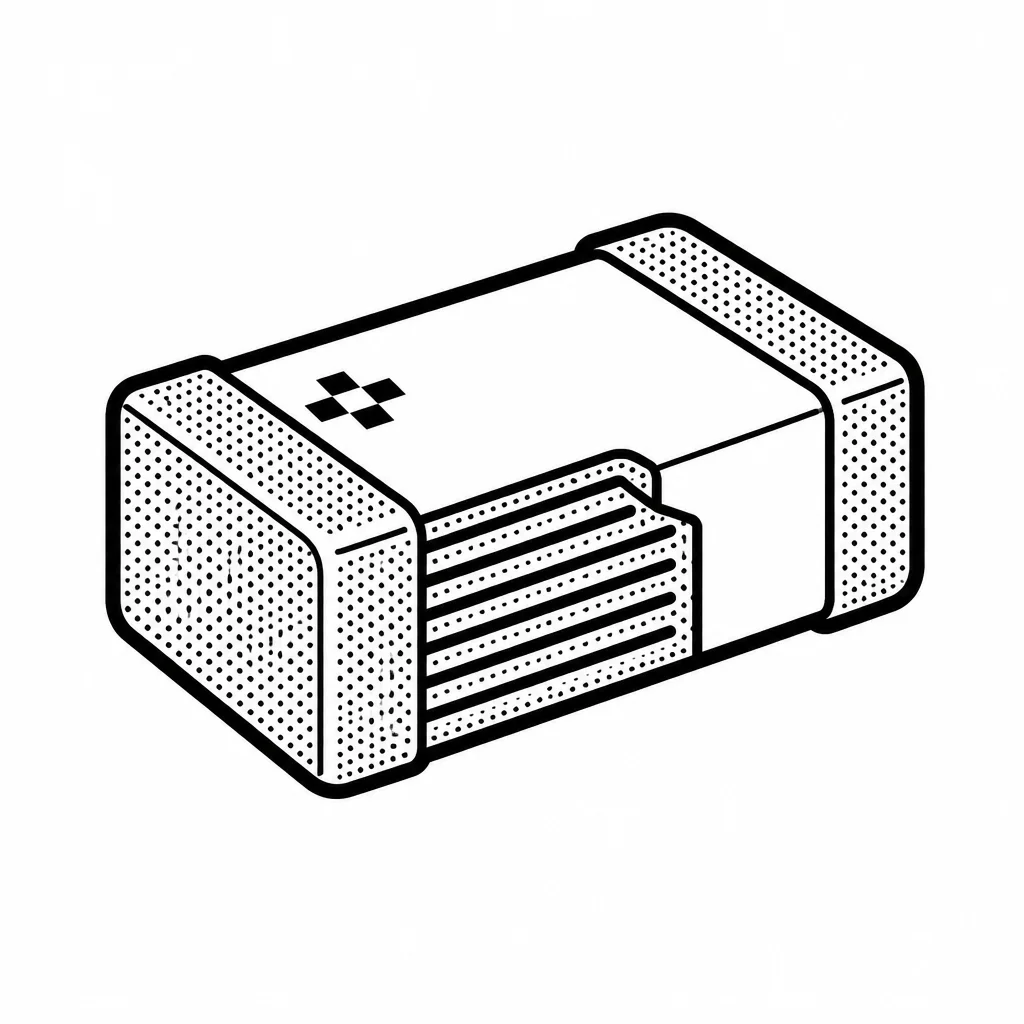
The company's customers are the electronics giants—phone makers, car companies, and network equipment builders—who design Murata's parts into their products years before launch. That design-in process is sticky: once a part is baked into a design, switching suppliers is painful, so customers tend to stay. Beyond capacitors, Murata sells inductors, filters, sensors, and small batteries, plus wireless modules for connecting devices. The spread matters because it lets Murata sell more parts into each device and smooth out swings in any single market. Murata's real edge is manufacturing. Making millions of near-perfect ceramic layers at microscopic scale, cheaply and reliably, is brutally hard, and the company has spent decades refining it. That has kept it ahead of rivals like TDK and Taiyo Yuden in capacitors. But the business is cyclical and exposed to the smartphone and auto markets, so revenue swings with demand. The company invests heavily in new factories and capacity, and it has made acquisitions to expand into new areas like energy and healthcare. It also pays dividends and buys back shares.
The story worth knowing: Murata started in 1944 in Kyoto making ceramic insulators, and a founder's bet on titanium oxide ceramics in the 1950s set it on the path to capacitors. Today its parts sit inside an astonishing range of products, and the company's fortunes rise and fall with the electronics cycle it quietly powers.
Saved answer · last researched 12 Nov 2026